







Employee Skilling
The skills gap is real, but a bigger challenge is the mindset gap





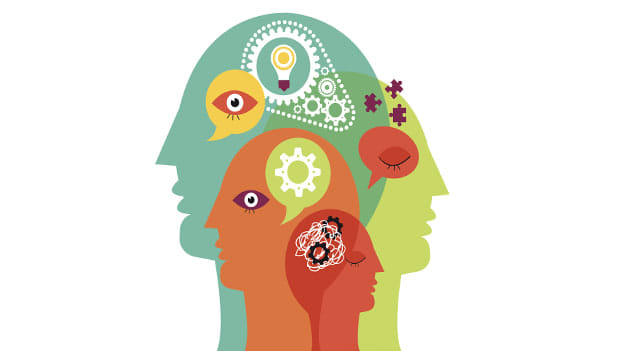
Are organizations really anticipating the future opportunities and enabling their workforces to prepare for what is unknown?
There are a lot of spiels about bridging the skills gap and what organizations and especially the L&D functions in organizations are doing and can do about it. There is no denying that the skills gap is real, and data backs it too. The 2016-17 annual report of the Ministry of Skill Development and Entrepreneurship reveals that less than five percent of the total workforce in India has undergone formal skill training while it is estimated that around 50 to 70 million jobs will be created in India over the next five years, and about 75 to 90 percent of these will require some vocational training — this is a huge gap. ManpowerGroup’s study, Talent Shortage Survey also reveals that almost half of Asian employers (46 percent) report hiring difficulties.
I believe there are two kinds of gaps that exist, one is a skill gap and another is the capability gap. The skill gap is “Here and Now” and the other is about “Shaping the Future Mindset”. Organizations are looking at identifying many ways of bridging these “Here and Now” skill gaps. While some create internal academies to bridge these gaps on an ongoing basis, or plan orientation programs for some roles that may stretch from a few weeks to a few months, other organizations tie-up with educational institutes to create customized curricula. There’s more to be done in this area, but largely, organizations are aware of this problem and are finding innovative solutions for the same. However, there is a bigger question: Are organizations really anticipating future opportunities and enabling their workforces to prepare for what is unprecedented or unknown? Are organizations just addressing the challenges that render themselves visible on the surface-level or do organizations go deeper?
It requires capabilities to “Shape the Future”. With the enormous focus on the stock market and quarter-on-quarter profits, organizations have a ‘here and now’ mindset. Few leaders and fewer managers are focusing on creating a future. But what is required is a different mindset — for identifying how the needs of tomorrow are going to be starkly different, and how we need to evolve our capabilities to manage the uncertain future. The biggest mindset shift is to move from the ‘here-and-now’ thinking and ‘what is it that I am doing and can do more efficiently’ to ‘what future can I create which is different and how will it create a tremendous value for my customers’.
There are two kinds of gaps that exist – one is a skill gap that is ™here and now∫, and the other the capability gap which is about ™Shaping the Future Mindset∫
Employers don’t do a very good job of anticipating what the future is going to look like and thus, they are not sure what capabilities will be required in the future. A lot of employers want to play the ‘spot market’ for labor, and when they do realize they need someone with certain skills, they just want to post a job and have someone who is ready with it and can fit into it. However, what they need to hire for today, especially in the critical high impact jobs, are people who have a mindset for change, mindset for innovation, mindset for managing ambiguity and biggest of all, a high learning agility.
These mindsets don’t get created by going to learning programs. And capabilities get created when people undergo a variety of different, diverse experiences. Organizations need to hire such people and also provide varied experiences to them for creating an internal pipeline of talent.
What leaders need to do is to anticipate the future of the industries, and identify how organizations can help shape that future. They need to bring out and emphasize the elements of the future from a business model, organizational, structural, and from the required capabilities viewpoints. This will make people latch on to the real possibilities and capabilities towards which they need to propel themselves. Rather than be subject to a new reality, people would then be able to help create a successful future state for the businesses and for themselves.
L&D has a choice to make – it can either be a follower in identifying the skill gaps and help the business in bridging those, or it can help shape the future focus mindset of the organization and its people
L&D has to be at the forefront of changing mindsets and enhancing capabilities. First and foremost, it needs to create a culture of development, learning, and coaching, and focus on creating managers and leaders who are genuinely able to coach, support, and develop people for the new age that is fast-moving and fast-changing. This will fulfill the capability and skill gaps at the workplace. Secondly, L&D needs to help solve the unsolved business problems by facilitating learning ‘in situations’ or in situ, and by being involved in the issues and problems in real-time. It is about integrating learning and innovation, on-the-job. Thirdly, L&D needs to create diversity in the classroom. Collaboration is a reality in all business situations and classrooms also need to have diverse impact teams. A more diverse classroom will lead to higher levels of learning and will translate into the work environment. The fourth aspect is to draw-in the individuals who are high on learning agility. They will be the ambassadors of change for the organization. L&D needs to drive “shaping the future mindset” in people high on learning agility, and need to be able to call out these people through the existing systems and processes of performance management, potential assessment etc., and then use them as the ambassadors of change across the organization.
L&D has a choice to make — it can either be a follower in identifying the skills gaps and help the business in bridging those, or it can help shape the future focus mindset of the organization and its people.
Topics
Author

Loading...