







Leadership
Big Interview: Uber's CHRO on the power of resolve





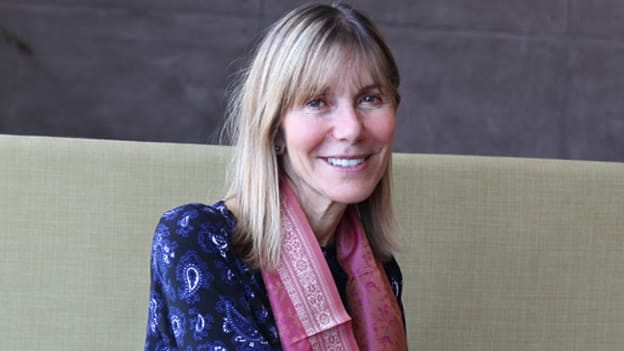
Liane Hornsey, CHRO of Uber is a picture of perseverance. In a candid conversation with People Matters, she shares with us what motivated her to join Uber, her resolve amidst Uber's leadership crisis and more.
Liane Hornsey is the Chief Human Resources Officer at Uber Technologies and leads efforts in scaling Uber’s entrepreneurial, start-up culture across more than 80 countries. Prior to Uber, Liane was the Chief Administrative Officer & Operating Partner of Softbank Group International, where she helped a number of portfolio companies hire diverse and high performing employees. Before SoftBank, Liane spent nearly a decade at Google, where she led People Operations for Global Business, and became Google’s first female Vice President in HR and led Google's human resources department.
From Google to Softbank, to changing Uber's culture. Tell us what motivated you to join Uber.
When Uber called me (back in 2016), I was very clear that this is where I wanted to work. Nothing else mattered because the reason was simple — I truly believed that Uber was an iconic brand; it was the darling of the valley and ‘the’ company to work for. The other thing that motivated me to join Uber was the fact that I understood the ridesharing business as I was involved with Grab and Ola at Softbank. But I think the most decisive factor for me was that I knew and had seen what ridesharing did for people, the economic opportunity it provided to people who had no real means of living. I had seen that in India and South East Asia particularly, and I wanted to be a part of something that truly made a socio-economic difference. Today, Uber has 3 million drivers who interact with its platform, and the fact that we are providing them with the economic opportunities just feels right. The decision to join Uber was an unequivocal one.
You came into Uber when there was a significant leadership crisis and you had the responsibility of rehabilitating Uber’s public image. What kept you going at Uber?
I think it is very hard to explain this, but what kept me going was the employees at Uber. There is something about the passion in Uber and its employees. Because we had a difficult year, people rallied together and wanted to see the change. I felt they were by my side the whole time and that was a positive feeling. That is what categorically kept me at Uber. More so, I really think I can do my best work here. I say this with humility but I think Uber needed and needs stability of the HR leadership and people leadership. Also, the main reason I joined Uber was about the economic opportunity it provided to people. I am really sure that I am staying here until I retire. This is the company for me.
During the last one year, you had to face many challenges as an HR leader. How did you look at those challenges and which challenge did you prioritize?
I was with the company for about 4 weeks when Susan Fowler wrote the blog that became the big news overnight. But it was a seminal moment for me. I remember clearly that I had to be introduced to the company at the all-hands meet and her blog came up on Sunday preceding that week. I had created this beautiful speech about why Uber was such a fantastic company and why we should all be so passionate, but I stood on the stage and ripped up the speech because it was just inappropriate at that moment. But it was the watershed moment for me. I realized that our employees were really upset and they had experienced a deep organizational shock.
I had to prioritize this challenge over everything else because when you experience something like that, you know that there is only one thing to do, and the only thing you can do is to listen to the people to find out what the problem is. And that’s how we started with the process of listening; we ran a couple of 100 listening sessions in the company, and our employees told us what was wrong. They told us what they wanted us to change, and these were nine things. So those nine things became our priority and they still are.
Where are you today in terms of those priorities?
In terms of where we are today, I think we have impacted every single one of those priorities. Some, we have absolutely delivered. Some are obviously continuing processes. For example, the number one thing that our employees did not like was the “performance management system”. It was a standard bell-shaped curve with numerical ratings, hard cut-off, underpinned by deep bonus curve. It was not an ideal way of performance management and we understood that. To change this, we wrote a survey and sent it out to 17,000 employees asking them for their opinion. There were a lot of questions but we got about 9,000 responses which were instrumental in building a new performance management system. We then asked 500 of our employees across the world to design our new performance management system. We launched another survey asking them what was good and what was not, and how they wanted us to move forward. This is just one example of how we have changed things at Uber.
On similar lines, we have completely revamped our compensation structure and our training and development.We revamped our values once our new CEO came on board and we went back to all our employees and asked them what they wanted the values and norms to be. They penned them for us.
Every time, our priorities became what our employees told us our priorities should be.
We asked our employees to design the policies they would like to see. But what was really interesting about the whole experience of redesigning everything in that way was that our employees got aligned with how the leaders or the organization would have done it. They knew what they wanted, what would be fair, and what would be right.
What is the one thing that Uber is doing radically different than other organizations?
I think we have taken some bold initiatives around diversity and inclusion. This is a difficult area and only a handful of companies have really moved the needle on it. I have personally learned a lot about diversity and inclusion over the last 12-13 months including what to do and what not to. We have treated diversity more holistically than most companies, and have included socio-economic diversity as well. For example, we have actively worked with drivers on the platform to help them through the recruiting process and ensure that they become Uber employees, working in a green light center or COEs. I feel that the root cause of the difficulties around the diversity agenda is particularly socio-economic, and we are taking a thoughtful approach to diversity.
Diversity is our top priority and I am focused on making Uber a diverse workplace
But we all are also learning that it is not just about diversity, it is about inclusion too. We are working really hard to make sure that everybody can bring themselves to work, irrespective of their sexual orientation, age or gender. We are doing things that other companies wouldn’t do and I am not going to stop until we are at the top when it comes to diversity and inclusion. I am not going to rest. That’s what differentiates us.
How do you think the roadmap for leadership has changed at Uber in the past?
One of the things that surprised me when I came to Uber was just how sophisticated our leadership development was. I had expected it to be embryonic but some of the work that was being done before I arrived was actually powerful. What made it amazing was that the people in the leadership and development team really understood, and still understand, the importance of training as a tiny element of development. Many of the programs that we have were not training courses but developmental periods of time like having an event, joining a project, working together, having a sponsor or mentor, etc. The processes of learning based on individual needs were sophisticated and they still are.
When you look ahead at your plans and your priorities for the year, what is the most exciting thing on your people agenda?
There are two sides to a coin – positive and negative both. And it’s the same at Uber. The first is that it has a driven and passionate “can-do” culture. Things get done, people make things happen, and any employee can have an idea and can make it real. There is a real “can-do” sort of opportunity here which is fantastic and we need to preserve this as we change our culture. But one of the things that I think was not positive as it should have been was the presence of a culture rooted in individuals. We have to change this and I am looking most forward to is working with our new CEO to build supporting structures and behaviors that truly embed a real, genuine feeling of collaboration and teamwork. I think this will make Uber amazing. If you can marry that “can-do, get things done” attitude with teamwork, I think it is a rocket ship. That’s the first thing. The second thing is, undoubtedly, continuing on diversity and inclusion with real gusto and passion and an intellectual and emotional commitment. Those are the two things for me.
Topics
Author

Loading...