







Diversity Equity Inclusion
Diversifying the boardroom





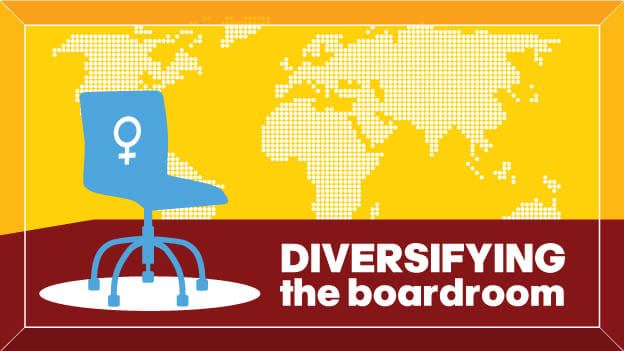
At the People Matters-ACCA round table on Boardroom Diversity, leaders talked about challenges in diversity initiatives
There are at least 20 women Presidents and Prime Ministers in the world, with seven of them from the Commonwealth Group of countries. It is rather unfortunate that we don’t see this kind of diversity at the workforce even though there is a perfect business case for it as diversity not only impacts the business but also the community. Even many studies have proven the effectiveness of women in the workforce and how by being in the senior management they contribute to increasing the effectiveness of the Board decisions. But, all these developments have not led to a dramatic increase in the number of women in the workforce.
People Matters and ACCA organized a round table on the topic ‘Boardroom Diversity: Making it Possible’ in Gurgaon on June 25th at the Leela Ambience, which was attended by many HR leaders across the spectrum of industries. Lucia Real-Martin, Director, Emerging Markets – Asia, ACCA, was the keynote speaker. The round table discussion focused on key issues that organizations face today to bring a balance to the leadership at the board level and also how organizations can move towards achieving sustainable progress in women’s leadership.
Real-Martin talked about various topics such as why it is necessary to have women on Boards and senior management, the impact of Board diversity and sustainability of succession pipelines. She shared some of the global best practices in diversity with the participants and also some key findings of the ACCA and Commonwealth Business Council Women Leadership Report.
Gender disparity
Gender equality not only affects the community but the overall economic progress. Hence, it is a very realistic topic that affects the bottom lines of organizations. Addressing diversity would help companies keep a check on the volatility with regard to gender issues like power shift, disparate wealth and disruptive business models.
“According to the Global Gender Gap Report though women comprise 49 per cent of the population, the working population is only 14 per cent. If rest of the women are not part of the economy, then we are missing out on something. Education has had an enormous impact on increasing the number of women in the workforce across the world. However, there is a still a great disparity at the grassroots level and at the ceiling. There are still very strong barriers that women have to go through,” Real-Martin said. The Global Gender Gap Report was the result of a collaboration between the Commonwealth Business Council and ACCA.
By 2020, there will be 870 million women. Though the number of educated women and the quality of education has increased, it is necessary for companies to intervene and get more women on board. In countries UK and Australia, 35-45 per cent of women are in senior positions and that number decreases to 15 per cent when it comes to the Board. Real-Martin said companies need to have at least 30 per cent diversity in the senior management team or the Board for it have to an impact. About 57 per cent of the female directors have a finance background. The more the diversity, the better decision-making becomes as it allows for improved governance in organizations and also leads to more rigorous and challenging discussions. Research indicates that having diversity allows for more innovation as women naturally ask more questions.
Deepak Bharara, Chief Human Resource Officer of Lanco Infratech Ltd, said a lot of issues were cropping up in terms of diversity. “We Indians have a typical mindset, which is more power-centric. That does not work when it comes to cultural integration. We need to respect people’s views and emotions and the more we do that, the more we can leverage them in terms of their potential, their performance and value system,” he said.
The absence or presence of women at various levels of the organizations was what separated companies that were doing very well in terms of revenue and those that weren’t, according to an ACCA research. In some organizations, women stopped growing by the time they hit middle positions, while some at the Board level.
“A lot of studies have indicated that a good gender ratio is great for companies. Also, in these companies, there is a prevalence of strong ethical practices. There was a clear differentiation in the way the organizations operated,” said Kavita Mathur of Associate Director- HR, Ernst & Young.
Today, women comprise 40 per cent of the management, 7 per cent overall and only 5 per cent as directors on Board. Women are shy about their achievements and this is one area that they should learn from their male counterparts. It is far less damaging for a woman to step out of the career than it is for a man. Though a lot of women are entering the workforce, an equal number also leaves the workforce.
With the new Company Law to take effect on October 1, companies are under pressure to nominate at least one woman to the Board. The picture is grim. Out of the 1,500 publicly traded companies, 966 do not have women on Board. Out of the 9009 Board members, women comprise only 597. The huge disparity in the figures are affecting companies already and they are not able to draw in the diverse experience of the workforce.
Many concerns were raised by the participants at the round table, including the mindset of the Board in dealing with succession talent planning. One of the participants said women’s priorities change after they reach the age bracket of 35-40. Summing up the problems faced by women, Rakhee Malik, Head – HR at A.T. Kearney India, said three things go hand in hand in the case of increasing gender diversity in organizations. “One is the family support you get, second is how you see yourself growing and what the organization can do. It all starts from the socio-economic set up and the family support a woman gets whether it is for education or while working. The second aspect is what kind of facilitative environment they get in the organization that ensures there is enough flexibility and nurturing. If I, as a woman, feel that I have to take some time off to support my family and the organization feels that investing in me is a waste of time, then it would completely demotivate me and whatever little enthusiasm I would have would completely go away. So while there are some best practices in some organizations, we would need to bring in the right passion and be honest about what we want to do for the woman employees. The third and the most important aspect is the self-imposed barriers in terms of why they can or cannot be successful. A lot of women don’t take up projects as they think ‘it is a wrong expectation for me to have, it is against the cultural norm, I can’t put myself before my family’.”
What needs to be done
The round table participants talked about the relevance of sabbaticals, work-life balance for both men and women and how to make business leaders more amenable to change in the talent pool. Exhorting companies to be more open towards women taking sabbaticals, Bharara asked, “Can we look at certain positions where women will be able to do part-time employment and still fulfil their aspirations?”
Agreeing Karin Bamji, Head-Training, Serco Global Services, said companies have to empower women, coach and mentor them. “This is something that our organization wants to do very actively. We are already doing that in terms of mentorship and buddy planning. We lose a lot of middle management. It is not just the women, but also the men that companies need to focus on.”
Sameer Khanna, VP and Head-Human Resources of Ericsson, said the company was running sensitization programs for both men and women to remove some of their deep-rooted prejudices they might have. “We are pushing the boundaries on flexi working and have a work environment that is more open and conducive for women employees to work within Ericsson. With a focus on measurement, our effort is to ensure that the diversity ratios are maintained at all levels in the organization,” he said.
The more ambiguous your performance expectations are, the more difficult it is to be flexible with your resource, said Vivek Dwivedi of Director India, Organization Development & Learning of Honeywell. “If you get your business leaders to be more amenable and accepting of your talent moves in general, then you are in a good place. You need to get your business leaders to be able to juggle with the talent pools, move them across one business to another, one function to another, then the acceptability is higher,” he said.
In conclusion, though the challenges are many, with a little help from the top and a shift in the focus to the welfare of the employee—be it man or woman—helps the organization to restore the diversity balance in the workforce.
Topics
Author
Loading...