







HR Technology
The human-machine dilemma





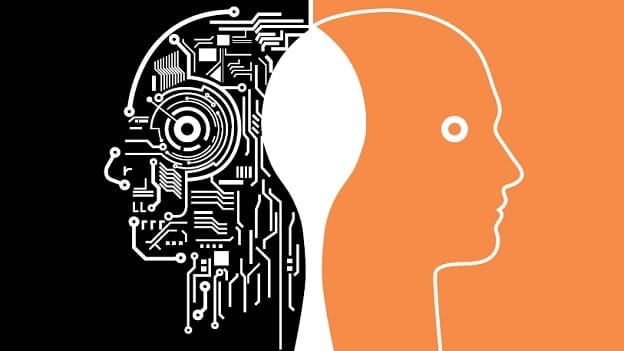
Impact of automation on jobs and the future of work
When IBM’s supercomputer, Deep Blue, defeated the reigning world chess champion Gary Kasparov in 1997, it fuelled the already burning conversation – ‘Can machines be smarter than humans?’; ‘Can machines replace humans?’. For this wasn’t a machine from the industrial revolution which was capable of doing mechanical work like lifting heavy material or pulling metal worth metrics of tons, this was a machine with cognitive abilities. Albeit programmed just to play chess, it was a big reminder that machines could be programmed to think and act like humans. Knowledge work, something on which humans had a sense of entitlement, could now be automated.
Almost two decades since the ‘Man vs. Machine’ chess match, automation of knowledge work has been recognized by McKinsey as one of the 12 Disruptive Technologies that will reshape the future of work.
Organizations are widely using machines with artificial intelligence capability at the workplace, indulging in activities that couldn’t have been expected to be done by machines a few years ago. With this development, a school of thought lamenting the threat of automation to jobs has emerged. Take for instance World Economic Forum’s Future of Jobs report which expects 5 million jobs to be lost by 2020 owing to technology.
This reinforces the two-sided discourse surrounding digital advancements of businesses and the fourth industrial revolution – A positive for businesses, but a negative for jobs.
In the October 2016 Cover Story, we look at both the sides of the argument.
Read the argument in favor of automation here
(Argument which doesn’t project automation to have a negative impact on jobs)
Read the argument against automation here
(Argument which projects automation to restrain job-creation or eliminate jobs)
Topics
Author

Loading...