







Leadership
Always hire better than yourself: Deep Kalra





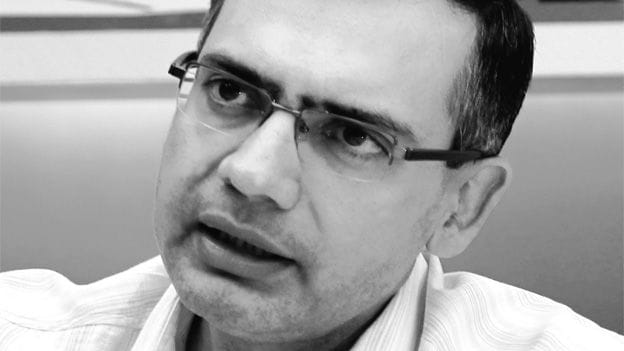
MakeMyTrip Chairman & Group CEO Deep Kalra on golden rules of entrepreneurship and lessons from a startup's evolution
Q. How are ground rules changing for entrepreneurs and what does this mean for HR?
A. I am not an HR guru, but every entrepreneur and HR professional needs to know that startups are getting younger and so must HR. When I started my career in 1992 after just graduating from business school, the leading, first-generation entrepreneurs in India were companies like Infosys. For me, people like (Narayana) Murthy and Nandan (Nilekani) have been a role model since then. These folks were in their 40s when they got going with their company. By the time I started out with MakeMyTrip, it was 2000. A lot of the companies were coming up in India and overseas and entrepreneurs were in their 30s. Sanjeev Bikhchandani (another person I look up to a lot) was in his 30s or perhaps a little younger when he started Naukri. Now, the most successful entrepreneurs, like Mark Zuckerberg, are in their 20s. Sergey (Brin) and Larry (Page) were in their 20s too when they started Google. We also know Bill Gates was a dropout and so were many other folks. So the fact is recent startups, so many of which have become great companies, are very young in every sense. The founders are young and people who join them are even younger. New-age companies are so young that I think the HR needs to change as well. HR needs to stay young and maybe metamorphose a bit to stay in tune with the changing times.
Q. What is the most important thing you have learned as an entrepreneur?
A. One of the key learnings I have had, not just at MakeMyTrip but in the years before, is that failure is important. When we are successful, we all know it’s heady. You come number two at Great Places to Work or get listed at Nasdaq, you get carried away and stop learning. When you fail in anything, even in a product launch or a speech or presentation, you actually sit back and think a lot. That’s a great time to learn.
I failed spectacularly before starting MakeMyTrip in a company called AMF Bowling; I was crazy enough to bring the sport of ten-pin bowling to India after a banking career. I tried very hard for more than four years to make it work. Against a target of 2,000 lanes, I managed only 200. I learned how hard it is to get people to put up money for large projects, and how difficult it is to find genuine businessmen who are not looking for only joint ventures.
It also taught me a lot about resistance and commitment. When I started MakeMyTrip and saw the dark years afterwards, I didn’t throw in the towel. There is a big stigma associated with failure in India, but it is changing now. Some of our prospective hires say, “I ran a startup and it didn’t work.” Some don’t use the word “failure”. But the young people, especially IIT alumni, say “I ran a failed startup.” We just love to hear that. They have admitted that they’ve failed and learned so much and now they’ve joined hands with us. I also learnt to have discipline during depression.
Q. How does an entrepreneur maintain this discipline in hard times?
A. A year after starting MakeMyTrip in 2000, we had what I call our triple whammy. First, 9/11, which pretty much ended the world of travel for a while. Second was the dot-com crash. All of our funding dried up. “Dot com” became a bad name. We even contemplated dropping “.com” from MakeMyTrip. Finally, the SARS epidemic killed travel even in Southeast Asia and the Far East.
I had two very senior guys who eventually became co-founders. We sat in a tiny mezzanine in Okhla Phase I at Rs 11 a sq ft — clearly the cheapest real estate you’ll find anywhere. It was really tiny, but we had a lot of fun.
We started talking about existentialism a lot and when you do that, you actually cannot focus. Every other day we would ask ourselves: Are we going to survive? Finally we decided to keep the last day of the month for that kind of discussion, go out for a drink or whatever, but would focus on work for the rest of the month. The discipline helped. We got in every morning at 9 am or 10 am and we never left before midnight. We had to get a job done. So for two years of slogging, 18 months of no salary, both these guys took big cuts and became co-founders. My past failure played a big role. It came down to the fine line between stubbornness and perseverance. Stubbornness is when you’re blind to logic. Every entrepreneur has got to be stubborn. But perseverance is a better form of stubbornness; it’s when you also listen to logic.
Q. What has been your biggest learning in terms of hiring?
A. The biggest learning has been: Hire better than yourself. It’s so simple and, guess what, nobody does it. What really confounds me is why entrepreneurs don’t do it. I understand why managers don’t. They’re insecure, or the organization has not given them the security to go out and hire better than themselves. If the organization is genuine and gives senior managers the confidence and real commitment to hire better than themselves, asks them to become redundant and gives them the security of bigger roles, then that’s a great company. But when entrepreneurs don’t do this, it’s shocking. Entrepreneurs get insecure! They don’t want to sound and look silly.
Ours is a leadership team of 12 — 11 in India and 1 overseas — and each of them is better than me, not only in their own areas but in others too. If they weren’t, they wouldn’t be on that leadership team. It’s a pleasure to learn from guys in their 30s. In fact, I want to get guys in our leadership team who are in their 20s, because the amount we can learn from these guys is incredible. It’s a different world.
Q. How best does one leverage the talent in a company as it grows?
A. There are guys who are great startup people, but they’re not very good scale people. And they are definitely not very good people when you’re looking at a mid to large-scale company, but they’re phenomenal at the startup level. Then I saw the contrary: Phenomenal scale guys and large-scale guys, as we call them, but terrible startup guys. There are very few who can perform well at all three phases of evolution of a company. The all-rounder, your startup guy; give him anything and he will take it; give her anything, she will catch the ball and run with it. They don’t always scale up.
It’s also good to bring the specialized people in. One needs to refresh the organization all the time, especially the leadership team. But you need not discard the older folks. Some companies like Airtel have done a great job with this. I’ve heard Sunil Mittal talk about this: His older folks are still in the system doing new projects because they’re startup people. Put them in those kinds of jobs. If you’re going to do MNA or data analytics, you will need super-specialized people. So there are horses for courses, and we need to accept that.
I was slow at learning this. It’s really difficult to find creative people with an ability to think out of the box. But I would kill their creativity without realizing that they, in fact, were the scarce resources. Let the structured guy do that which requires his ability and let the creative guys be mavericks.
Q. Of these different types of employees, which type would you value the most?
A. Most Valuable Player (MVP) is a term used in all kinds of sports. I feel an organization’s MVP is the one who irritates you the most at work, gets under your skin, makes you feel look silly and small and takes you on in arguments in front of the board till you turn red. This person is not only your alter-ego but also the MVP. So you need to nurture such an employee because he or she is actually helping you better the decision-making process of your company. It is not easy to get them, but when you do, hold on to them. They’re not afraid to disagree with you even on a daily basis.
Q. Does an entrepreneur face a time when he might have to step back from his role?
A. Founderitis is a disease when founders believe they are invincible and that they should remain the founders and CEOs forever. That’s not going to be, because everyone’s got a best-before date. Founders need to understand that they are not going to be the horse that can run every course. There’ll be a point of time when you will have to hand it over to someone else. Last year I handed the baton of CEO for India to Rajesh (Magow). It’s the best decision I made. Rajesh is phenomenal. So beware, because the moment you let this disease set in, you kill the ambition of deserving people and become a lala-culture company where you will never be able to attract quality talent.
Q. What is the secret recipe behind MakeMyTrip’s reputation as an employer?
A. If we do have a secret sauce, it’s keeping things simple, being very transparent and open and being very honest. So when we hire people and when we make promises, even if they’re done verbally, they’re followed up. I don’t think there is even one person who has worked with MakeMyTrip or outside, who’ll stand up and say: “I’ve never got my due.” It doesn’t matter if they quit or if it’s a full and final settlement, or even if it’s some RSU (Restricted Stock Unit) discussion in passing, it’s an ethic for us that everyone gets her due. Second, we uphold meritocracy. If you’re good, you will rise; nothing can stop you. Even though we’ve become a 1,200-person company, each of our leaders is an ambassador of that culture. I interview extensively each of our leaders. So does Rajesh. Yuvaraj (Srivastava) joined us last year. He met each of us at the leadership, and each one of us has a veto, but everyone had to say yes. We try to keep each discussion civil; we try not to double speak and that really works.
Topics
Author
Loading...