







Leadership
From Meditations to boardrooms: How Marcus Aurelius guides modern leaders





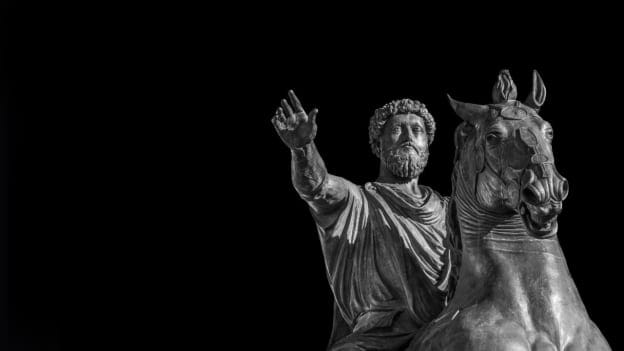
Meditations by Marcus Aurelius offers timeless wisdom for today's leaders, emphasising courage, discipline, justice, and wisdom. Learn how his stoic philosophy can guide modern leadership.
The world is being ravaged by two wars, economic inequality is at its highest, and we are teetering on the edge of a climate catastrophe. We look around, and it is evident that a crop of belligerent, self-centred, myopic leaders who believe in an eye for an eye has unfortunately played a big role in getting us here.
Marcus Aurelius lived close to two thousand years ago and is among the greatest philosopher kings the world has seen. His reign, when the Roman Empire was dominant across the world, was characterised by a period of peace and stability. He was an honourable exception to Lord Acton’s later day saying, ‘Power corrupts, and absolute power corrupts absolutely.’ Aurelius’ journal ‘Meditations,’ which he wrote to himself as a private diary for guidance and self-improvement, has the essence of stoic philosophy and should be mandatory reading for today’s leaders. Written in Greek, it is a philosophy that is action-oriented and supremely practical. At the core are four principles – courage, discipline, justice, and wisdom. Some replace ‘discipline’ with ‘temperance/moderation,’ but broadly, they address the same aspect of self-regulation.
A good example in recent history of a leader displaying the stoic philosophy was in October 1962, when an American spy plane photographed nuclear missile sites being built by the Soviet Union in Cuba. American President, John F Kennedy, was under severe pressure to act fast and launch an air strike and an invasion. After wide consultations, as the world waited for thirteen long days, he decided to place a naval blockade around Cuba. This "quarantine" prevented the Soviets from bringing in more military supplies. Kennedy had chosen to remain calm and achieved a peaceful resolution with Khrushchev, the Russian Premier. Courageous leaders are not hasty; they make space for solitude and reflection. They know that between the stimulus and the response, there are precious moments.
Marcus sought out and benefited from many mentors. Antoninus Pius was by his side for 23 years, and he learnt a lot from him, particularly ‘the value of peace and the management of finances.’ From Maximus, he learnt ‘cheerfulness in all circumstances, to do what is set before you, and never have a bad intention in all that you do.’ From Catulus, he learnt ‘never to get angry.’ From Diognetus, he learnt ‘not to busy himself about trifling things and engage only in what is necessary.’ From others who remain anonymous, he learnt ‘to want little, to work with his own hands, and not to meddle with other people’s affairs.’
Today’s leaders can learn important lessons from ‘Meditations’. It is said that Nelson Mandela read it while in prison, and many of his later sayings were representative of the stoic philosophy. Bill Clinton re-read it every year. General James Mattis was a firm believer in the stoic philosophy and carried a copy of this book to maintain his emotional balance, particularly during the Iraq War. The world needs ascetic leaders more than ever before - those who know when enough is enough.
Topics
Author
Loading...