







Leadership
Great leaders are great followers



 ||
||

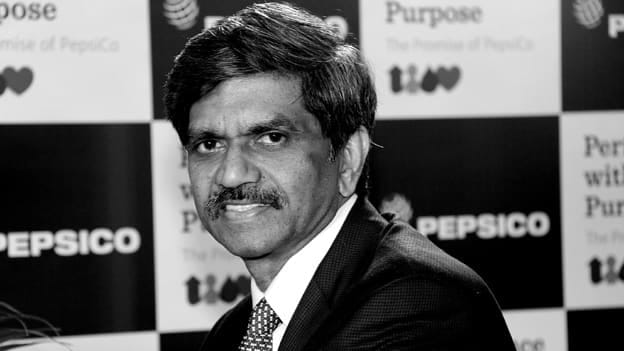
D. Shivakumar, Chairman & CEO – India Region, PepsiCo, talks to Esther Martinez Hernandez on mentorship and more
Q. You have worked across different companies in different industries. What makes a successful company and what are the ingredients of a successful CEO?
A. The principles of business are very similar irrespective of the category you are in. The principles of profit, of innovation, of people management, of putting the customer first are all the same.However,the characteristics of an industry are different. For example, the characteristics of a beverage industry will be very different from the characteristics of a Telecom industry. So, while the characteristics of a business might change, the principles remain the same.
During my tenure and experience in various companies in India, Middle East and African emerging markets, whenever I went into a company, I just looked at three things: One, Is the company gaining market share? If you are getting market share, then you are doing something better than competition and hence your productivity would be much better. The second thing that I look for is employee engagement and productivity. If employee engagement, productivity and the trust in the company is very high, then you get much better return on investment in people. Hence, that is one of the best ways to actually reduce costs. Most people look at reducing costs as a one-way act of cutting. I would like to recommend to HR managers to think of improving productivity instead of cutting costs. The third one is cash flow. You have to ensure that you are making enough money.
Q. How would you relate that to the key ingredients of a successful CEO? How has your CEO journey been?
A. I have been a CEO for 11 years now… that is about 40 per cent of my career. The CEO’s job has changed significantly in the last 10 years. Delivering results and meeting targets are the day job, but a CEO’s role has gone far beyond that. It has become a digital world, one with very young employees and high attrition. You are in a world where you are competing for talent. A typical CEO leads a team of about 8 to 12. If you don’t know half the functions well and you can’t add value to that, you won’t get the respect of your own team.
So, grooming a future CEO and giving young general managers big breaks are very important for HR people. In the 80s, the early general manager jobs were given by large multinationals like Hindustan Unilever. I was a general manager when I was 32 and it was a huge empowering job. The next wave came when companies like PepsiCo arrived. After that, it was the telecom sector. Since the sector was divided into circles, you had young general managers handling businesses of Rs 2,000-3,000 crore. To me, a big conglomerate or any other large company must think about how to give young people general manager exposure. That’s the grooming, the start to ensure that we are producing great CEOs of the future.
Q. What is the role of the coach or the mentor in the process when big responsibilities are being handed to young people? How does the coach or the mentor support the learning process to help the person grow?
A. You can pick a coach, but you can’t pick a mentor. A mentor has to pick the mentee. You can go to a coach to correct the obvious details like disciplines and the structural part of your job. On the other hand, mentorship is a completely different ball game. I have been extremely lucky that right through my career I’ve had wonderful mentors and I’m really grateful to them. People like Mr K. K. Sridhar, Mr Anand Bhatia, who was my managing director when I was a brand manager, Dr Ganguly, Mr Balraman, Mr K.K. Dadi Seth, Mr Damodaran, the ex-SEBI chairman. There are a lot of people who just through interactions have played a role.
Q. What have you learned from your mentors?
A. One of the things that I have learnt from a lot of my mentors is that always put the institution first, the team second and the individual third. If the institution wins, you win. If the individual wins, the institution doesn’t win. The other thing about mentorship is that they tell you what are life’s good lessons and tough lessons. Life is like an airplane journey, say from Delhi to London. There will be a few pockets of turbulence but that doesn’t mean that you jump out of the plane. You fasten the seat belt, you stay firm and have the confidence that you will land.
Q. How do you create a culture of mentorship?
A. I believe that the whole concept of changing a culture through mentorship or investing in people down the line cannot happen with just the CEO. It cannot happen with the CEO and his management team. It requires the top 10 per cent of the managers to do it. If you are serious about mentoring and development of people, you have to ensure that none of the operational stuff comes in the way. For example, if there is a training program scheduled for the sales team and they are not doing so well in terms of revenue, then you should have the guts to send the team for training and development despite all the challenges that you encounter.
Q. You have handled more than 34 brands in your entire career. How does an organization build an employee value proposition and how does a mentorship culture plays into that?
A. A culture is a very important thing and I feel that a number of people in India get the concept of culture wrong. Culture is the smell of the place. When you go to an office, you can figure out what kind of culture they have. You can’t fake culture. Culture is actually the emotional alignment of the organization. It has to do with values that you would die for. It is really important if you want high quality talent working for you. How do you build a culture? It is being clear about what you do and what you won’t do. Don’t go beyond the point of symbols. For example, I may be wearing a tie and a suit, but I may be a very informal person. A good culture takes a long time to build and it just takes a few instance to become a bad one.
Q. What keeps you awake at night?
A. There are two reasons why companies fail: One is arrogant leadership. So the first thing for any CEO is that you must stay rooted all the time especially in a hierarchy structure like India. To remain grounded is one of the greatest things you can do to yourself as a CEO. The second reason why companies fail is the ability or the inability to learn or unlearn. So what keeps me awake at night is my ability to learn and unlearn, my ability to provide strategic direction to the people, my ability to connect with the rest of the organization. The definition of great leadership is the same, but the practice of it is very different.
Q. You talked about time management. Is Shiv a 24*7 CEO or do you have a personal side where you enjoy doing some hobby?
A. An organization cannot give you work-life balance. You have to give yourself that. The individual has to think deeply and decide what matters to them. To me my work matters, not in the sense of money but I want to do a good job. Indra (Nooyi) and Sanjeev Chandha have trusted me and want me to do this job. I shouldn’t let them down. So when you think of leadership, I also want people to think of followership. Followership is about backing your boss, getting the details right, ensuring that the job is done, to ensure that the ship is in place. Great leaders are great followers. That’s a very important aspect of the job. I will not be a great leader if I’ll not be a great follower to Sanjiv and Indra. That’s one aspect.
The second aspect of it is that I like to watch sport, read and I also like to teach. I need to balance my time, it’s my call entirely. No company can dictate how I should spend my time and as a leader I can’t dictate the choice to anyone who works for me. You will talk of work-life balance when you are not happy with your work. When your work is a hobby, it doesn’t matter. But, if you are not happy with your job, then there’s conflict. In this world of high attrition, never leave a company when you are unhappy because when you are unhappy, every choice outside looks good. You should always leave a company when you are very happy because the choice outside will be brilliant.
Author
Loading...