







Leadership
People are interested in what you do, not what you say



 ||
||

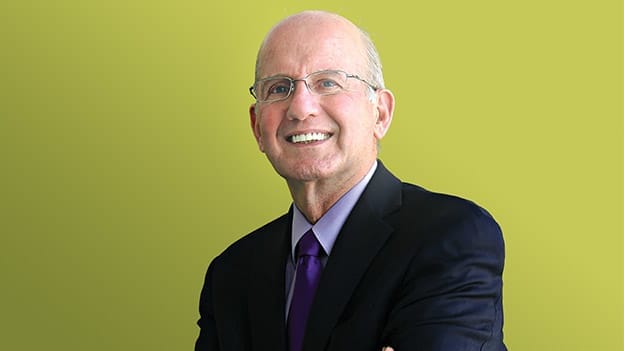
John Ryan, President, Center for Creative Leadership, talks about polarity management, matching actions with words and more
Q. You’ve had a very interesting career as you’ve worked in very different fields. So if you have to pick up one key leadership learning in each one of those stages, what would they be?
A. In my first job, I spent three decades as a US Navy pilot. I learnt early on that the most important thing was to be authentic because in the military if you are a pilot, you are not going to have a wingman unless they trust you. I let the men and the women know that I was privileged to lead them and that I was interested in their personal & professional development and welfare. That was fundamental. In my second career, which was in higher education, I learnt the value of listening. It was very different in context and culture than the military and it was about showing respect to men and women, particularly faculty members who spent 30 years in a business school or a medical school. The most important thing I did there was I considered myself to be the Chief Listening Officer. In my current role as the President of the Centre for Creative Leadership and also a member of some prominent boards, I think I learnt the cycle of the business language, the sense of urgency, the importance of not just the long term but the short term. It is what we call polarity management where it is a spectrum between payroll or serving the client and the perspective of the long term also. It’s constant balancing. You have to manage a perspective and manage those polarities.
Q. Tell me more about polarity management as you didn’t have to do that so much in the other two roles.
A. What you need to do as a leader is that you shouldn’t let one group trap you. Some people have to answer to the shareholders and stakeholders every 90 days be it in the US, India, London or Addis Ababa. You are not going to be around for the long term if you are not going to focus on the sustainability of the organization. It is important not to be trapped by particular interest groups, whether it is people who are buying or selling our stock every day or if it is the people who are investing in your long term. They both have an important role to play in making sure you handle that context on a long term basis.
Q. What was the most difficult learning for you when you moved to a business role?
A. It was on how to handle margins. Margins are important and you have to maintain it by not being a commodity but being something that offers value to the client. The thing that I learnt, which was invaluable about the business world, is they are the best people looking and listening to the client/customer and saying what is it that the customers values. Sometimes, in the government or higher education, we forget who the real customer is. I don’t want to speak for the Indian politicians but I know in the US we sometimes forget that. The business world is good at teaching us that we need to understand what the client or the customer values and deliver that in a quality way.
Q. Who were your mentors and what did you learn from them?
A. I would not call them “mentors” but “role models” – My parents. All my life I had watched two people whose words and behaviors matched. My father died first about six years ago and the last word he spoke was my mother’s first name. That was symptomatic of his whole life, which was he asked you to have certain values and live those values. I think many of us are fortunate to have parents as role models and we shouldn’t forget that. They are not the people who are on the front page of the Wall Street Journal, but they are the people who make life better. And so they were the two of the most important people in my life. I have worked for a number of presidents, generals and admirals in the US and you admire and respect them for many reasons, but usually it is because their behavior matches their words. The best leadership lesson I have learnt is people aren’t so much interested in what you say; they are interested in what you do and that’s how they judge you on whether you are authentic. And unless you are authentic, you are not meeting anyone. You might be in a position of power where people are complacent, but whether they are engaged is another story altogether.
Q. You talked a lot about learning agility. Is learning agility a foundation skill that is required today? Why is it more important than other skills?
A. I would define learning agility as learning from experience rapidly in a contextual way. We’ve always had to be learning agile. The reason why I think it is more important for people today is because we are now in this global economy where things are changing rapidly and we don’t have control over many of these things. We need to be able to learn from these experiences and rapidly with precision apply the context in which we are working. We don’t control this VUCA world (Volatile, Uncertain, Complex, Ambiguous). We have to live in it and the way to prosper in it is to learn from our experience every day from our coaches, colleagues, customers and how can this apply to a business or university environment where people matter. In this stage of volatility and uncertainty, people become the key to the future. Leaders make the future, but only if they stay learning agile. You must be someone who is willing to challenge the status quo, someone who is willing to learn from your experiences and experiment, someone who is comfortable being uncomfortable because that’s the world we live in. The good news is these are skills that can be learnt and improved.
Q. Are there some personalities who are more adept at learning agility or is it a skill that can be acquired by everybody?
A. Anybody can be more learning agile, but it does start with what we call the growth mindset. In other words, John Ryan doesn’t think that he can only be good as the DNA he had from his wonderful mother and father. I think I can build on the DNA by having an idea that “I can get better”, “I can learn”. Some of us have what we call a fixed mindset and it is not dependent on cultures but is dependent on “I can’t do this” or “I might embarrass myself”. In some cultures, you don’t want to show that you are vulnerable, but you have to be more comfortable being uncomfortable. People with the growth mindset would say “Okay I made a mistake but I’ve learnt from it”. I want to hire people like that. Things are changing so rapidly that none of us are going to get anything right.
Q. Will culture come in the way of learning agility?
A. I think culture can be an impediment, but it is not something that can be permanent. If your colleagues feel that it is okay to try and experiment, to get out of the edge of your own personal envelope and be uncomfortable and if you encourage that, it would override the national or the religious culture and get people more comfortable. It is very important for leaders, middle managers and supervisors to let people have that freedom. That is the key to the future.
Q. What are the business challenges that you see emerging in 2014?
A. I’m cautiously optimistic, but I think it would be a roller coaster. We are convinced that leaders make the future and I’m talking about leaders at every level in the organization. Therefore, it’s critically important that the managers and leaders focus on the development of the men and the women that they are privileged to lead. Overall, I see a very positive environment coming forth in general.
Q. Any advice for Indian business leaders for 2014?
A. I think there are incredible leaders in this country. I’ve been coming here for 20 years and I see the entrepreneurial spirit getting deeper and greater every year. If I could offer one thing and it is with great humility that I say this: We should all focus on the men and the women we are privileged to lead and figure out how we can draw out their abilities in the coming year and if we do that, all organizations will grow and prosper.
Q. What is the one thing to get that right?
A. The one thing to get that right is the judgment. I’m privileged to have met a lot of good leaders, but the great leaders are the ones who have this diagnostic ability, a large leadership repertoire and they are very clear and unambiguous in their communication. If there is one thing that they have to get right, then it is people judgment. The best thing they can do is to hire people who have been responsible in the past and who are looking for greater responsibility in the future and are people oriented. A businessman has three areas to focus on: People, Strategy and Operational Execution. My experience over 45 years is that if you get the people right, whatever your strategy or business operations are, they will execute that in a wonderful fashion. You can have a great strategy and a great business plan but if you don’t have the right people at every level, you will have a lot of work on your hands.
Q. What is your impression about the HR community in India?
A. At People Matters event, I saw HR professionals who are really engaged in their work, who love their work and most importantly they want to get better. I think that is important for all of us. We are all in a learning journey and if we stay engaged and we have the growth mindset it would augur well. I think HR managers in India are really becoming good partner of the line managers and business operators and that makes them even more valuable. That is something we need to do across the world.
Q. What is the role of HR to get the men and the women to lead into the future?
A. I think the role of the HR should be to draw out the talent in all of us. The role of HR is important because they are people who express interest in the personal and professional development of all individuals in the organization. That is more meaningful to me. I think HR professionals are key to enhancing engagement in all the organizations in India.
Topics
Author

Loading...