







Leadership
The man who never takes no for an answer





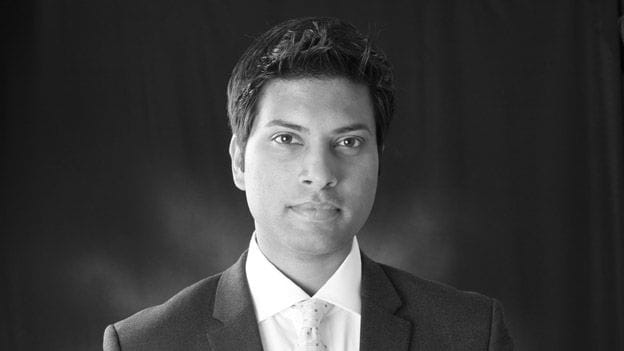
Mittu Chandilya, CEO of AirAsia India, talks about his intellectual curiosity and why he doesn't take no for an answer
You did not have any experience in the airline industry when you were roped in by Tony Fernandes to run AirAsia India. How did you make up for the lack of experience?
I started my career by starting my own company in the US in the FMCG space. It did well and we ended up selling it. After that, I was in charge of global M&As for Ingersoll Rand and ultimately ran the US market for one of their divisions by managing the P&L and mature businesses that we managed to turnaround. Then, I moved to China where I managed Asia Pacific for the business unit. I lived in China, Malaysia and Singapore and was working with teams in 17 different countries, with a (direct and indirect) workforce of 6,000 and 12 factories in the region. When I joined Egon Zhender, I went from being a people leader to a being a consultant. These roles needed a lot of agility and a lot of different skill sets. I think I have learnt something in each one my career and life experiences that can even be used here at AirAsia India. One of the things that I have always prided myself in is a lot of prep work. As a consultant I used to learn everything about the company situation, read through every annual statement they had, every operational statement they had made, review everything, talked to people, even before I approached the client and started talking to them. The idea was never to tell them that “Look I know everything about your business” but rather to say that “I know enough about your business and this is where we can have a dialogue and I can give you my perspective around people, strategies, expansion and industry best practices where we can create something together”.
This approach has been consistent throughout my life experiences: It is just the hunger to learn. I’m driven by intellectual curiosity. The moment that dries up, I’ll probably get very bored. So, if there is an impossible task or someone says it can’t be done, I’m really motivated by that. I make sure I read, talk to people and industry experts and get knowledge from different parts of the world. I’m doing that not just to acquire technical knowledge, but to be able to sit in a room with experts & professionals who have done this for 20 years and know when to bullshit. In a similar manner to be able to challenge my own team who say it can’t be done. I think I know just enough to be dangerous where I can kind of push the limit and motivate people to accomplish the impossible.
Do you look at people or leadership with the same unconventional lens?
Absolutely! Every one of my hires was recruited for attitude, passion, personality and potential. It’s not being the best on technical knowledge. You’ll be surprised to know that 70 per cent of the staff in our company don’t come from aviation. Jobs like safety, flight ops and engineering are all from aviation but mainly at the senior and middle levels. At ground levels, we bring in people and conduct a lot of trainings. I can train staff on technical requirements but they need to have the passion and ambition. The whole idea is that they have enough of a support system where they can grasp all the technical knowledge and learn aviation lessons from leaders who have done it but bring in enough fresh perspective and push the system. What I am trying at AirAsia India is to make people feel like it can be done. The word “no” does not exist for me. Our motto is: Dream the impossible, believe the unbelievable and never take no for an answer.
How do you create that kind of culture? Do you think it stems from you showing the way or is it organizational where everybody pushes the envelope?
I believe it fundamentally starts from the leader. The leader needs to exude the never-say-die attitude and lead by example and that is especially critical in a start-up mode. I’m very passionate about spending time with my 400 employees at all levels to exude the same sort of energy. I constantly push my teams to try new things and I hope that they too will do the same with theirs. To do that, you need to hire people with attitude, personality and make sure that their dreams and ambitions are aligned with what you are trying to do, where the priority is not just to earn money but to create something or do something quite dramatic. Honestly, my recruitment philosophy is really finding diamonds in the rough. I always look at potential versus experience. I first look for hunger (I would define it as persistent ambition – someone who has the drive and the vision to achieve the almost impossible.) Usually, that vision is set by me but I try to put it in a very tactical and simple which they can apply to achieve their goals and in turn achieve their dreams. The second thing I want is the curiosity that I talked about. It’s not just about how they learn something but how they tackle an impossible task: Do they actively go look for new ideas, seek new experiences and feedback? So, the way they assimilate information is something I look at. Then I look at someone who’s strategic. Even a store manager can be strategic—someone who looks at new information, how we have done things in the past and change to improve for the future. The next thing would be execution. I’m a very impatient person. I get very direct and transparent with my team when they don’t execute. For me, performance matters. They should not fear failure, they need to act fast and implement. Having said that they should learn and ensure not to fail a task again. Execution for me is someone who is detail oriented, and able to drive tactical elements, deliver on the deadline and to innovate and add value to something I have set for them. Finally, for me is engagement. Airlines is a people business. Somebody who is able to draw the emotions and evoke motivation is very important for me.
Your boss Tony Fernandes seems to have influenced you a lot.
I believe Tony and I are very alike in terms of personality, approaches, ambition and drive. When we had our initial chat we bonded. Both of us didn’t come from very privileged backgrounds and we had to work our way up. Our belief in simple terms if we took an additional day to do something, it meant a day of money spent and that really pained me. Entrepreneurial spirit fuels us. Through my life, I have never accepted “No” or the impossible. I think it has to do something with your upbringing and life experiences from a very young age. My parents from a young age always encouraged me to follow my dreams and goals. I used to be a professional athlete and I’m extremely competitive. Tony is very competitive and that really gelled in our first meeting and every time we used to spend time together we are very much on the same wavelength in that way. When you start going into tactical elements, a session with him is like looking at endless possibilities even if you start with a blank canvas. I have always been like this and never looked at my age as a barrier. Tony is a delight to be around and good to work with. It’s impossible not to get inspired by him. Besides Tony and S. Ramadorai to whom I speak to almost every day and is a humbling force I’m very honored and lucky to have all these forces.
Tony announced your appointment on Twitter first. You yourself are social media savvy. How important is social media going forward?
Without telling me (laughs)…I had no idea. I think social media is something you can’t ignore and I would urge most companies and leaders to adopt it. It is a sensitive tool because it ca be a double-edged sword. When things go bad, it can go really bad and it spreads like wildfire. But I don’t think you should be worried about that because ultimately it’s a medium to reach out directly to your customers, stakeholders, people who care about you and hear what you want to say.
What keeps you awake at night?
It’s a good question. At every stage there are different challenges and concerns that you should iron out. Our culture is something I am proud about and keeping it intact as we scale is something I spend a lot of time on. When you are in a start-up mode, keeping the integral foundations of the culture consistent as you scale up is important. That’s a concern because you can do only as much as an individual and this is where your leadership has to grow exponentially. How can you scale the culture from now at 400 employees to 2,000 employees to 12,000 employees? I’m very proud of our culture: We are very direct, open with no hierarchy, people speak their mind and work towards their dreams so there is always a sense of achievement – everyone is here for the right reason.
Topics
Author

Loading...