







Leadership
Transformation in Action: Interview with Na Boon Chong




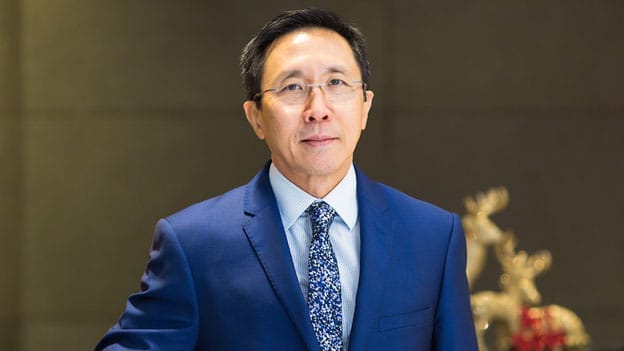
In an exclusive conversation with People Matters, Na Boon Chong, Managing Director and Partner, Aon Hewitt Singapore talks about his own career trajectory, the Asian talent landscape, and the need for organizations to adapt to disruptive technologies
Boon manages Aon's human capital consulting business in Singapore and has more than 25 years of experience of consulting in corporate governance, executive compensation, public sector pay, organization transformation, post-merger integration and talent management in Asia. He initiated the Best Managed Boards Award (a joint study with the Singapore Institute of Directors examining best human capital practices by Boards locally and globally) which is part of Singapore Corporate Awards. Prior to joining Aon Consulting, Boon had a long career with Hewitt, most recently as head of its Singapore consulting operations and APAC practice leader in Corporate Restructuring and Change.
Boon graduated from University of Minnesota and Rutgers University (USA) with a B.Sc. and M.Sc. He is a Certified Compensation Professional with the World at Work, and is a Fellow of the Singapore Institute of Directors. He contributes frequently to boardroom discussions on issues relating to performance, compensation and leadership.
You have had a long career with Hewitt and then Aon. What has been this journey like?
I think I can segment my career into 3 stages. The early part of my career in international HR consulting started in 1989 when projects were mainly transactional in nature like compensation benchmarking, performance management, etc., and we were serving primarily multinational clients. The second stage started somewhere around the late 1990s, which coincided with the Asian Financial Crisis. There was a lot of restructuring of major domestic companies during this time. It was also a period of significant growth for us and we did more end-to-end type of restructuring work. The third stage was when I left Hewitt and joined Aon in 2007, and started HR Consulting for them. We were in a start-up mode as we were building the business from scratch. Then Aon acquired Hewitt in 2011 and I went back into the fold of a large firm. I believe my experience and my work have benefited from the various cycles of the business that I went through.
While you were in that start-up mode, what was the differentiating factor that you found relevant in the context of a bigger firm?
If I were to look back, in a large firm, there is a lot more you can do in HR consulting. You have more offers and tools at your disposal, and you can assess and evaluate their suitability for your client. On the other hand, when you are starting a business, you must be selective in what you want to bring to the market to give your organization the competitive edge over the big rival companies. At Aon, I chose to bring to the market executive compensation services at a time when corporate governance was getting scrutinized and the demand for consulting was accelerating. During this time our competitors lacked the edge, so I acquired the right talent with the right skillsets and increased our penetration within the market. Our model was about developing a unique offer that is timed to the market and then linking that with the right talent strategy as opposed to trying to be all things to all clients.
In your opinion, has there been an overall shift in the mindset when it comes to talent?
When people talk about talent and the importance of talent, I would like to refer to what organizations were doing 8 to 10 years ago, when organizations spent more money on talent during an upturn or cut back spending on talent in the downturn.
Today, business volatility is the new normal, and they cannot go with the same spending pattern. Organizations today recognize the importance of talent and they don’t wait for the upturn to invest on talent anymore. For them, there is never a good time but more of a strategic spend on talent regardless of the economic situation.
There’s a lot of talk on succession planning. It is the number one challenge for organizations in the ASEAN region — they talk about thinking ahead and how to get ready for the future. What do you have to say about it?
Succession Planning has become one of the major issues in the last 10 years and has sort of distilled into the talent management perspective. If you want to get good CEOs, then you need to look at the entire pipeline — from young talent, middle talent, to senior talent. If you look at the role of a board, there are two sets of responsibilities. One is fiduciary, directly addressing the affairs of the company to make sure that they are in line. The second is to ensure that you have the right management team in place to run the business. The latter is where succession planning falls in.
So, why are we only in recent years become concerned with succession planning?
The first reason is boards in Southeast Asia needed to strengthen corporate governance first including audit, risk management, financial control and compliance. These issues are in place now, and hence boards are turning attention to CEO succession, and related concerns such as talent management and culture transformation as business transformation levers.
Then, of course, the maturing of the current generation of CEOs is another reason.
Some of the most successful companies in ASEAN are state-owned or founder-managed. What is the difference that company-ownership brings on leadership strategy?
I would say that state-owned companies have detached and impassive kind of talent management practices; for example, the CEO of a state-owned enterprise might not be there forever because the state might deploy a CEO from one company to another. On the other hand, founder-led organizations are very different and the fit with the founder is very important, therefore making it an emotional issue as well.
So how can you develop leaders and actually move those leaders when it comes to dealing with change and adapting to new technologies. How is that done?
I think this is where we come back down to an open culture, bringing in new ideas into the organization.
One question to ask is: Do we set up a unit that deals with innovation or do we build innovation within our own organization?
I want to mention the example of DBS Bank. It’s well known that they hold periodic hackathons where they invite Fintech companies, who interact with their employees and co-create new ideas. What they are doing is that they are bringing new things into the organization, rather than setting up a special unit to innovate or incubate. They are aligning employees and outsiders, and using this opportunity to develop promising ideas— they then fund the growth of these start-ups while aligning their own employees to adapt to what is happening outside.
How do you think organizations can manage the coexistence of collective ambition and individual ambition?
I think there is always a challenge in this. When talent joins an organization, they need to leave their ego at the door before they enter. For organizations, the first thing is to define long-term goals and identify people with the right competencies. Apart from right skills, organizations need to consider the softer competencies of their candidates, for example interpersonal skills and team work.. Once on-board, then it is a matter of how do we develop the team culture using every way possible to shape desired behaviors. Structure drives behaviors and so it is important to think carefully the roles for the people , and how they must play their roles on a day-to-day basis.
In one of your articles you have mentioned that “Ensuring quality in human capital starts from the top and this is probably the most fundamental risk mitigation tool any company can have.” Tell us more about it.
This was actually said in the context of the changes in business models brought about by disruption and innovation and the need to have the right talent to execute it. Any time you change the business model, you are undertaking a fair amount of risk and you need the right people to help you mitigate this business risk. Organizations need to seriously consider human capital issues and play a bigger role to manage such risks. Managing these risks involves managing the values and behaviors, not just hard skills.
For example, success in digital transformation requires not just people with digital skills and new technologies but ability to collaborate and innovate together in the face of uncertainty and ambiguity. We can see the physical changes in the organization, but we can’t see the cultural changes that are essential to sustain the transformation.
As disruption occurs across industries and economic cycles become more volatile, more firms are seeking a balance of fixed pay, short-term bonuses and long-term split between retention and performance. Tell us how can this balance be attained?
I think that’s an interesting challenge. If your business model is being disrupted and your profit margin is declining, you cannot afford to fund your annual bonus as before, how do you motivate management to stay and fight for the future? This is where we see that there could be a good balance — between the short-term and long-term incentives. If you suffer the short-term pay-out this year because of current performance, you still have long-term incentives to shoot for.
A typical type of performance share plan is that I grant you a hundred shares today and it will be vested in 3 to 4 years’ time, subject to future performance conditions being met. The prevalence of these incentives depends on which market we are in. The volatility of the marketplace and business cycles will also affect the ability to plan the performance targets. Sometimes these performance plans don’t vest at all due to market volatility. Furthermore, a performance share plan of 3 years might not reflect the transformation cycle of the organization. Typically, transformation requires disrupting the business model and requires collaborative effort across the organization and business units to tackle the unknown. But collaboration is hard to measure by KPIs. The reinforcement of collaboration is more about culture and values, and leaders who drive the culture and live the values.
One hand you want to measure, but on the other hand we are putting more emphasis on intangibles like behaviors and values. How can there be a balance?
Measurability of intangibles is a tough task. Let’s see this through the example of the Board of Directors. They find it harder to do this because they don’t work in the companies, they are non-executives and come to meetings only a few times a year; what they do know is that to transform a business in a sustainable way, you need to have a good reading of the culture. Typically, what they would do is to try to take a dipstick — talk to people, etc. and get a sense using observations and opinions, and hopefully, when they add all the subjective observations together, they get something a little more objective because it is coming from different people. That’s why it is important to monitor culture change. A business transformation without transforming the culture is not sustainable. The good news is the measurement of the intangibles such as personality, values and behaviors are getting to be more scientific every day. That is one part of our growing business.
How do you think disruption is affecting HR as a function?
Today, businesses are talking about the digital platform serving the customers. This actually permeates down to HR having a digital platform to serve employees in order to fill out the value chain. If we could digitize dealing with customers, then we should also digitize the employees who are serving the customers. The overriding objective is to get HR department upgraded with services, technology, capabilities, governance and a measurement system. Digital strategy is not just about supporting a digital customer strategy; it is about changing the business model. In that, you also need to have an employee digital strategy. A lot of what you are doing in terms of having digital HR as an integrated platform would enhance the employee experience and enable data analytics. A common problem in most organizations is that HR data is in different places.
Over 50 percent of CHROs in Southeast Asia do not have an HR background, and almost 40 percent of this group has a 'Mixed' background. In your view, what are the positives and negatives of having CHROs with an HR background and without one?
I think everybody recognizes the importance of having the line perspective in HR. The downside of that is that you may not have the HR expertise to manage the strategic and the operational aspects of HR. But I believe that it actually depends on what stage you are in. If your HR practices are pretty mature, that’s where you can get the line perspective in. But if you are in more of a HR building stage, then you may need more of an HR expert and having a line person as a HR head might not work so well. I think it is more about thinking what kind of a person you need for that period. For example, if it’s a start-up stage, you will need an HR expert to come in because you are starting from scratch. But the HR expert needs to be one who could adapt to that start-up environment as opposed to merely importing best practices of matured companies.
Author
Loading...