







Strategic HR
We will have to redefine the work culture





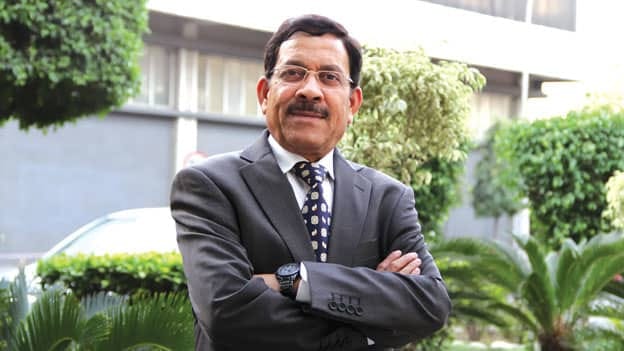
S.Y. Siddiqui, COO at Maruti Suzuki India, talks about challenges of handling a changing workforce during a slowdown
What are the biggest challenges auto companies face today?
The biggest HR challenge for auto companies today is the talent crunch specially highly skilled category. The demand is high while supply lines are short. Getting the right talent and of course retaining them is another key challenge. Thirdly, with the younger workforce coming in at the shop floor level, there is a high potential for conflict in the IR space. We have to readjust to changing times and focus on the engagement of the Indian young workforce, who are skilled and highly aspirational. The big change will be for Corporates to have flexibility & to redefine the work culture for sure as the conventional model may or may not work at all. The work culture will be high on employee engagement and learning. I think strong internal communication channels with the young shop-floor workers will lead to good engagement.
Auto and media sectors have been the hardest hit in terms of lay-offs. Do you see more happening in the future given the current economic scenario?
In the last five years, the auto sector has been pretty volatile. Auto industry growth has been moving between 25 per cent and then crashing to negative growth of -8 per cent suddenly. This volatile nature will bring in flexibility in manpower deployment perspective. When you look at US and Europe, flexibility of manpower deployment is the biggest management tool that companies have used to achieve a competitive edge. I do not think downsizing as it exists in present form is going to be a long-term sustainable model. But flexibility in manpower deployment with a balanced mix of regular and temporary manpower will enable companies to be more productive and competitive and it can also enable short-term employment and skilling in the country. Lay-offs and downsizing obviously affect the employer branding in the Indian context.
Is HR today equipped to deal with evolving IR issues?
I think the focus on IR and ER capability has gone down over the years. However, NHRDN and other bodies are consciously looking at this space now. To a great extent, the IR conflicts had gone down considerably in the last 15 years. However, in the last 5 years the IR conflicts have again gone up in the country. When we talk about successful CFOs, its recommended for a CA to first have real accounting experience and then move on to Budgets, Funding & Finance Strategies. Similarly, for Marketing Heads, the early Field Sales experience is a must. For good HR heads also, handling IR and employee relations perspective will also be a need going forward not only for the manufacturing, engineering and auto sectors but I believe Services, FMCG, IT ITeS will also slowly catch up on this front.
What is the future for temporary workforce in the auto industry? Should auto companies rely on temporary workforce given the current labour unrest?
The auto industry will have to live on the sharp competitive edge hence a balanced mix of regular & temp manpower will be a good way forward. However at the same time Corporates will have to openly look at a competitive compensation for temp workers. While the temp workforce should have the tolerance to move out when the business is down and become the regular talent pipeline for the future. If we follow a professional model, then it will work without any issues. The model should take care of competitive wage and benefit offering; social security cover, supportive work environment & skill building. In terms of this kind of volatile nature of the market, customer preferences and globalization impact, we have to provide for alternative people strategies aligned to new business strategies with a win win principle.
What should HR in auto companies do to prevent such issues in the future?
First of all, start understanding business very closely and then look at forecasting what kind of impact it will have on talent, skilling, retention and engagement and ER perspectives. For example, the demographic shift which India is undergoing was largely unnoticed by HR professionals. Typically, maintaining conventional HR Sub Systems like recruitment, training, compensation and benefits are going to be mundane. I think from transactional HR to a more strategic HR approach at some of these perspectives and forecasting of what is going to impact the people & talent, a kind of trend analysis, looking at HR analytics, making the maximum use of technology in HR functions – that will be the shift for the future.
Author
Loading...