







Performance Management
How HR is facilitating business transformation in GE



 ||
||

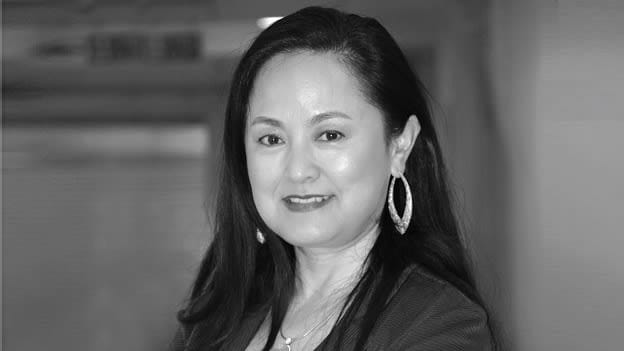
Heather Wang, VP HR, GE Global Growth Organization (GGO)and GE Global Talent Acquisition (GTA) on how GGO is a critical element of GEs long term strategy, building GE synergy, moving to an integrated talent strategy and the renewed focus on becoming a digital industrial company.
Heather (Xiaojun) Wang is the Vice President, Human Resources at GE Global Growth Organization (GGO) and GE Global Talent Acquisition (GTA). With a career spanning 22 years in the organization, Heather has held leadership positions within GE Lighting, GE Capital, GE International, GGO and GE Corporate. In January 2011, Heather assumed the HR Leadership role for GGO, and took the additional responsibility to lead GTA in November 2013. Prior to joining GE, Heather had 10 years of extensive business and HR management experiences, including working for China International Trust & Investment Corp. (CITIC) and AT&T Beijing Fiber Optic Cable Co. She holds an M.B.A. from Rutgers University in New Jersey and is Black Belt certified in Six Sigma.
GE Global Growth Organization (GGO) started in 2011 wherein you assumed the role of the HR leader. What really was the mandate of GGO and what triggered the development of the organization?
The mandate behind GGO was to help GE move faster in markets outside the US and Europe. GE had been growing globally with more than 100 countries contributing to the organization’s revenue. But we realized that we were at a stage where we needed more local capability, which extended to the markets outside US and Europe, and needed to look at the sourcing and localization strategy. We would have been able to do all of these activities at a slow pace even without a centralized platform like GGO, but we would not have been able to leapfrog. That really triggered the need of an organization to advocate globalization. Because when you are trying to shift the gravity from where you have critical mass to a new space, you need a push from the top to make things happen.
Consider a CEO of one particular business, say healthcare or power; the CEO will have multiple things on her priority list, which for example will not necessarily include looking at a country like Angola as a potential market. And it may as well be a missed opportunity. That is where GGO comes in – to think long term, to look at the total opportunity across all GE, and create a balance between short-term business results and long-term sustainability of the organization.
What was the initial big challenge that you had to overcome in 2011 when you started?
GE, by legacy, is a vertical set up that assembles multiple businesses within it. So that makes GGO the first organization which cuts across GE horizontally. The first challenge was to underscore the value of GGO, the need to create it, and the impact it can bring. We had to ask ourselves these big questions. So initially there was some resistance from businesses on what we can deliver. But in its five years of existence, GGO has delivered. It has been instrumental for GE’s growth across regions and building capability of leaders in the region.
What were the main goals that you had set for the group and how far have you been able to reach?
GGO had three priorities – ‘Global growth’, ‘Localization and capability’, and ‘One GE synergy’. GGO’s objective was to penetrate more in new markets. To measure global growth, we kept a count of the number of countries we went to. And we have moved from operating in over 100 countries to about 180 countries today. Another metric to measure global growth was the market size in regions. Currently, we have a better market size in each country. We are also focusing on localization capability and also moving towards one GE – wherein each business works horizontally as one team.
From a talent point of view – we have doubled our executive level leadership talent during the last five years, which shows that we have built local talent and capability. We have also hired more than 30,000 external talent into GE, and have delivered training to 20,000 employees every year in those markets. Those are the things which help us grow faster. Also, we have been able to facilitate about 4,500 people’s jobs across businesses. That is the value we have added from Human Resources side.
What were you looking for when you were building this new leadership cadre which comes from emerging economies? Was there anything different that you were looking for in GE leaders in the past?
We are consistent in GE in terms of the kind of leaders we are looking for. The expectation from a behavioral standpoint is the same. The challenge though in growth markets as opposed to mature markets is that we have had to understand that our brand isn’t well known, and we have to sell our brand. To overcome that challenge, we have to articulate GE’s value proposition to attract the right people to the organization.
Does working horizontally in diverse geographies also drive innovation?
We now have different businesses working together as one team in all the functions. On the commercial side, we have also developed the concept of mission-based teams. That’s one kind of innovation we have started in the Human Resources front. By mission-based team, we mean a team comprising all the relevant stakeholders for a particular mission. They may be working in different verticals across regions, but they come together with a clear objective of winning that mission. Consider the example of a locomotive deal in India. In addition to the core team from Transportation we pulled in resources from across multiple businesses and everybody worked together to achieve the mission-based goals, over and above their full-time jobs. In growth markets particularly, some deals are so huge that one team alone cannot win them, and you require expertise of various stakeholders. India is one example, and we have many more in countries such as Saudi Arabia, Egypt, Pakistan among others.
What are some of the other changes that you have brought to the HR function and the way it operates?
In the HR function, we brought three big innovations. We started with the Human Resources Center of Excellence (COE) model five years ago. We built COEs across HR functions like talent acquisition, learning and development, compensation and benefits, operations, etc. Realizing its success, we made it as a global COE.
Another innovation that we are doing at GGO, is putting the HR partnership model to effect across GE business at the country level. It was originally designed by two businesses in the US, but are leveraging it by applying it in other businesses in different regions.
The third innovation that we have initiated is practicing an integrated talent strategy. GE has always been very good at building talent – we do people’s review, leadership training and development programs. But to take it a notch ahead, at GGO, we have come out with an integrated strategy, which includes not only building talent but also doing effective workforce planning. Before building talent, one has to understand the talent gaps, growth projections, and look at the talent inventory to figure out when there is a shortage of the right talent, and how to fill such gaps. We use a capability-based tool, called Integrated Talent Management (ITM) that helps us in identifying the capability gaps in GE, and we leverage this data for finding talent that will fill the missing pieces. Addressing the gaps is not to be done by simply leveraging the ‘buy’ side, but also by leveraging the ‘build’ and ‘borrow’ side. Sometimes one may also need to borrow the talent from another market to transition the local and develop local successors. That is another innovation we have brought in.
You also play the role of a global talent acquisition leader. Tell us more about your experience in this role.
In talent acquisition, we operate the COE in all the countries and businesses. We work at a pretty large scale – we fill about 50,000 jobs each year, some of them internal, some external. One of our priorities from a talent acquisition standpoint is building our global capability – not only to recruit, but also build intelligence around sourcing. We are building capability to do talent mapping and looking for more passive candidates who are happy with their current roles.
We are also moving to the next phase of talent acquisition which involves measuring the quality of hire. We have also linked our talent acquisition strategy with succession planning. When we do people reviews, we identify the areas where we don’t have internal successors, and consequently, we immediately engage the talent acquisition team to map out the external succession plan. So, overall it has become much more strategic than being a simple transaction.
Moving towards being a digital industrial company, we have to hire a lot of digital talent and GE may not be a very well-known brand in the digital space. So we work on articulating our value proposition for digital talent and we have a specialized talent recruiting team only for digital recruitment.
We have a taskforce wherein business leaders and talent acquisition teams work as a unit to go over the digital recruiting strategies and activities. Earlier, it was only the talent acquisition team that was strategizing and executing, but now we have business leaders as a part of it. In terms of onboarding, we have a dedicated digital senior HR leader whose job is to ensure we develop a new approach of integrating the digital talent and make things much easier for them.
We express our gratitude to Ravindra Kumar, Senior Human Resource Manager, GE South Asia for facilitating this interaction and for his additional inputs


Loading...