







AI & Emerging Tech
Microsoft's technology evangelist - Norm Judah



 ||
||

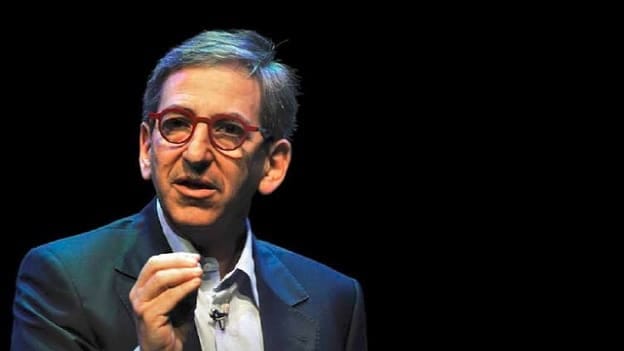
In an exclusive interaction with People Matters, Norm Judah, Microsofts Chief Technology Officer of Services shares his outlook and insights on the role of HR in capability building, the role of the CTO, delivering solutions, disruptive technologies and skill sets for the future
Norm Judah, Chief Technology Officer of Microsoft Services holds a Masters of Applied Science from the University of Toronto and a Bachelor of Science in Electrical Engineering from the University of Witwatersrand. In this exchange of thoughts, he discusses the fundamentals of the disruptive organizational changes at Microsoft and how it is building its people and changing lives with innovative technology.
Q: As an outsider to the HR function but also as an insider to the business as a business leader, what do you think is the future of HR?
It is incredibly interesting for me just to watch and see the rate of change of the people function and what they are doing. I have spent a lot of my time talking to people internally and externally about the function. Organizations are realizing that they can actually get much more out of their people, and when it comes to people productivity, the key sponsor should be the HR head. And so when we talk about HR function holistically, it has to be an active player in its own change, because they are themselves their own customers.
I have spent a fair amount of time on building capability and readiness, and I think the overall behavior of the people with you, the injection of new talent and diverse opinion and views can change the way people work or integrate. The introduction of different technologies and skillsets is a big part of the partnership that exists between technical leadership and people leadership — these can’t be separate anymore. This is happening within Microsoft and with customers we are touching across the world. In many countries, whether emerging economies or bigger economies, this question is arising constantly up the roll — Is HR being able to redefine themselves and actually be a part of it too? This is an interesting aspect because on the one hand, they are managing their own change while on the other they are helping orchestrate changes too.
Q: The office of a CTO is a crucial one for any organization – but especially in an organization that has redefined what technology means to us today. Tell us a bit about your journey to your current role.
I have been in Microsoft for almost 27 years and I have had multiple careers. As far as the role of a CTO is concerned, I actually synthesize this role down to 3 core pillars: technical strategy (deciding which technology to use and when; and how you convert innovation to action), quality (doing it correctly) and people (how you grow technical people and technical leadership, in particular). When you combine strategy with quality, it leads down to how you build community, knowledge and readiness, and how you deliver this in a global organization in multiple languages to enable people around the world to collaborate and share. So readiness and community are tied together and have a co-dependent relationship. And it’s not about what you know, but what a group of people know.
When you combine strategy with quality, it leads down to how you build community, knowledge and readiness, and how you deliver this to enable people around the world to collaborate and share
Q: With respect to the three pillars you talked about — strategy, quality and people, how do you define your role and take decisions?
The role of the CTO is part technologist, part evangelist (bringing people with you), and part “external evangelist” (meeting with customers, presenting to them and listening to them too). And so this combination is what really defines the role. An element of it is wisdom, which is the ability to see things. I have the best job as I sit between engineering and customer and not between technology and solution. The wonderful part of that is gluing technology together to deliver amazing solutions. And so being able to not only show things that work but to be able to demonstrate them — it is an evangelist role but also a development role in terms of bringing people with you along with enabling others.
For decisions, there are multiple input sources of influence. In our case as a provider, some of them are based on engineering and some on research. Many of the things that you see today with AI, virtual or augmented reality or Cloud have come out of the research environment. Internally, I am checking input sources and influences form both engineering and research. Externally, there is a huge customer influence part and some of it is what customers are doing and some of it they are asking. The combination of those two is also very important.
However, the magic lies in synthesis. It’s the ability to look at the sources together and make magic, and that’s the capability we try to grow. Whether you are a CTO or an architect, it’s the ability to look at internal or external influences and sources that enable you to execute the job you are trying to do. And there’s a lot of internal, external and in-between collaboration that happens while doing this.
Q: How do you see the function of the CTO evolving?
I love the energy that comes from change. And it is an inherent part of this role. In commercial companies, a part of what the CTO works on is deciding on the best thing to take, which translates into “Where am I going to take the company forward?” But given the rate of change today, the question also is “Do you take a financial lens for making decisions?”, which is that every time you make a decision, you also need to take a financial decision, not only a technical one. And how you manage this role should be as if you are managing a portfolio of mutual funds.
My perspective, as a CTO is that if you are not building things or not experimenting and understanding, you are essentially using your own inherent capabilities and outsourcing that. Today, most companies are insourcing it, because such decisions are fundamental to the transformation of businesses. The CTO has a big role to play in that. And I think the wonderful opportunity they have is to play that role.
The role of a CTO is part technologist, part evangelist (bringing people with you), and part “external evangelist” (meeting with customers, presenting to them and listening to them too)
Q: Can you throw some light on how organizations can make decisions that are transformational for their business models?
One of the things that many people are investing today in the scope of Artificial Intelligence is bots. There’s a common view of what a bot is and what an artificial agent or an intelligent agent is. One of the ways of doing this is to actually experiment with it. You can experiment with a bot in a call center. Microsoft is doing work with a bank in Latin America that is actually looking at how they can relieve the load in their call center for simple calls related to balance, transactions etc. so that they can create capacity in the call center to do more complex things. You can experiment and you can move with that in an incredibly agile way to get an understanding.
Let’s take another example, of a retail company that has a website and a physical store. What you could do using a bot is actually connect those two environments (the website and the physical store); you can use the bot as an immigration point between the virtual and the physical. For example, when you are considering to buy a television set, you can do the homework online and can go to the store to buy it without the sales associate knowing as to what you have been looking for. But if those two environments can be connected, when you go in to the store, the store associate via a connection will know who you are, and what you have been looking for and they can sell it to you. So the goal is selling more in a short amount of time.
Such are the places where you could actually experiment today. Instead of waiting for the absolute big thing, you can use real world problems to understand technology, rather than doing it in a lab and not really understanding.
Q: So what’s stopping organizations to experiment more?
I think it comes down to giving the time and energy to actually encourage experimentation. Part of this is the fear of deciding right. People usually struggle to decide “the one” rather than experimenting. What I find in my conversations with the technical leadership and also business leadership is that at times, business leadership or people can push the agenda to a certain extent, but it actually comes from initiative and being inquisitive. There is a need for agility in experimentation because technology is evolving quickly. One of the conversations we are having is how to innovate — as a provider of technology or a consumer of technology. We are seeing organizations setting up innovation labs/centers that are places for people to innovate. This is an enabling idea of innovation in an agile way.
Q: You mentioned synthesis for making magic. Tell us how prevalent this is in the business environment today?
From a business perspective, the magic is in being able to connect the dots. I will give you an example. A retail company was redoing its stores and was trying to understand the customer sentiment. They installed devices with smiley faces, and frowning faces and what they asked the customers to do was to press those buttons according to how they felt. But what they could do instead is use the security cameras and recognize the customer sentiment by looking at the video footage of people who come in the store. And more than that, you can recognize the demographics. You can actually build a demographic model in an anonymous way that can give you richer information than just somebody pressing a smiley face button or not. That for me is a simple example of taking two random things and being able to connect them together. So in technology or business, connecting those dots is important.
Q: What’s your opinion on what would be the most disruptive technologies of the future and what kind of bets are you taking?
Six years back, I was asked in an interview, “What do you think about the Cloud?” And at that time, people were questioning the Cloud. Today, people are asking ‘if’ and ‘when’. But in five years, the conversation will be ‘how’ and ‘why’. Today, the number of people who are moving to the Cloud is more than what most people expected. I will say the same thing about Artificial Intelligence. A lot of people are investigating it but the reality is that the conversations about AI are about “Whether I should use it or not?” In five years, the conversation will be “How do I use AI and how it has changed the business?” I think that AI, broadly, is going to be one of those massive bets that will be durable.
One of the other places where we are seeing a lot of investment today is in Augmented Reality (AR) and AR is really changing the way people are interacting with systems. We spent the last forty years teaching people how to use computers, and Augmented Reality will change that as computers will now suddenly understand people; this means that the relationship that people have with systems either as a consumer or a part of the supply chain will change dramatically. It’s no longer the computer but the system that a person interacts with. So there are a number of bets like that.
Q: You mentioned that the relation between humans and systems will change. How do you think this will manifest?
If you take a slightly medium term view, as an individual, a lot of work that I am doing relates to finding information, collaborating with people, and getting things done. Today, I have to be knowledgeable about how to do them, how to find things, how to switch, and all the way to getting things done — the actual task completion. I feel that the interaction of people and systems in the future, a large part will be through an intelligent agent, who will know you and your preferences, who will help you in getting things done in different ways. But there’s an interesting break point to this, and it will happen when the agent changes from becoming advisory to doing things itself. That subtle change will happen at some point, but it will be in your control to decide when you are comfortable switching from that advisory mode to a closed feedback loop. What it means is that your interaction with the system won’t be through 150 apps that are sitting on your phone, but it would through an agent. But there is an interesting consequence to this, which is that as a company, as an entity that deals with customers and consumers, the agent reflects the brand of the company much like a website that reflects the brand of the company — it is a deep integration of who you are as a business. That’s going to happen to the agents as well; your agent will become a reflection of your business. The interaction that you have with the system will be a part of a collaboration that will come through the agent in some way. So you will see a lot more of it.
If you take a slightly medium term view, as an individual, a lot of work that I am doing relates to finding information, collaborating with people, and getting things done. Today, I have to be knowledgeable about how to do them, how to find things, how to switch, and all the way to getting things done — the actual task completion. I feel that the interaction of people and systems in the future, a large part will be through an intelligent agent, who will know you and your preferences, who will help you in getting things done in different ways. But there’s an interesting break point to this, and it will happen when the agent changes from becoming advisory to doing things itself. That subtle change will happen at some point, but it will be in your control to decide when you are comfortable switching from that advisory mode to a closed feedback loop. What it means is that your interaction with the system won’t be through 150 apps that are sitting on your phone, but it would through an agent. But there is an interesting consequence to this, which is that as a company, as an entity that deals with customers and consumers, the agent reflects the brand of the company much like a website that reflects the brand of the company — it is a deep integration of who you are as a business. That’s going to happen to the agents as well; your agent will become a reflection of your business. The interaction that you have with the system will be a part of a collaboration that will come through the agent in some way. So you will see a lot more of it.
Q: You mentioned that the systems will become an additional source for us to get work done. How do you see the future of workplace and employment?
I think that different people will do different things. In every lifetime we have multiple careers, I’ve probably have had two or three, and in my view, what makes me successful is operating within the environment that I operate in, building an incredible network and connecting with people. The other side of it is the environment where there are people who like change, take risks and enjoy the excitement and the ability to grow in different ways. There will be people who will be very successful in one environment and people who will be very successful in the other. What is wonderful about this is the connection; the systems know the provider and the suppliers’ contexts, and the ability to match those two things can become sophisticated. Finding people and information will accelerate dramatically, and that’s the part I like.
Q: What is your opinion on the advancements in technology affecting areas like privacy and security?
I think the essence of it is trust — to me, my company and the systems and people I deal with and how they deal with my information. Do I know what they are doing with my information? Where they are storing or sharing my information? — Trust becomes the essence of all of this. If my data is valuable and I get value out of it, then I might agree to you sharing it. People need to understand that it is their data and they own it, how that data gets established, the privacy and trust of where it goes, I think that will differentiate how we deal with this problem. But I think there is an incredible value in the ability of a system to help you collaborate and communicate; and people will place that value against the value of their data and context. My context is my context and I should be accountable for how it’s being used; and it only comes with trust.
Q: If you were to build a team for the future, what would be your strategy for recruiting talent and what skillsets would you recommend for the future?
Internally, from a Microsoft view, we are a global company with a global presence. We deal with small and large customers all around the world and across multiple industries and so, we are very interested in actually being represented where our customers are. The other thought is injecting people at different layers of experience, from industry experienced to university hires. Having a diverse view is important. And it is related to the role of HR. This requires the HR team to become more analytical and use the information and integrate it with external information for identifying and matching patterns or anti-patterns. Growth of any company will be in the ability to attract and retain interesting people doing interesting work.
The relationship that people have with systems either as a consumer or a part of the supply chain will change dramatically
The real question today is around what students at high school or university level should be learning so that they are employable in ten or fifteen years’ time. I think that the essence of that is going to be in the core elements of data, understanding schema, models and systems, reviewing supply chain, medical etc. and understanding the way systems work. It’s not a single specific skill but broad systemic thinking, and a definite core capability of data, as well as understanding information because that’s going to be present in everything we do.

Loading...