








In today’s BANI [Brittle, Anxious, Non-Linear, and Incomprehensible] world, artificial intelligence is no longer a futuristic concept. It’s already transforming the way businesses attract, evaluate, and retain talent. Recruitment, once rooted in campus visits, face-to-face interviews, and manual assessments, has now become a digital-first process. The pandemic accelerated this shift, pushing companies to adopt virtual hiring and onboarding practices at scale.
But AI’s role goes far beyond efficiency. It’s reshaping the candidate experience, expanding reach to diverse talent pools, elevating employer branding, and redefining how organisations think about long-term potential and cultural alignment. At the same time, it’s raising critical questions about fairness, trust, and the future of work itself - making responsible AI in recruitment essential.
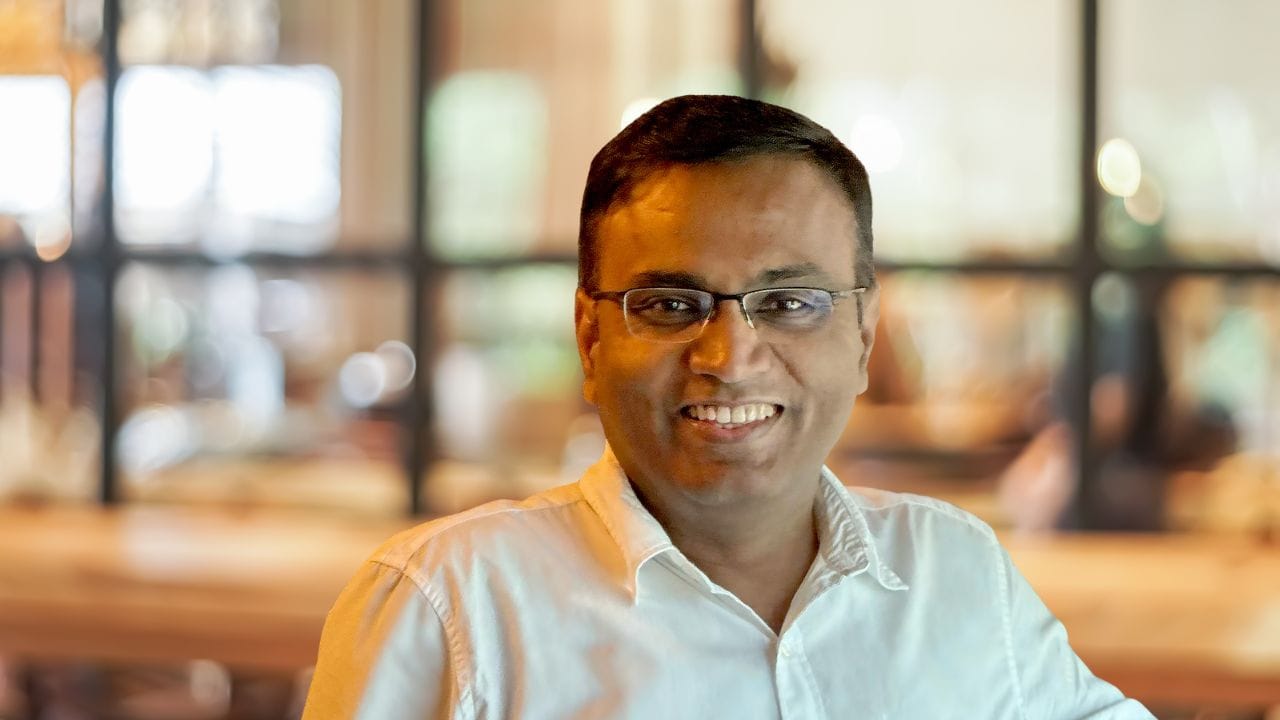
To explore these dynamics, People Matters sat down with S Pasupathi, Chief Operating Officer of HirePro, a Careernet Group company, to discuss how AI is being integrated into recruitment, what it means for organisations, recruiters, and candidates alike, and underscoring a critical truth: AI is not replacing human judgment but enhancing it.
Recruitment has undergone a dramatic shift over the past decade. In your view, what are the most fundamental changes shaping organisations’ approaches to talent today?
Yes, I believe the changes have been remarkable, especially in the last five years. Before COVID-19, the recruitment was done almost entirely physically. For example, companies would visit campuses for entry-level hiring, and lateral candidates would walk into offices for multiple interview rounds. In simpler terms, candidates saw the workplace, met people, and absorbed the organisation’s culture. The process had the element of physical connection.
The pandemic disrupted this completely, and everything was moved online. The aspects such as assessments, interviews, and even campus hiring – everything became remote. While this expanded access to talent across geographies, it also introduced challenges for the talent acquisition teams.
The first was volume; the hiring scaled up dramatically, and organisations didn’t have the bandwidth to interview everyone at that time. Secondly, integrity came into the picture, where the remote tests made it easier for candidates to seek unfair assistance. Thirdly, the virtual interviews removed the human touch. This included no walking into a lobby, seeing the company’s branding or having casual conversations with fellow interviewers.
The biggest upside from all of this was the newer access to talent.
The organisations could go beyond regional boundaries and focus on the best candidates, not just the nearest colleges.
Factoring all of this in, I believe this is where the AI and automation came in. The AI-driven tools and processes helped with scaling, ensured fairness across the assessments, and enhanced both branding and candidate experience.
How is AI helping organisations bridge the gap between talent needs and the growing, diverse talent market, such as university campuses?
Traditionally, a hiring decision can happen in a few hours, which usually involves an assessment and one or two hours of interviews. The problem with this approach is that it only captures a candidate’s immediate skill match, not their long-term potential or their upskilling/reskilling pathways.
With the introduction and adoption of AI, it broadened the perspective. The AI-powered tools help in executing comprehensive assessments, measuring problem-solving ability, adaptability, and even interests beyond work.
Take campus hiring, for instance. With Hirepro’s platform, shaped by over 25 years of holistic talent expertise and experience engaging over 200M applicants, leaders can track how a candidate evolves from their second year through to graduation. By the time of the final interview, the process involves frameworks that contain validation of years of data, not just a two-hour snapshot, making the recruiters’ job easier.
This framework will also benefit the candidates.
The data found from the diagnostics will record their strengths, weaknesses, and alternative career paths that can be taken up in the future.
For example, a tech graduate might discover they are better suited to customer-facing roles or solution architecture than pure coding. With these frameworks, the organisations can assess these candidate situations while building a more inclusive hiring process.
You mentioned HirePro, where you have pioneered AI-driven solutions. Could you share specific examples of where you see the most immediate impact of AI across the talent cycle?
HirePro began in 2004, as part of the Careernet Group, and as one of the very first organisations that primarily focussed on campus hiring. We have seen the industry evolve over two decades across the recruitment supply chain. And the journey that started off from paper and pencil is now a platform that manages large-scale hiring, which includes on-campus, off-campus, and even remote, making recruitment more democratic and inclusive.
Our strengths lie in talent assessments and proctoring, with the aim to provide “Fearless Hiring” solutions, i.e eliminating the anxiety recruitment faces when managing high-volume talent acquisition.
With the adoption and evolution of AI tools, the focus has now shifted to introducing AI in all the elements. For example, the AI interview bots can screen candidates fairly and squarely. Our in-house AI recruiter trained on years of hiring data, is a key part of this transformation.
Interestingly, I have found that many candidates prefer bots because they feel less biased compared to human interviews.
Similarly, the advent of AI has such an effect that AI-powered tools also handle transactional work such as interest checks, interview scheduling, summarising recruiter feedback, and more. Moreover, these adoptions have changed the recruiter’s role. Instead of being stuck in just coordination, recruiters can also spend time understanding candidate aspirations, explaining the company culture, and helping potentially right candidates to prepare for the interviews.
But as AI tools become more sophisticated, such as agentic AI, how can leaders ensure they enhance trust and fairness rather than reducing hiring to just transactions?
I believe that this is a critical point.
Every new technology follows a cycle: initial excitement, followed by fear, then gradual adoption, and maturity. AI is no exception.
The key to this is responsible adoption. I believe that leaders shouldn’t expect perfection right away from AI tools. Instead, they must start small, iterate their expectations with the platform, and help improve the process. The crucial factor here for the leaders is how to blend AI with human judgement. That’s why I believe that candidate acceptance is also vital. For example, young sales professionals love AI bots because they can interview at night or at weekends, but senior sales candidates may resist due to a lack of exposure.
The most important part is that the recruitment leaders need to remember: don’t kill the product by expecting it to do everything on day one. Too many try to jump from zero to full automation, which rarely works in reality. I say that sustainable adoption means building trust with the tools, step by step.
I agree that sustainable adoption takes time. Hence, looking to the future, how do you see AI redefining talent strategy and the future of work?
I have noticed that there is a lot of anxiety about AI replacing jobs, especially at entry-level tech jobs. It’s true that AI can code, analyse, and even generate basic research.
But here’s the bigger picture: AI is eliminating mundane tasks while raising the complexity of higher-level work.
I believe that the momentum is shifting toward “up-levelling” them i.e. the average performance won’t be enough for the organisations anymore. Those who embrace AI as a partner will thrive, while those who don’t, risk being left behind. Automation amplifies the capabilities of top performers. The example that I can think of is robotic surgery, which uses AI frameworks to empower specialised doctors, rather than replacing them.
Therefore, the future of work isn’t about fewer jobs, but about more specialised, meaningful roles.
And what about leaders who are excited about AI but unsure which products to adopt? What advice would you give them?
I would tell them to treat AI just like basic literacy. Just as we were once taught computer skills as essential, AI familiarity will soon become non-negotiable for all of us.
The key to this is to start small. The leaders need to try experimenting with meeting summarisers, AI-powered email drafting, or research tools. Just think of AI as a toy to build curiosity, and over time, this will grow into confidence and deeper adoption.
If leaders risk avoiding AI in this day and age, they must also risk being left behind. In just a few years, conversations between colleagues using AI tools will seem like science fiction to those who have never experimented. Yet I believe technology is only one part of the story. The real transformation lies in how leaders and organisations adopt it. Leaders, ask yourself – will you do it gradually, responsibly, and with a focus on human potential? The sooner leaders get hands-on, the smoother their transition will be.