








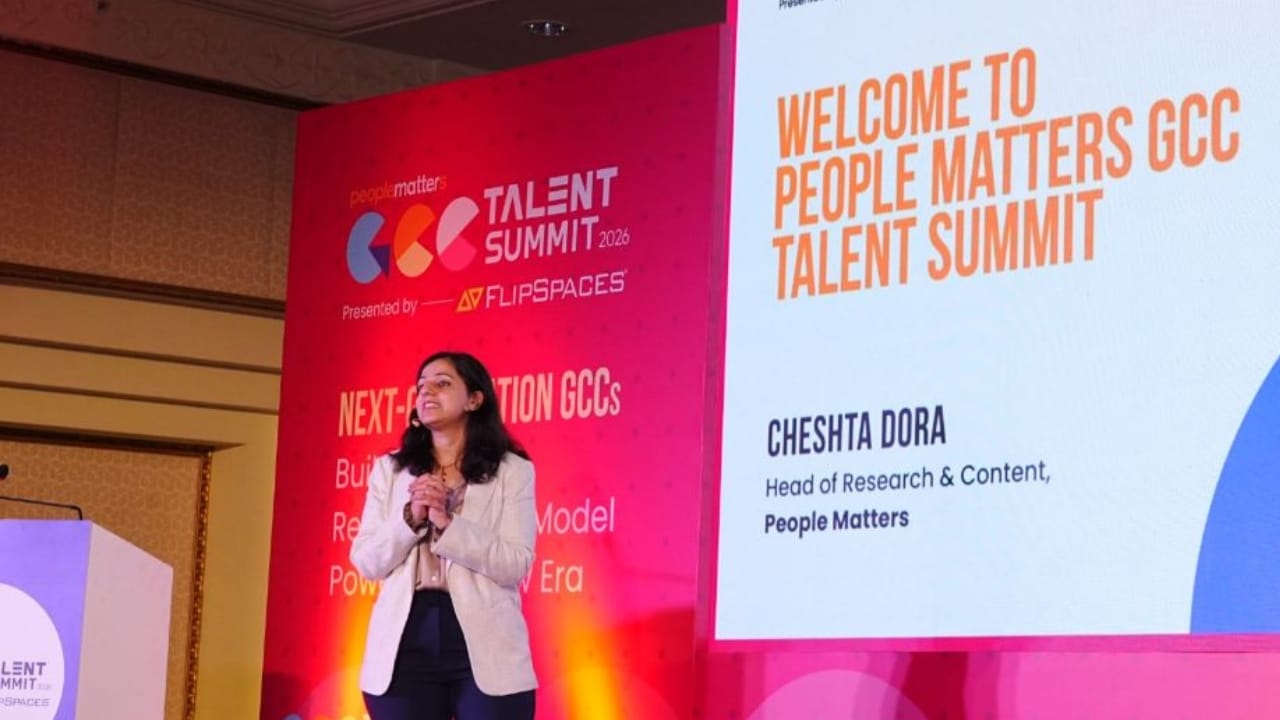
Leadership development and emerging technology have emerged as the most formidable challenges for Global Capability Centres (GCCs) in India, with 64% of GCC leaders citing them as their biggest hurdles. This was the central message delivered by Cheshta Dora, Head of Research & Content at People Matters, during her opening address at the People Matters GCC Talent Summit 2026 held in Bengaluru.
The summit, which brought together HR and technology leaders from across the country, spotlighted the evolving identity of GCCs. Once hailed as digital capability builders, GCCs are now being urged to position themselves as “AI-first value creators.” As Dora highlighted, “What we are being positioned as, we will be positioned as, is the AI-first value creators. And the key to success is building resilient talent models for the next generation of GCCs.”
Fresh insights from the People Matters State of HR Industry report revealed further data on the sector’s transformation. Four in ten GCCs reported that augmenting work with AI and upskilling middle managers are the most pressing pain points. Despite their reputation as hubs for technology talent, only 20% of GCCs have fully adopted generative AI since its introduction in 2023. The top barriers to AI implementation, according to the report, are a lack of internal skill expertise and, interestingly, 30% of GCC leaders perceiving no challenge at all—an attitude flagged as a potential red flag.
The readiness gap is stark: while 84% of leaders across organisations believe they are prepared for change, only 20% of GCC leaders consider themselves ready for AI. “This will lead to us missing big HR transformation goals if change readiness is not equal to AI readiness today,” Dora warned, calling this disconnect the “biggest risk” facing the sector.
Investment in HR technology is nonetheless on the rise, with GCCs expecting a 10% to 25% increase in HR tech spending. This surge is fuelled by demand for hybrid suites, with 30% of GCC leaders seeking more integrated, innovative solutions to meet the needs of their expanding, dynamic workforces.
Despite signs of progress—HR tech maturity and performance have improved by 29% from 2024–25 to 2025–26—the sector still faces challenges in bridging the gap between intent and execution. Dora noted, “HR is actually acing change readiness intent in the organisation, but the gap we are seeing is between intent and execution.”
The opening remark also addressed issues of return on investment and technology adoption. “There is a deep surge in the expectations that management has from you in justifying the ROI, the value realisation from the technology you are investing in,” Dora observed, noting a perception gap between HR leaders and their tech partners on priorities such as deeper integration, change adoption support, and robust analytics.
As part of her address, Dora cited Seagate, a global data storage company, as an example of a company that successfully created a resilient talent model integrated with AI. By positioning AI as a tool to augment rather than replace employees, Seagate fostered trust, encouraged adoption, and ultimately achieved a business rebound.
Looking to the future, Dora urged GCC leaders to focus on three priorities for 2026: “Building data and AI readiness across your organisation as a capability mandate, shifting from just tech deployment to tech selection and adoption for increased ROI, and making leadership talent and AI core to your HR transformation decisions.”
As the summit continued, delegates were encouraged to reflect on their own journeys and commit to the bold, maverick changes required for the next era of GCC growth—anchored in AI readiness, talent resilience, and transformative leadership.