By: Atul Sahgal
For years, recruitment technology has been optimised for efficiency, enabling faster sourcing, quicker screening, and tighter coordination. While these gains improved execution, they did little to fundamentally change how hiring decisions were made.
Today, AI is reshaping not just the speed of hiring, but how decisions are informed, structured, and owned. The real transformation lies not in automating processes, but in elevating decision quality. In this shift, recruiters are evolving into what can be described as “super recruiters”, professionals supported by coordinated AI agents that reduce manual effort, surface deeper skill insights, and improve decision consistency at scale.
Redefining the recruiter’s role
Hiring is becoming less linear and more interconnected. AI systems are increasingly working alongside recruiters to source candidates, interpret skill signals, structure assessments, standardise evaluation inputs, and anticipate hiring needs. What is emerging is not merely a collection of tools, but an intelligence layer that connects decisions across the hiring lifecycle.
In this model, the recruiter is no longer managing isolated steps, but orchestrating outcomes. AI agents handle sourcing breadth, screening efficiency, and signal aggregation, while recruiters focus on interpretation, alignment, and final judgment. This is what defines the “super recruiter”, not someone who does more tasks, but someone who makes better, more contextual decisions supported by augmented intelligence.
However, this transition is not yet seamless. Many organisations are still stitching together fragmented tools, resulting in partial visibility rather than true end-to-end intelligence. Recruiters often find themselves operating in a messy middle, balancing automated recommendations with human judgment, without clear frameworks to guide those decisions.
AI’s strength lies in bringing structure at scale, but it continues to struggle with context such as organisational culture, team dynamics, potential versus experience, and non-linear career paths. AI systems can also inherit historical biases if not actively governed, creating a false sense of objectivity, where decisions appear data-driven but are shaped by incomplete or skewed inputs.
This makes human oversight not optional, but essential. Recruiters must be able to interrogate AI recommendations, understand how decisions are generated, and intervene when required. The recruiter’s role is shifting from process execution to decision accountability.
Increasingly, the recruiter’s value lies in contextualising talent, interpreting signals, assessing readiness, and aligning hiring decisions with business needs. As demand grows for human capabilities such as communication, adaptability, and problem-solving, recruiters are not just evaluating candidates, but translating potential into long-term business fit.
Building an intelligence-led hiring system
Realising AI’s full value requires moving beyond tool adoption toward system design, what can be described as an AI-native hiring engine.
At its foundation, this system is built on a unified skills framework that creates a common language for evaluating talent. Clearly defined and measurable skills make hiring more evidence-based, comparable, and scalable across roles and geographies.
Transparency by design is equally critical. Recruiters and candidates must understand how decisions are made, which signals are evaluated, and where human judgment is applied. This is not only a compliance requirement, but a foundation for trust in an AI-enabled hiring process.
A critical element of this intelligence-led system is governance by design. Another critical element is human-in-the-loop governance. While AI brings scale, speed, and consistency, humans retain ownership of interpretation, accountability, and final decisions.
AI agents support distinct parts of the hiring journey, coordinated through a unified orchestration layer, while recruiters retain accountability for final decisions.
This balance ensures that intelligence enhances outcomes without displacing judgment.
Together, these elements enable a coordinated ecosystem where AI agents support distinct parts of the hiring journey, from sourcing and screening to assessment and decision support, while remaining firmly anchored in human oversight.
As hiring becomes more intelligence-driven, the focus must extend beyond efficiency to experience. Recruitment is often a candidate’s first meaningful interaction with an organisation, shaping perception, trust, and engagement.
An effective system reduces ambiguity on both sides. Recruiters gain clearer visibility into skills, context, and trade-offs, enabling more confident decisions. Candidates understand how they are evaluated and what is expected, strengthening transparency and engagement. The true value of an intelligence-led hiring system, therefore, lies not just in faster hiring, but in better, more confident decision-making.
The road ahead
The real advantage will not come from adopting AI faster, but from integrating it more thoughtfully into the hiring system. Organisations that succeed will design for decision quality, where intelligence strengthens outcomes and human judgment remains central to accountability.
The “super recruiter” will not emerge from better tools alone, but from better decisions enabled by the combination of structured intelligence and contextual understanding. In this environment, hiring becomes not just faster, but more deliberate, more transparent, and ultimately, more human.
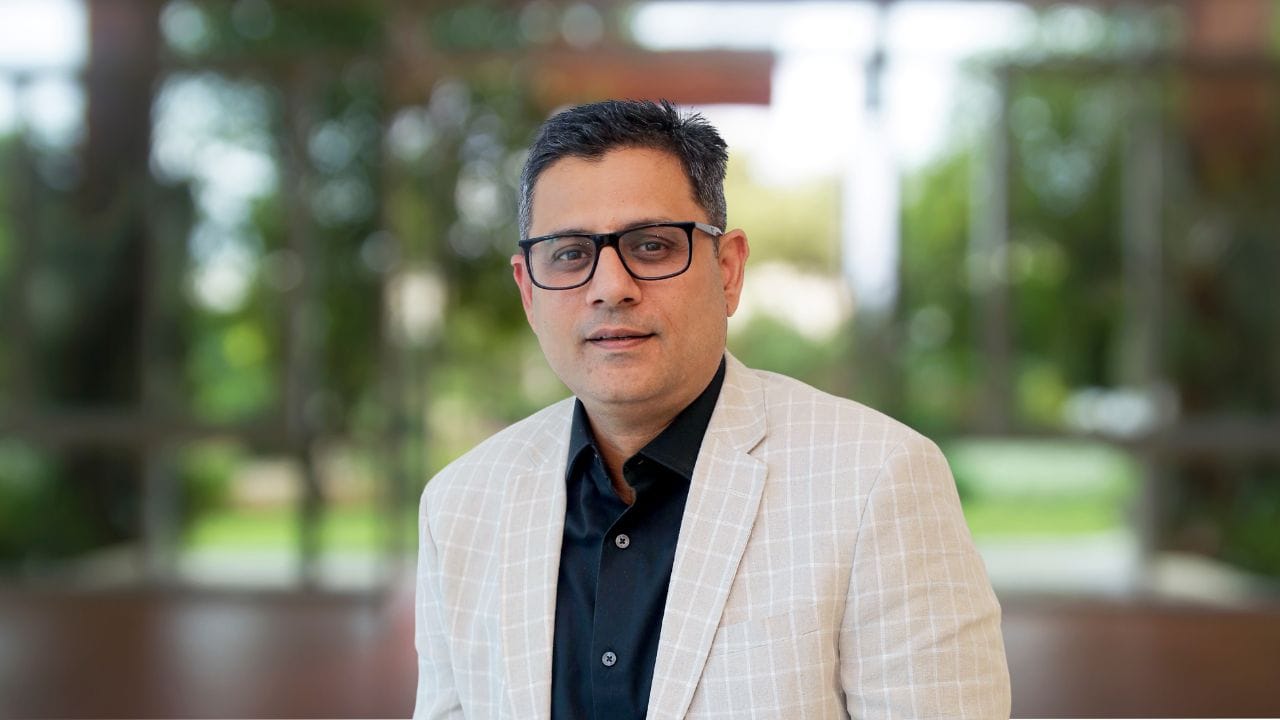
About the author: Atul Sahgal is the SVP & Global Head of Talent Acquisition at Cognizant. He has more than 25 years of extensive Talent Acquisition experience and thrives on meeting challenging organizational hiring goals.