








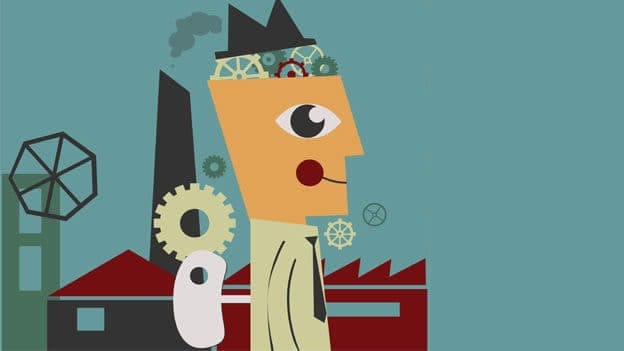
The debate is out in the open! On one hand, research is indicating huge potential savings on account of the adoption of digital and new technologies. On the other hand, there are predictions galore that robots will take over our jobs, and make humans redundant and unemployable.
Undoubtedly the future is much nearer than most of us anticipate it to be. Our awareness and adoption today will determine how ready we are to ride this wave. A digital disruption is inevitable, and like each wave of change and transformation, our success will depend on whether we choose to ride it, and ride it well.
A talent strategy of the future should be cognisant of an employee’s demographics, motivations, skills, aspirations, and experiences desired within and outside work. It will have to plan for and build an employee’s understanding and comfort with frequent & evolved interactions with machines and robots. It will need to design systems and processes that optimise/ maximise these interactions to unlock value. Most importantly, it will need to redefine the employee roles and skills. This is where the next big talent opportunity lies; identifying clear areas of impact, automating all transactional and low complexity work, defining clear areas of collaboration (among individuals/ teams and between humans and machines), building the skills of the future and through all this, realizing true human potential.
To understand this better, let us visualize a day in the life of an employee in the future, say the year 2020. Our employee is named Rahul, lives in the city of Bengaluru and works as an HR professional.
Rahul starts his day with his virtual personal assistant (a bot named “Meera”) informing him about the meetings lined up for the day. He “tells” Meera which meetings to decline and accept. Meera confirms that he has accepted four meetings for the day, including a meeting with his primary business stakeholder to discuss the increasing attrition in the account. Rahul asks Meera to scan the exit database and identify key insights as prep for the meeting.
On Rahul’s direction, Meera interacts with “Datsun”, the virtual analytics specialist engine, and share the insights with Rahul three hours ahead of the meeting. This gives Rahul a window to reflect the trends and propose retention strategies in the meeting.
Rahul meets the business leaders and they ideate on the key retention actions for the next quarter. They want to understand if there are any best practices they can leverage on. Rahul communicates the keywords to “Meera”, who then parses through the organization’s knowledge management portal and throws up relevant ideas. This helps the business lead and Rahul firm up their retention strategy.
After the retention strategy is defined, (actions, milestones, responsibilities etc), Rahul communicates the action statements to “ToDo” - the HR automation robot. ToDo creates workflows for each retention action, informs the required action owners (business leaders/ managers/ HR), and sets up milestones on their calendars. ToDo instructs “Datsun” to share required analytics insights with each action owner. Given the sensitivity of the data, “ToDo” assigns a personal encryption key to each user.
This automation enables Rahul to then invest time in coaching the action owners/ managers on how they can engage their team members better. The business lead and Rahul also plan one on one conversations with employees identified by “Datsun” as critical based on their demographics and other inputs.
Rahul’s experience at work is enhanced as he is able to add significant value to his stakeholders. His virtual team members - Meera, Datsun and ToDo enable him to focus on high skilled deliverables. They help him be more agile and proactive in his response to business problems.
How do the stakeholders benefit?
The business lead gets data and insights faster, enabling him to be more nimble. The decisions made on retention actions are well supported with data analytics and internal benchmarking. The automated workflows are created to ensure actions are taken in time.
With this automation and artificial intelligence at his disposal, Rahul is now focused on areas which truly leverage on his expertise and skills - problem solving, creativity and ideation, people management and coaching. He no longer has to invest time or effort in low complexity work - data gathering and consolidation, setting up meetings, follow ups etc.
Not only does the quality of work improve, the time taken to do the same work is crunched significantly thanks to the efficiencies and rigor brought in by Meera, Datsun and To Do.
How do organizations plan for automation?
To reiterate, organizations need to start building future readiness at the earliest and fine tuning their processes and ecosystems. The right automation technologies and technology vendors will need to be identified. A few aspects will be critical for this readiness journey -
Research and deep dive
- Define priority processes that influence & impact employee experience and/ or interactions s/he spends the most time on. Identify a process or two for the pilot before full-scale adoption.
- Adopt Design Thinking to understand’s user and stakeholder needs for each process and interaction. Map the interaction journeys as user research.
- Ensure the business goals are defined and benefits are ascertained in terms on RoI, impact on key metrics, tangible and intangible savings.
- Identify key blocks of work required to facilitate each process and interaction. Build agility for the work to move seamlessly/ back and forth across blocks, with patterns and flows responding to personalized user needs. Not an assembly line.
- For each block of work, define complexity.
Automate and Support
- For low complexity/ repeatable blocks of work, evaluate process automation (and simplification) through well-defined workflows. Understand volumes, SLAs and compliances. Identify partners specializing in robotic process automation.
- For medium to high complexity blocks of work, identify human skills required. Evaluate digital enablers through market research and benchmarking. IIdentifypartners for intelligent automation.
- Define and build collaboration touch points (among individuals/ teams and between humans and machines) across the blocks of work to deliver required processes and interactions.
- Deliver the pilot and solicit feedback at the end of each sprint to improve the efficiency and speed of work flow and quality of interactions.
Upskill/ Reskill for Productivity
- Map high complexity skills required to identify hiring and training needs. Explore potential areas for the redeployment of human bandwidth saved as well as identify new opportunities/ areas for leverage of complex human skills.
- Define clear areas of productivity and performance through application of desired human skills. In the example above, Rahul brings in value through critical thinking (application of insights), creativity (ideas for retention) and people management (coaching managers).