Business transformation has never been short of ambition. Companies invest in new technology, redesign operating models, roll out learning programmes and restructure teams, all with the expectation of delivering lasting change.
Yet many transformation programmes struggle to deliver the one outcome leaders are chasing. Behavioural change.
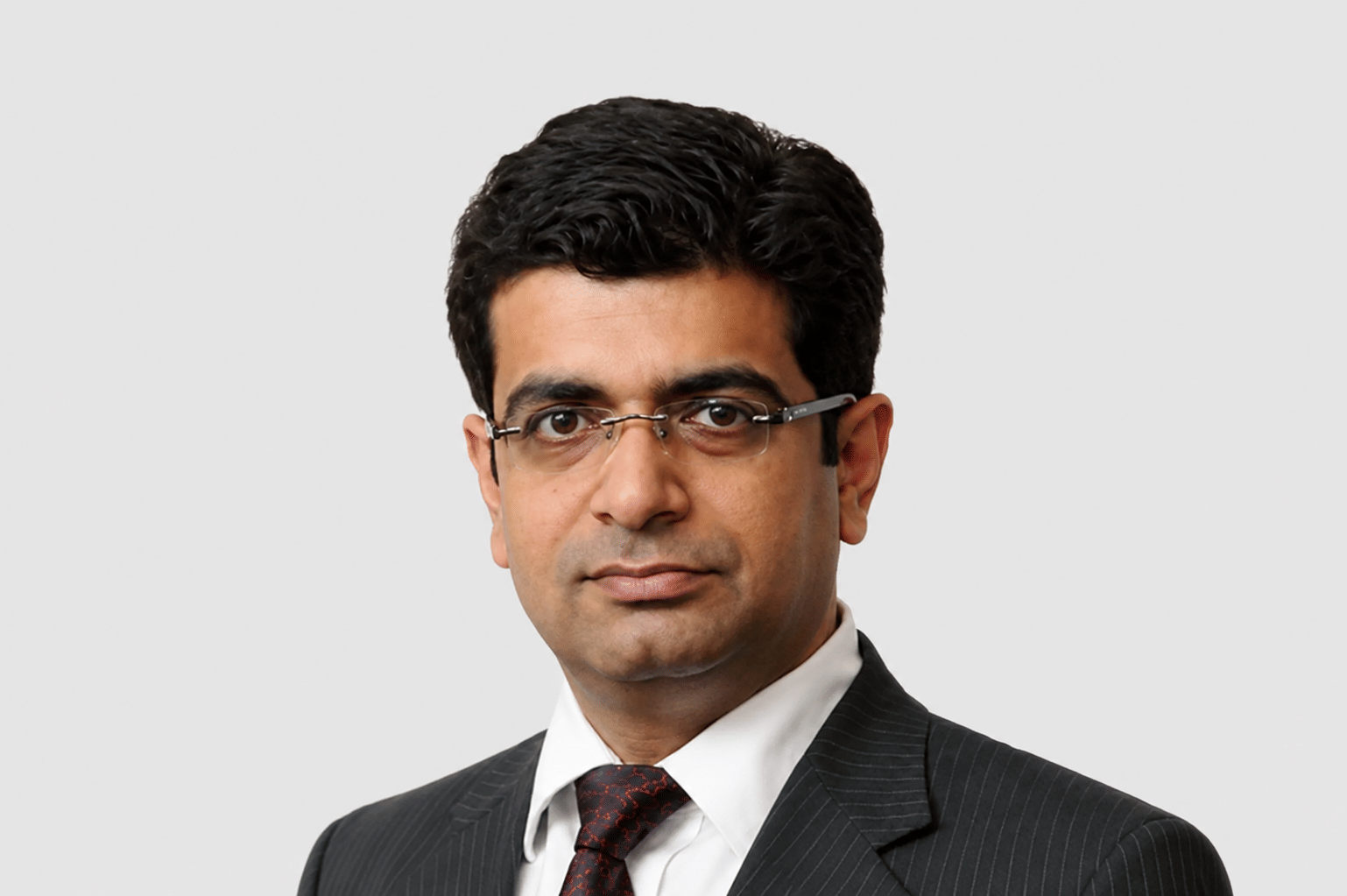
In an interview with People Matters, Anurag Malik, Partner and National Leader, People Consulting, EY India, says organisations often focus on changing processes while overlooking how people actually work, think and make decisions. His central message is simple. Deployment is not adoption. Technology can be implemented. Behaviour has to be earned.
Technology changes quickly. Habits do not
Many organisations assume transformation begins and ends with systems, workflows and organisation charts.
Malik sees it differently.
"Most transformation programmes are designed to change what organisations do, not how people think. Significant investment goes into new systems, restructured workflows, revised org charts and leaders are often surprised when, six months later, the old behaviours have quietly reasserted themselves."
For him, the problem begins with a common misunderstanding.
"What we consistently find is that organisations mistake deployment with adoption. The real work of transformation is behavioural, and it begins where most programme plans end."
Communication, he says, is only one part of the equation.
"Transformation is often treated as a communication challenge. If we explain the change clearly enough, people will follow. But behaviour is driven by capability, conviction, and context."
Employees also need confidence in the new direction.
"If employees don't have the skills to work the new way, if they don't believe the change will hold, or if their immediate environment still rewards the old way of working, the change will not take root regardless of how well the vision was articulated."
The myths organisations continue to believe
Transformation programmes rarely fail because leaders lack intent. More often, Malik says, they rely on assumptions that simply do not hold up in practice.
One of the biggest misconceptions is treating change as a straight line.
"The most persistent one is the assumption that change is a linear event, that you move from state A to state B, and then it's done. In reality, behavioural change is non-linear and deeply personal. Different parts of the organisation are always at different points in the journey."
Learning programmes present another blind spot.
"A second assumption is that training equals capability. Organisations invest heavily in learning programmes and then measure completion rates, not behaviour change."
He points to an example from EY's work with organisations.
"We've seen organisations where 100% completed a mandatory upskilling programme but 80% reported no discernible shift in how work was being done on the ground. Training is an input, not an output."
Leadership teams also tend to overlook one influential group.
"Transformation programmes spend enormous energy on the front-line workforce while underestimating how much the middle layer of management, the people closest to day-to-day work, either enables or quietly undermines the new way of working."
Why people are harder to change than processes
Replacing software is difficult. Replacing long-established habits is considerably harder.
Malik draws a clear distinction.
"Processes and technology are extrinsic. You can mandate a new system, redesign a workflow, restructure reporting lines and compliance will follow."
Behaviour works differently.
"Behaviour is intrinsic. It's shaped by beliefs, habits, identity, and the invisible social contracts that govern how people actually operate within an organisation."
Leadership presents an even greater challenge.
"Leadership behaviour is particularly challenging to shift because it's often the most deeply embedded and the most institutionally rewarded."
In many organisations, the qualities that helped leaders succeed earlier may become barriers later.
"The behaviours that got leaders to where they are, decisiveness, control, expertise, may be precisely the behaviours that need to shift in a more agile, collaborative, or AI-enabled operating model. That's a harder ask than learning a new platform."
Culture quietly decides the outcome
Culture often receives attention during transformation. Malik believes organisations should spend less time discussing values on presentation slides and more time examining everyday behaviour.
"The way I frame it with clients is this: culture is the sum of what gets rewarded, and what gets celebrated, day after day."
He cites findings from the EY Work Reimagined Survey 2025. According to the survey:
- India recorded the highest global talent health score at 82%.
- The score was driven by culture, trust and empowerment.
Malik says this creates both opportunity and responsibility.
"If leaders in a high-trust culture signal, even implicitly, that the old way is still acceptable, employees will follow that signal over any formal change communication."
When assessing readiness, he looks beyond formal value statements.
"What we look for when we assess cultural readiness is not whether the values on the wall are the right values, but whether the real operating norms, how decisions get made, how dissent is handled, how failure is treated, are aligned with the transformation intent."
What successful organisations do differently
Malik identifies several practices shared by organisations that sustain behavioural change. They include:
- Define behaviours with precision rather than broad aspirations.
- Build capability using role-specific learning and targeted assessments.
- Redesign tools, incentives and work environments so new behaviours become the easiest option.
- Treat cultural change as a leadership responsibility rather than an HR initiative.
Specificity, he says, matters.
"Not 'be more collaborative' or 'embrace innovation,' but behaviours that are observable and measurable."
He adds practical examples.
"What does a good cross-functional decision look like? What does AI-enabled working look like for a relationship manager versus a risk analyst? Specificity is what makes behavioural change trainable and measurable."
Capability building also needs greater precision.
Discussing EY's internal platforms, Malik says AI Academy provides role-based GenAI learning pathways, while Competency Connect helps organisations identify capability gaps so skilling investments become more targeted.
He also stresses a practical principle. "The new behaviour" should become "the path of least resistance."
Compliance is not the same as adoption
Transformation programmes can appear successful long before genuine change takes hold. Malik outlines several warning signs leaders should watch for. These include:
- Employees using new systems only during reviews while returning to older methods in everyday work.
- A complete absence of friction or difficult conversations during implementation.
- Managers failing to integrate new expectations into team discussions and feedback.
- Honest conversations taking place informally rather than during governance meetings.
"The presence of parallel systems" is one of the clearest indicators, he says. "When employees are using the new system or process during audits and reviews, but defaulting to the old approach in daily work, that's compliance."
He also challenges the idea that smooth implementation always signals success.
"Genuine behavioural change is uncomfortable."
"If a transformation is progressing without tension, without questions being raised, without some friction in teams, it often means people are performing adoption rather than experiencing it."
AI is rewriting the rules of change
The next phase of transformation will be shaped by artificial intelligence, according to Malik.
"AI is fundamentally changing the nature of the work itself, which means behavioural change needs to keep pace with capability change."
He refers again to the EY Work Reimagined Survey 2025, which found:
- 88% of employees in India are using AI at work.
- More than one-third use AI daily.
For organisations, Malik says the challenge goes beyond providing access to AI tools.
"The organisations that are managing this well are not just providing tools. They're actively shaping the human behaviours that make those tools effective: how to prompt well, how to validate AI output, how to integrate AI judgment with human judgment in consequential decisions."
His conclusion points towards a broader shift.
"The future of change management will increasingly be about building these embedded, continuous learning systems rather than deploying discrete change programmes."
Behaviour, in other words, is no longer a side project within transformation. It has become the transformation itself.