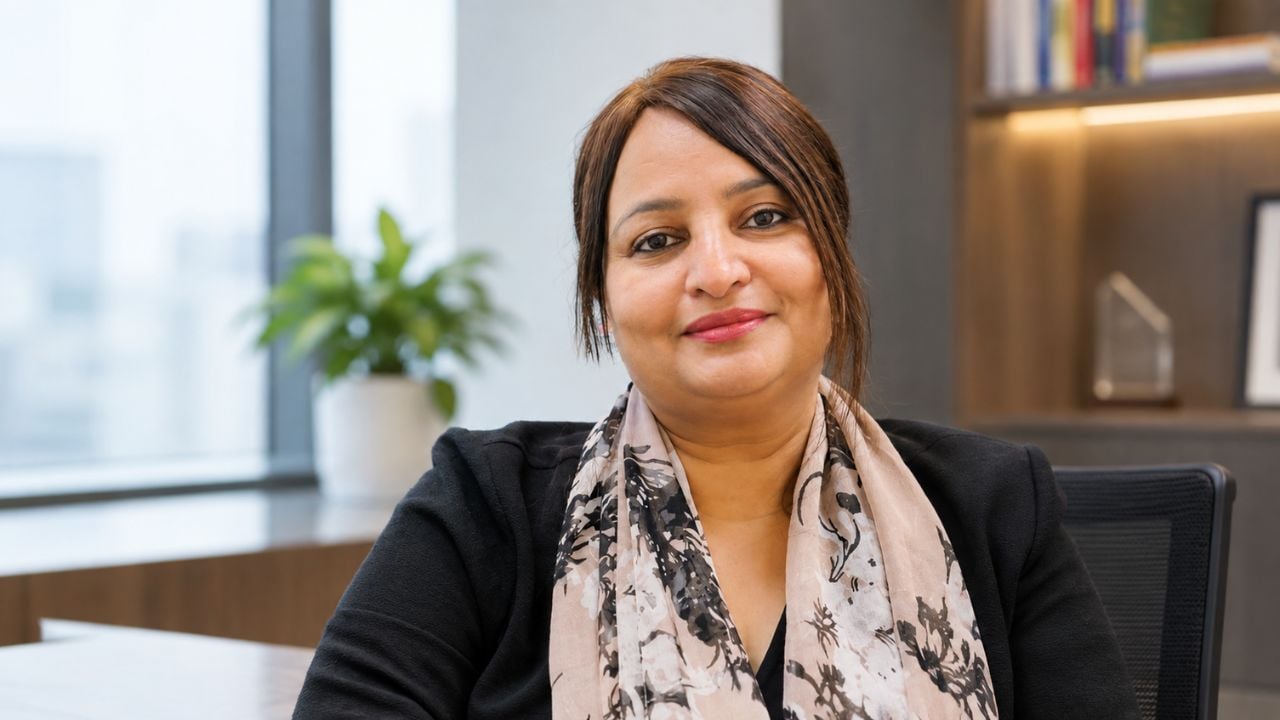
Matt Krentz is the Managing Director & Senior Partner, Global Diversity & Inclusion, and Leadership Chair, Boston Consulting Group, Chicago. He is responsible for developing BCG’s DE&I offering for clients and advising chief executives and senior management on their diversity and inclusion strategies.
Prior to this role, Matt served as the firm’s Global People Chair and was a member of the Executive and Operating Committees. Matt currently sits on the Board of Advisory of Catalyst; the Business RoundTable Diversity & Inclusion Working Group, the World Economic Forum’s Partnering for Racial Justice in Business initiative.
Matt has received recognition for his advocacy including: HERoes Advocate Role Model in 2019 and 2020, OUTstanding LGBT+ Ally Executives Role Model in 2020, and Global Champion of Women in Business, Financial Times in 2018.
In this exclusive interview with People Matters, Matt talks about how organisations can break the stigma around disability, the role of men in enabling gender equity, the roadblocks to sustainable DEI and the 5 actions for engaging front-line leaders in driving inclusion at the workplace.
Here are the excerpts of the interview.
What are your top three DEI priorities for 2022?
Our DEI priorities fit into three categories: Talent, Business, and Society.
Talent. We will retain our focus on recruiting, retaining, and advancing diverse talent. To ensure we support all our employees and drive retention we are continuing to invest in DEI programs, measuring and track our process, holding leaders accountable, education, and affiliation opportunities.
Business. We are looking to bring a lens of equity and inclusion in all of our business operations.
We’re asking ourselves how to drive innovation and value creation through more inclusive practices, products and services – supplier and distributor diversity is one area we are committed to.
Society. We will continue to partner with organisations across the globe to learn from those who are best in class and to contribute to and shape the evolving dialogue around diversity, equity, and inclusion. Guided by our founding belief in the power of diversity and inclusion, we are proud to uphold a longstanding commitment to drive this agenda in society. Examples include: Catalyst Inc. The Female Quotient, Bloomberg, GiveOut, Management Leadership for Tomorrow, The Valuable 500, Girls Who Code, and more.
A recent Harvard Business School report coined the term 'hidden workers' to reflect the missing talent pool in global hiring efforts. In your opinion, what is keeping underrepresented talent hidden despite the spotlight on DEI today?
A couple key issues come to mind.
- Systemic bias in hiring practices. Multiple studies have found that resumes with Black sounding names receive fewer callbacks than identical resumes with White sounding names. In addition, as part of the “motherhood penalty,” women who have a gap on their resume because they have stepped out of the workforce to raise children may be overlooked. There is also more work to be done using inclusive language in job descriptions
- Access to flexible ways of working that make it easier for those with caregiving responsibilities to remain in, or reenter the workforce. There is also much needed paid leave (in the US, in particular), and access to high quality and affordable child and elder care.
With the pace of change still slow, how can organisations better balance the needs of underrepresented communities across access to employment, mental healthcare, career growth and cultural inclusion?
While important progress was made through programs designed to support diverse talent on the leadership track, and to mitigate workplace inequity and bias, they are not sufficient to address the new human capital realities of the post-pandemic world.
DEI efforts must expand to include a much broader focus on the workforce beyond those poised for leadership roles, and pivot towards shaping employees’ decision-making about their careers.
What makes them stay? Our most recent research, a deep dive on women in the US, found that:
- Addressing needs matters. There is a strong statistical correlation between satisfying women’s needs and improving leading indicators of positive employee outcomes, specifically, happiness, motivation, and retention.
- Emotional needs matter more. Although more difficult for women to articulate than functional needs, emotional needs correlate more strongly with leading indicators of positive employee outcomes.
- One size does not fit all. While a core set of mostly functional needs are generally shared among women, their emotional needs are diverse. A nuanced approach to segmentation is needed.
- Needs are not static. The primary variables that drive diverse needs are dynamic in nature; the needs for any individual will shift over time.
- Intersectional identities other than race generally are not discrete drivers of needs. Most traditional intersectional identities do not drive unique needs but rather affect women’s abilities to fulfil the needs that they share with others.
- The programs that companies have aren’t the ones they need. The traditional DEI focus on eliminating discrimination, improving equity; and increasing the representation of women in leadership won’t alone deliver what is needed today. To address the great resignation, companies need programs that influence the work and career choices of many, not just a select few.
How do you see the role of managers in solidifying inclusion? How essential is manager sensitisation to enabling sustainable inclusion?
People often equate company leadership with the C-suite. For sure, the tone is set at the top and CEO commitment is a necessary requirement, but frontline leaders, those who directly manage line employees, have a significant impact on an organisation’s performance.
They have the most influence on employees and are critical for cultural changes such as diversity, equity, and inclusion initiatives. If they are not committed, a cultural change is unlikely to happen. Missing consistent leadership commitment is one reason why companies don't progress on D&I.
In our study, a quarter of surveyed employees did not think their direct managers were committed to D&I. This has alarming impacts on how included employees feel at work and on employee retention. Even when the executive team is fully committed, if direct managers aren’t, all employees are two times more likely to feel excluded at work. And are 2.7x more likely to look for work elsewhere. Conversely, when frontline leaders buy in, employees from underrepresented groups (women, people of colour, LGBTQ employees) experience less bias and fewer obstacles to DE&I in recruiting, retention, advancement, and leadership commitment.
In addition, inclusive behaviour has a positive cascading effect: Managers who are men, who believe their direct managers are committed to D&I, are more likely to adopt inclusive behaviour themselves.
We suggest 5 actions for engaging front-line leaders:
- Plan to commit time and capital with the goal of integrating D&I into everything the company does (every process, decision, project)
- Often frontline leaders receive limited training how to manage/coach teams; offer continuous training on inclusive and strengths-based leadership; enlist frontline leaders to implement training efforts
- Negative experiences at work are often subtle, rather than explicit; frontline leaders need practical tools and skills to make processes and routines more inclusive
- Provide tools that support more inclusive and objective decision-making based on transparent, fair, quantifiable criteria
- An inclusive leadership style is as important as business outcomes; make it part of the 360-degree feedback & evaluation criteria for all frontline leaders and hold managers accountable
With technology underpinning workplace accessibility for people with disabilities, how do you foresee inclusion becoming a reality? What can organisations do to overcome the social model of disability?
Accessibility and disability inclusion is one of BCG’s newest DEI pillars. We are working to educate ourselves, add structure to programs, and scale our community and offerings. In 2020 we joined the Valuable 500, a global collective of 500 CEOs and their companies committed to advancing disability inclusion. The collective is a community from which we draw inspiration and best practices as we grow on our journey of education and inclusion of people with disabilities. In our work with them we have come to believe that the following are key considerations:
- Build your awareness – A good place to start is to engage and simply listen to your employees.
Often, our fear of saying the wrong thing stops us from asking important questions. But it’s imperative to understand the lived experiences of people that we are working to support. We can help to break the stigma around disability by having authentic conversations.
Consider intersectionality between different identities related to different elements of DE&I
- Create a community & sense of belonging - Create a community where people with physical disabilities, neurodiverse backgrounds, mental health conditions and/or chronic illness can come together. Employee Resource Groups (ERGs) are an important avenue to foster a sense of belonging.
- Ensure an equitable work environment – With input from employees with disabilities, provide proper tools and technologies that allow talent to thrive. Some accommodations can be very simple.
- Create allyship - Identify senior allies (i.e. executive sponsors) who are truly and deeply engaged and committed to culture change.
How impactful are virtual learning programs to sensitise the workforce and leadership towards being more inclusive? What are some essentials to shaping meaningful and transformative learning experiences and bringing sustainable mindset and cultural change?
Learning programs that are immersive, grounded in data, and are scalable have been the most effective at BCG. An excellent example of this is the GroundWater Institute in the US.
The GroundWater Institute, co-founded by BCG alumni and senior leaders of the Racial Equity Institute, brings decades of experience and robust quantitative and qualitative analysis on racial equity. It enables leaders to move for equity and justice, and they have been a critical element of our racial equity efforts at BCG.
In 2021, we expanded our partnership with the Groundwater Institute to broaden and deepen the collective understanding of racial equity among our leaders and staff. For BCG senior leaders, we expanded our Groundwater Leadership Program, which takes participants through an immersive multi-day workshop on structural inequities based on race. More than 200 senior leaders have participated in the multi-day program, a number that will continue to grow in 2022.
BCG leaders have found the Leadership Program to be transformative. Leaders say it has expanded and clarified their views on how they as individuals and how BCG as an organisation can contribute to racial justice. They have also found that the workshop provides important context that informs how BCG’s racial equity efforts should look in practice. Leaders who have participated now serve as advocates for its expansion, believing that the Leadership Program is critical to ensuring BCG delivers on its aspirations for racial justice.
In early 2021, encouraged by these results, BCG partnered with the Groundwater Institute to co-create a scalable version to help grow its reach and impact. BCG has also invested in raising awareness and building a shared language among our US employees with “Introduction to Groundwater” discussions, leveraging local staff who volunteered to lead these discussions. This year we are expanding the Groundwater programming available to our US staff.
Particular to gender diversity, how do you see the role of men in enabling and accelerating gender equity?
We cannot move the needle for women in the workplace without the advocacy and commitment of senior leaders who are men, who are most often the ones with responsibility for policy and investment decisions about workforce strategies. It cannot just be women helping women.
Yet, part of the challenge of getting men to join the efforts, according to our data, is that they tend to overestimate how well their company is doing in terms of gender issues.
When asked whether their organisation has made progress in gender diversity over the past one to three years, men were, on average, 12 percentage points more likely to say yes than women.
I think there are a number of ways for men to get involved:
- Support flexible work policies – that means men need to work flexibly and take paternity leave to normalise these programmes
- Model the right behaviours - For example, before a team that’s predominantly men books an off-site event at a traditionally male-oriented venue, such as a golf course or a cigar bar, all the team members should be asked about their preferences for location. And don’t make assumptions about the goals, needs and ambitions of women. For example, a manager who’s a man’s well-intentioned move to “help” a new mother by taking her out of contention for an international job assignment may instead end up adversely affecting her career.
- Communicate fairly - in meetings, leaders who are men should ensure that everybody has sufficient opportunities to speak, that nobody is talked over or consistently interrupted, and that credit goes to the originator of a good point and not just whoever talked the longest or the loudest.
- Sponsor high-potential women - Sponsorship entails advocating for a employee who is a woman at key inflection points in her career, such as bringing her to high-profile meetings, supporting her application for a promotion or a key international post, and ensuring that she gets the training and development she needs to move up in the company.
- Get involved with company specific initiatives – in our data men tend to overestimate their personal involvement in such efforts by an average of 17 percentage points. In some major markets—Australia and India, for example—men rate their involvement substantially higher than women do, by 20 percentage points or more. A CEO who shows up to attend an internal affiliation event or conference, for instance, can help signal the importance of the topic more than any number of press releases or emails.