








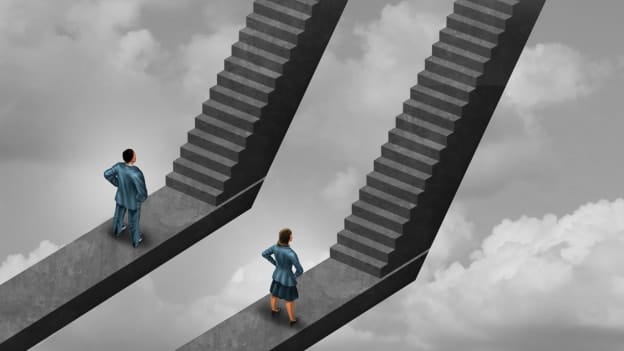
A recent observation by the Supreme Court of India has sparked outrage among gender equality advocates: "The structures of our society have been created by males and for males." This sentiment reflects a global issue, with laws in many countries systematically discriminating against women.
Over 2.8 billion women face legal barriers to job choices, with more than 100 countries restricting women from certain sectors. 59 countries lack laws against workplace sexual harassment, and some even allow husbands to prevent their wives from working.
India has one of the lowest female labour force participation rates at 37%, compared to the global average of 63% (and 94% for men). Most women work in informal, vulnerable sectors like domestic help and agriculture, often earning less than men. Reports during recent elections in Assam revealed that women in marquee plantation companies are paid significantly less than men and rarely promoted to supervisory roles. The global gender wage gap is around 24%, but pandemic lockdowns have worsened this, with more women being denied jobs.
Governments, society, and businesses are putting further hurdles on gender parity in terms of little or no access to social security schemes, banking services, education, digital services, and so on. As for corporates, the glass ceiling has always been there, preventing leadership roles for women.
The World Economic Forum’s Global Gender Gap Report 2021 predictably repeated the 2017 situation of halted progress towards closing the gender gap. The COVID-19 crisis has increased the impact at the bottom of the pyramid where financial independence for women just got obliterated.
Yes, many governments in both developed and developing economies and a few businesses have been trying to bring parity until the pandemic struck. The global gender gap, defined as the difference between men and women as reflected in social, political, intellectual, cultural, or economic attainments or attitudes, will not get narrowed in the near future without all the major stakeholders working together with a solid agenda – that of economic growth by inclusion. It is estimated that another 135 years will have to go by before the gap is closed, given the current rate of progress based on the four pillars: education attainment, health, economic participation, and political empowerment.
India has slipped further down in ranking from 112 to 140 in just one year, confirming the assumption that women folks have been hit very hard during the pandemic. In fact, India was hit badly on all aspects of gender inequality and only Pakistan and Afghanistan are the two Asian countries worse than it.
It appears that without an economic or business case, most governments or companies will not help accelerate the progress. If half of the world’s population that can work does not get to deliver their full economic potential, there is no way the post-pandemic global economy can recover to its accelerated pace. The process of women's economic empowerment, which increases women’s real power over economic decisions influencing their lives and priorities in society, clearly needs much more than what we dole out today, or promise during election times.
The global GDP could rise by as much as US$ 28 trillion by 2025 if women play an equal role to men in labour markets, for instance. India’s GDP will certainly be impeded by not letting a major part of its 1.3 billion compete equitably. With a huge number of marginalized women at the bottom of the pyramid gaining economic empowerment, our GDP could get almost a trillion dollars annually towards the 5 trillion economy dreams.
Businesses can play a more involved role in supporting the government's efforts towards inclusion and can learn from global enterprises that have made solid business cases working to close gender gaps. Companies with more women representation have achieved 22 per cent higher productivity, 40 per cent better customer retention, and 27 per cent more profitability. With less attrition, women employees can bring in major cost savings and reliability. Why is it then that the HR heads are not pushing for faster gender equity and helping themselves?
Here are a few things HR must do to drive women's empowerment and establish it as a true business partner:
- Develop an equal opportunity employment policy. Use technology and AI to remove bias on gender, caste, etc., and select employees at all levels based on merit and fit for the position. Numerous studies have found that women have a better chance to land jobs when their gender is not known (women coders and orchestra auditions).
- Push for a gender sensitivity culture. Review the current practices, and make a conscious shift from gender-neutrality to gender sensitivity. Insist on diversity and inclusion at almost all levels and promote more women internally to next-level roles. Break down the silos to allow women to grab potential opportunities in hitherto male-dominant roles. WFH has shown how efficiently women can handle flex timings and productivity issues. In sexual harassment issues, take the side of the woman to protect her rights.
- Appoint more women in research and development roles. A study of over 4000 companies found that more women in R&D roles resulted in radical innovation. It appears women score much higher than men in championing change. If you are looking at growth from developing affordable products and services for low-income groups, women are the best to develop them.
- Break the barriers to allow progress. Cultural and structural barriers quite often come in the way of female employees from progressing internally. Unconscious bias and discrimination are rampant even in highly esteemed organizations. Establish fair and transparent HR policies. Getting more women into senior roles will help achieve much in reducing bias.
- Engage local communities to learn and adapt. Businesses cannot sustain long-term shareholder value without ensuring the welfare of the communities they exist in. It is in the best interests of the enterprises to engage with local communities to understand the cultural and other barriers in society. It will also help connect with potential customers, employees, and special interest groups driving the gender agenda and diversity further.
- Focus on DEI (Diversity, Equity, and Inclusion). Do not promote diversity as a number or ratio, as it will not lead to automatic inclusion. Most HR heads make the blunder here. Instead, take metrics to identify the risks and prioritize initiatives.
Create a training program to coach and sensitize the male employees on how best to work with women counterparts. According to a veteran who had had success in gender diversity in his organization, the training should include such items as what types of questions should not be asked to women during interviews, or discussed during performance appraisals.
There are over 14 crore girls and women in schools and colleges in India. Even if a quarter of them come into the labour market, there will be dramatic progress by 2030. Businesses with a conscience can achieve far more than what governments can by influencing policymakers. HR can play a major role in driving this with a bit more commitment and conviction.