








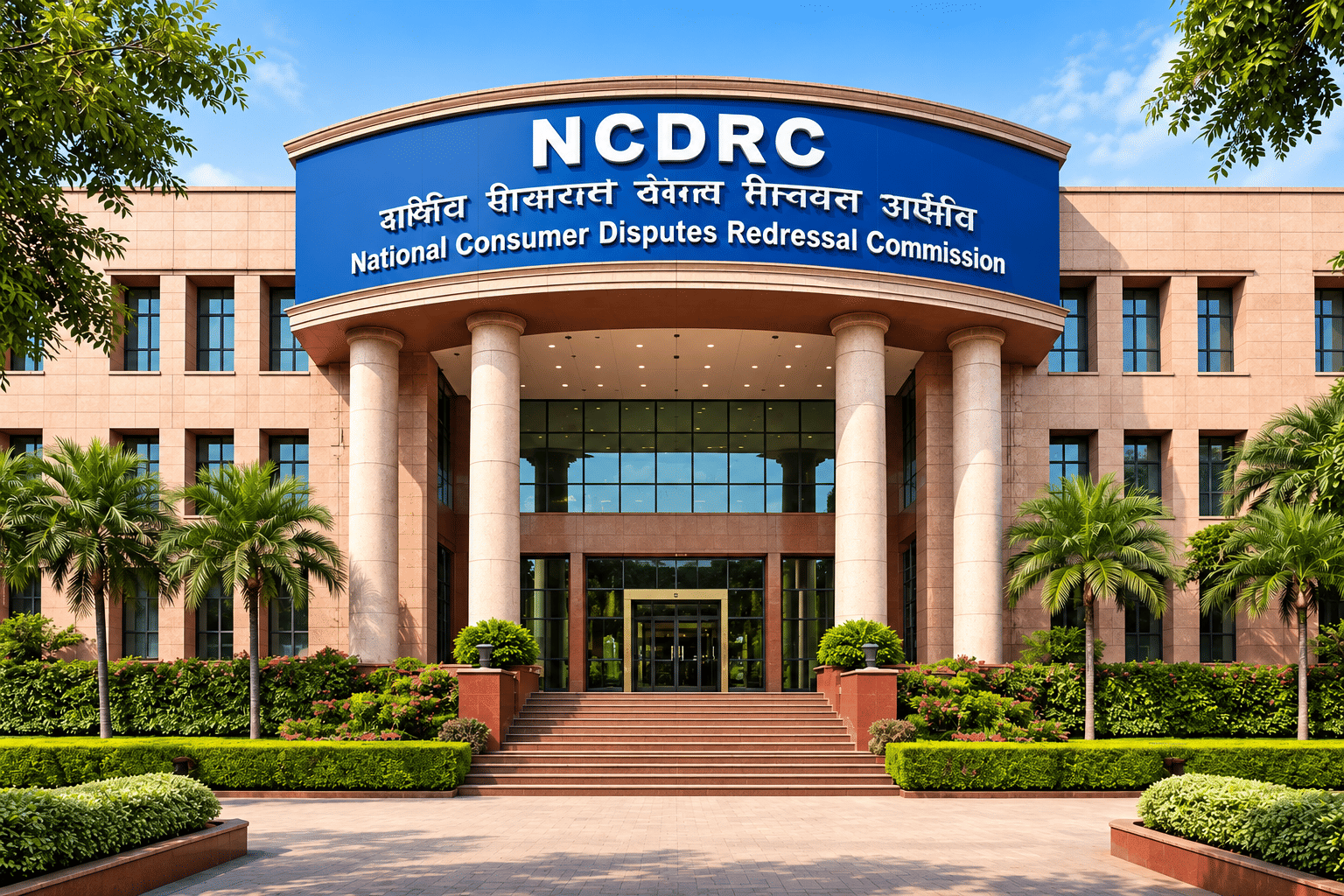
The National Consumer Disputes Redressal Commission (NCDRC) has ruled that a dispute over an employer's contribution to an employee's provident fund following disciplinary proceedings and dismissal from service does not qualify as a consumer dispute.
According to reporting by LiveLaw, the Commission allowed a revision petition filed by Dena Bank and set aside an earlier order of the Chhattisgarh State Consumer Commission, holding that the matter arose from an employer-employee relationship rather than a consumer-service provider relationship.
The decision provides important clarity on the limits of consumer law in workplace disputes and reinforces the distinction between employment matters and consumer grievances.
How the dispute began
The case involved Prakash Rao, a former employee of Dena Bank, who was dismissed from service on 18 July 2009 following disciplinary proceedings related to alleged financial irregularities.
At the time of his dismissal, Dena Bank had contributed ₹7,41,706.87 towards Rao's provident fund. The bank subsequently withheld the amount, stating that it formed part of recoveries linked to liabilities allegedly owed by the employee.
Seeking a refund of the amount along with interest and compensation, Rao approached a consumer forum.
Key developments in the case included:
- Rao sought the return of ₹7,41,706.87 along with interest.
- He also sought ₹2 lakh as compensation for mental agony and ₹25,000 towards litigation expenses.
- The District Consumer Forum dismissed the complaint in January 2018, holding that the matter was not a consumer dispute.
- The Chhattisgarh State Consumer Commission later partly allowed Rao's appeal and directed the bank to pay the amount with 9% annual interest, along with compensation and litigation costs.
- Dena Bank challenged this order before the NCDRC through a revision petition.
Why the NCDRC sided with the bank
The Commission examined the circumstances surrounding the provident fund claim and concluded that the dispute was directly connected to disciplinary proceedings and the employee's dismissal.
According to the order reported by LiveLaw, the Commission noted that Dena Bank had determined that ₹86.13 lakh was recoverable from Rao and had treated the provident fund contribution as part of that recovery process.
The NCDRC found that the action stemmed from the employment relationship between the parties and not from the provision of a service to a consumer.
The central question before the Commission was whether the dispute involved a consumer-service provider relationship. The Commission concluded that it did not.
As a result, the complaint could not be pursued under consumer protection laws.
A distinction between employment and consumer matters
The ruling highlights an important legal principle frequently examined by courts and tribunals.
Consumer forums are designed to address disputes involving consumers and service providers. Employment-related disagreements, however, generally arise from contractual and statutory obligations governing the employer-employee relationship.
In this case, the Commission determined that the provident fund dispute was inseparable from the disciplinary proceedings and subsequent dismissal. Because the claim originated from an employment matter, consumer jurisdiction could not be invoked.
The order therefore reaffirmed that workplace disputes cannot automatically be converted into consumer complaints simply because money or benefits are involved.
What the Commission ordered
The NCDRC ultimately:
- Allowed Dena Bank's revision petition.
- Set aside the order issued by the Chhattisgarh State Consumer Commission.
- Dismissed the consumer complaint filed by Prakash Rao.
- Granted Rao liberty to seek relief before an appropriate legal forum.
- Directed that any amount deposited by the bank before the District Forum be released to the bank upon a suitable application.
The matter was heard by a Bench comprising AVM J. Rajendra (Retd.), Presiding Member, and Justice Saroj Yadav, Member.
Why the ruling matters
The decision serves as a reminder that the nature of a dispute determines the legal forum available for resolution.
For employers and employees alike, the ruling underscores that disputes arising from disciplinary action, dismissal, recoveries, or other employment-related issues must be pursued through the appropriate legal mechanisms governing labour and service matters rather than consumer forums.
As workplace disputes become increasingly complex, the judgment offers clearer guidance on where employees and organisations should seek remedies when conflicts emerge from the employment relationship itself.