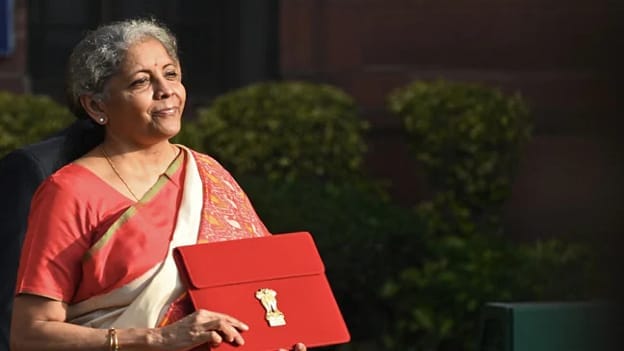
Budget 2021, the first paperless budget of India, was presented today in the backdrop of a pandemic that has drastically changed the economic landscape not only in India but globally. Though the government issued a slew of fiscal incentives last year, full recovery is still years away.
Finance Minister Nirmala Sitharaman presented her third Union Budget in Parliament today as India, like all economies the world over, tries to creep out of the shadows of the COVID-19 pandemic. She acknowledged that ‘Preparation of budget was undertaken in an environment like 'never before'.How did she fare? Read to know more.
The Budget proposals for 2021-22 rest on six pillars, which are -
- Health and well-being
- Physical, financial and capital infrastructure
- Inclusive development for aspirational India
- Reinvigorating human capital
- Innovation and R&D
- Minimum government and maximum governance
Here are the key highlights for the Budget 2021
Rural India and Agriculture
Under the backdrop of farmer protests, the FM stated that the government is committed to welfare of farmers, and announced enhancement of the allocation to the rural agriculture development fund from INR 30,000 crore to INR 40,000 crore.
Reflecting on the progress over years, for instance, in case of wheat, the FM shared that the total amount paid to farmers in 2013-14 was INR 33,874 Cr, in 2019-20 it was 62,802 crore and in the year 2020-21 the amount paid to farmers was 75,060 Cr.
FM indicated a commitment to ensure increased credit flow to animal husbandry, dairy and to fishery. In direction of enhancing credit to farmers, FM proposed increase in agriculture credit target to INR 16.5 lakh crore.
However, no radical reform proposals in the Union Budget for the agriculture sector were spelled out.
Income and Taxation
The FM announced that the government will take further steps to ease tax compliance.
- For senior citizens who only have pension and interest income, the FM proposed exemption of filing of income tax returns.
- Reduce time to reopen assessments to three years from the current six years.
- To reduce the burden of litigation, proposal to set up a faceless dispute resolution mechanism for small taxpayers.
- To further boost digitalization and reduce tax compliance burden, Tax audit limit increased from INR 5 crore to INR 10 crore.
- For reopening of serious tax evasion cases up to 10 years, the government has put in a monetary limit of cases involving over INR 50 lakh in a year.
- Also, advance tax liability on dividend income shall arrive only after declaration of payment of dividends.
- Government will also notify rules to eliminate double tax for NRIs on foreign retirement funds.
- FM also stated that affordable housing projects can avail tax holiday for another year till March 31, 2022.
- To further ease filing of IT returns, details of capital gains and interest from banks, post offices, etc will be pre-filled.
- Also, employers need to note that late deposit of employee's contribution to PF by employers will not be allowed as deduction to employers.
However, no major tax exemptions for the salaried employees were announced and IT slabs remain unchanged.
Measures for Migrant Workers
To extend support towards the unorganized labour force and migrant workers, FM announced the proposal of launching a portal for gig workers, building and construction workers, among others, to help formulate health, housing, skill and insurance credits and other such support schemes for all migrant workers. Some key budget introductions for this segment of workers include:
- Social security benefits will be extended to gig and platform workers for the first time.
- Minimum wages will be applicable to all categories of workers, covered under the Employee State Insurance Corporation.
- Women will be allowed to work in all categories by providing adequate security for night shifts.
- Compliance burden on employers will be reduced with access to online returns
Education and Skilling
FM announced introducing the legislation this year to implement the setting-up of a Higher Education Commission of India. The other measures announced were -
- A new Central university to be set up in Leh.
- Over 15,000 schools will be qualitatively strengthened under National Education Policy.
- Proposes to amend the Apprenticeship Act for providing post job training of graduates.
Initiative is underway with UAE to benchmark skill training. A similar collaboration with Japan has also been forged and more such collaborations with other nations will be undertaken.
Manufacturing and Infrastructure
In terms of manufacturing and infrastructure development, following measures were rolled out-
- 7 Textile parks to be set up in three years
- NIP projects: Creating institutional sector, monetizing assets, enhancing capital expenditure in state and central budget.
- For 13 sectors, the government has committed INR 1.79 lakh crore over five years starting from the financial year.
- Set up a development finance institution with capital of INR 20,000 crore in FY22 with aim to have a lending capacity of INR 5 lakh crore in three years.
- Outlay of INR 1.18 Lac crore for Ministry of Road Transport & Highway
- A framework to be set up that allows consumers to choose more than one distribution company
- A record sum of INR 1,10,055 crore for Railways, of which INR 1,07,100 crore is for capital expenditure only
- 7 port projects to be offered in private-public partnership mode; plan to support Indian shipping companies with subsidy
Healthcare
It came as no surprise that healthcare was amped up in the light of the global pandemic of 2020. The FM laid out a INR 64,180 crore spending plan for healthcare over the next six years which will be spent on primary, secondary and tertiary healthcare, in addition to the National Health Mission. This will include setting up of 17,000 rural and 11,000 urban health and wellness centres and integrated public health labs will be set up in each district.
In addition, the FM also announced INR 35,000 crore for COVID-19 vaccines.
Climate Change
In a move that favours efforts towards halting climate change and clean urban environments, the FM announced that vehicles will undergo fitness tests after 20 yrs for PVs, 15 years for CVs, along with announcing a voluntary vehicle scrapping policy. In that direction to boost public transport, the centre will provide INR 18,000 crore for public buses.
In addition, INR 2,217 crore for 42 urban centres with a million-plus population, to tackle the burgeoning problem of air pollution, will be allocated. Also, a boost to the non-conventional energy sector will be provided through allocation of INR 1,000 crore to solar energy corporation and INR 1,500 to renewable energy development agency.
Ease of Doing Business
A separate administration structure to promote ease of doing business was announced, to support the development of multi-state co-operatives.
Meanwhile, the government also suggested to amend Insurance Act to allow higher FDI in insurance, with the FDI limit in insurance increased to 74 percent from 49 percent.
Micro, Small and Medium Enterprises (MSMEs)
The budget also proposed that MSME allocation be doubled. The Government will set aside INR 15,700 crore in FY22.
The government also proposes to reduce margin money requirements from 25 percent to 15 percent for startups.
Changes to The Companies Act
FM Sitharaman has proposed redefining the definition of Small Companies under the Companies Act 2013 by increasing the threshold of paid up capital from not exceeding INR 50 lacs to not exceeding INR 2,000 crore, and increasing turnover from not exceeding INR 2 crore to not exceeding INR 20 crore, benefitting over two lac companies in easing their compliance requirements.
Entrepreneurship and Startups
To boost innovation and make way for entrepreneurship, the FM proposed:
- One person companies( OPC) to be allowed; NRIs shall be allowed to incorporate OPCs, in a boost to startups
- No paid up capital or turnover restriction, will allow conversion of one-person company to any other kind, reducing residency limit from 182 days to 120 days
- An investor charter is proposed to protect investors' rights across all financial products
In addition, the FM proposed an extension of tax holiday for startups by one more year.
What did you think about some of the key announcements made in the Budget 2021? Let us know in the comments section below.
Image Credits: NDTV