








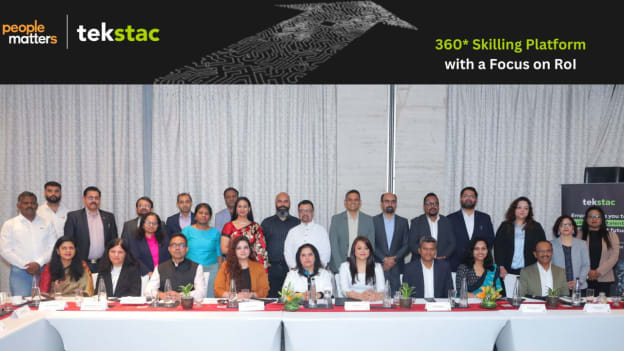
L&D has emerged as a strategic enabler of business transformation. Leaders today must rethink traditional learning models and incorporate AI-driven solutions to prepare employees and bridge skill gaps. They must learn to harness the power of GenAI to future-proof their workforce, differentiate their talent strategies, and drive sustainable business growth in an increasingly complex landscape.
This was the central theme of discussion at the People Matters x Tekstac Roundtable Conference, where industry leaders explored how AI is reshaping workforce development and the future of learning.
The L&D landscape: Challenges and opportunities
Organisational learning is transforming thanks to three core disruptors, as shared by Krishna Kumar, Head of Marketing, Tekstac:
- Skill Shortage: The GenZ churn and reduced longevity of top leaders is a dire reality today. It is crucial to maintain a talent pipeline as per ever-evolving skills, emerging technologies, and industry dynamics. Managing aspirations is another concern – people want to learn the latest new skills, hence L&D must build a competency framework and skill inventory that identifies and tracks skills over a period of time.
- Resistance to Change: Skill mapping will help align learning efforts to business needs. But to create a learning pull and enable skills flexibility at scale, organisations must drive learning , learner engagement and foster a continuous learning culture. Customising and personalising the learning experience for each individual can improve learning adoption. For example, a personalised coach can help learners understand what would be their next learning based on their skill inventory, and adjacent skill profile, and help them proactively realise their career aspirations.
- Speed of Technological Change: L&D must proactively predict skill dynamics using AI and data analytics, to adapt to continuous change. Skill insights in the form of robust analytics, and dashboards, can help create an objective outcome tied to real business ROI.
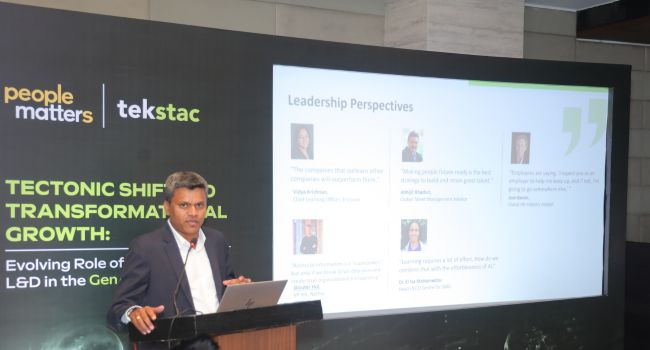
The answer to these conundrums lies in investing in developing, nurturing, and training one’s people as a way to engage and retain talent. Tekstac's approach involves empowering organisations and employees with necessary skills - building a skills intelligence engine for business decision-making to help organisations stay ahead of the pack. It is about providing the right skills at the right point in time for the right business outcomes.
L&D: A driver of strategic impact
Consumer psychology and consumption patterns are impacting how learners consume learning. Similar to how MOOCs (Massive Open Online Courses) democratised learning and microlearning addressed reduced attention spans, Gen AI has started addressing just-in-time learning needs with a single prompt. But with usage comes the question of impact. Adoption falters because the learner is not getting what they expect, often it is just “badges”, “certifications”, “recognitions”, etc. but no real outcome, leading to disconnect. Every organisation and organisational context is different, and L&D leaders must answer key questions around the relevancy and intended change through the learning program. Some ways to drive value for both people and businesses are:
- Hyper-personalise learning solutions, thinking about every individual and different motivations for learning. Create an agentic framework methodology that interacts with all systems and provides solutions, all starting with one quick prompt.
- Focus on capability building- empower the future workforce through upskilling, cross scaling, reskilling.
- Build “opportunity marketplaces” similar to talent marketplaces that marry skills and opportunities. Skill volunteering is one way to enhance this.
- Build predictive analytics to create curable ancillary skills in the organisation.
- Cultivate the right environment, alongside the 70-20-10 format of education-experienceexposure.
- Blended learning i.e. AI and human, for example, AI-based coaching.
Creating an impactful learning culture
Educating and training employees to use Gen AI will help build a Gen AI-enabled, ready workforce. Individual agency is a core component to make this happen – AI should become about “Authentic Inclusion” i.e. enabling people to be authentic themselves and do exactly what they want to do. Despite the fear of losing jobs to AI, the fact is that people will not be replaced by AI, because human intervention is extremely critical in whatever we do. However, people will be replaced by people who know AI.
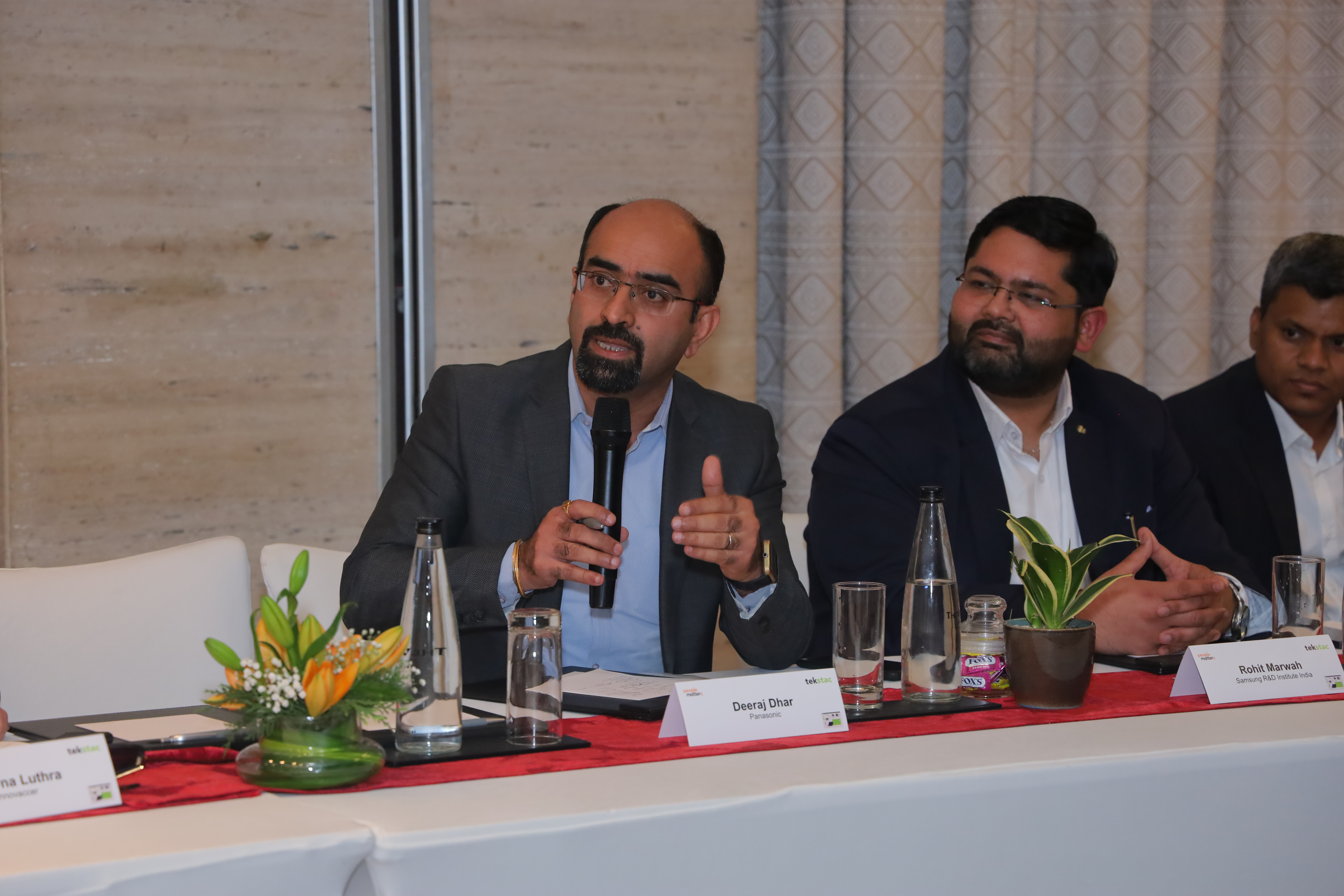
Hence, the more AI will come in, the more human we need to be. Employees have a real need to keep learning but lack time to learn. L&D should design learning to cater to humans’ very basic needs – “How do I feel valued by the organisation?”. Tapping into human psychology will help unravel the “nature versus nurture” gap, i.e. a person learning proactively for self, rather than being “recommended” to upskill. Learning culture is all about unlocking the “Nurture”. At the core, it is important to create the ability to respond to a world that is fast changing, by building learning into the flow of work. The task is to create a skills-first, flexible, autonomy-led, boundaryless, inclusive organisation to suit diverse people's needs. AI is an enabler which will help us reach the next level of human maturity, it will help unlock employee acquisition versus skill acquisition - a good framework to build skills.
Strategy, impact and adoption
L&D and HR professionals must learn to operate with a strategic mindset and emotional intelligence. Building a community of people who teach other people, and get other people to do things, rests on today’s leaders. This will sustain learning interest and learning engagement.
Ultimately, AI success boils down to business ROI. It is about convincing business leaders like CEOs and CFOs about investments made in L&D. Leaders should ensure learning outcomes are measured, both through the learner view and skills-and-organisation view. Create an ecosystem around whatever learner wants to learn, to whatever extent learner wants to learn, for real impact on the job”. Most people talk about AI from a feature standpoint, rather than business benefits. The moment leaders can change that lens, AI will become the catalyst to drive L&D forward.
One thing is very certain, we have to live with AI, and more importantly, accept and embrace it, because our job is to take care of humans. As one of the leaders noted in the roundtable discussion, “If we do not disrupt ourselves today, we definitely will be disrupted tomorrow”.