








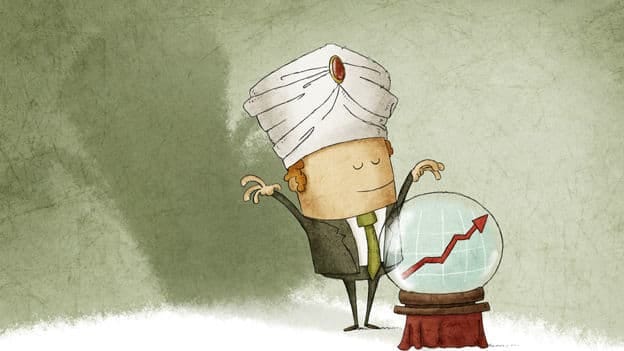
My 11-year old niece is a typical child of the new generation, I believe. Why? She spends a considerable chunk of her time fiddling with new technology and WhatsApping her friends. That’s right, an 11-year old on WhatsApp. At a family lunch one afternoon, as I watched her fingers fly across her smartphone’s keypad, I realized that “twiddling thumbs” in my childhood held a completely different meaning to what it does today. She isn’t alone. Imagine my surprise when my 3 year old nephew tried to unlock my smartphone with the combination to his iPad? As an HR professional, this fascinated me, because I knew that future-proofing an organization just got more complicated. They are the future, and their generation may make us rethink everything we think we know about our potential employees. Are we ready for them?
OK, the line above may have made the future of our workforce seem like an alien race about to land, but it isn’t so. In an ideal world, the HR function is always future-looking. But of late, it seems like we do a lot more from a “today” perspective. In fact, this outlook permeates the functioning of many organizations. For example, in most of our cities, the infrastructure is playing “catch-up” to an already burgeoning and demanding traffic situation. Smart Cities may be the way to go, but we should have had the foresight to start work a decade ago. We also need to take into account geo-political impact on business. Brexit has the business world humming, and especially Indian businesses from the standpoint of immigration and the value of the pound. American politics is also being closely watched for possible impact on our main source of bread and butter.
“What about technology?” You ask. It goes without saying that the rapid pace at which technology is changing the world is leaving many people wheezing and panting in an effort to catch up. But to catch up alone will not be enough. A successful organization will be that which predicts and builds the next big tech trend. Each of these aspects finally hits home, when we are faced with a dynamic, diverse and digitally-savvy workforce. It is here that HR needs to navigate the way forward for the organization, through the all-essential task of “culture-building”. Forget the clichés of dealing with an ever-demanding millennial workforce. The workforce and workspace of the future will pose challenges to HR like none other, but will also bring in opportunities to place HR at the core of business – ahead of the curve, with foresight into potential problem areas and solution-creation. We believe the workforce will move towards a “franchise” mindset, like the members of a football club: highly committed and going all out for the team, but fundamentally ok with moving around and within a short period of time. All of this, based on choices that we provide to each employee: Choice of type of employment, social contribution, career growth (like we do at Infosys with Zero Bench – our gamified platform to engage each employee in productive work and Compass – a platform to enable career growth through opportunities, learning, etc.), leave types, benefits, etc.
So, how do we navigate this transformation? By keeping it simple. Sure, it might look like we are living in paradox – deep-diving while broadening our base, trying to unify experience while personalizing to as large an extent as possible – but through all of it, we have always kept the employee at the center, and this must continue. Now, here’s what we can look forward to:
- Technology, Automation and Mobile - I recently heard that the pace of technology is the fastest it ever was and the slowest it has ever been. This is true and the possibilities for HR in this space are endless. Mobile apps ease connect across large global organizations, enabling employee engagement on a larger, more effective scale. Technology also helps HR through the automation of a number of processes, freeing up time for more collaborative purposes. It will be more “self-service” than before. At Infosys, we moved from an existing enterprise network platform to Yammer, solely because Yammer had a widely-available mobile app. This helped bring a number of teams together from across the globe. We also built an app to host modular packets of work to engage the bench population, called Accelerate. This helped the enabler functions partner better with business to realize demands.
- Virtual Reality and Crowdsourcing - Virtual Reality invokes scenes from sci-fi movies and gaming, but it could soon become an integral part of the holistic HR experience. Imagine an onboarding session that bypasses PowerPoint presentations and lets the new employee walk through the campus instead. This would be great, for new employees to see the Infosys Mysore Campus on their first day! Training opportunities can move from “in front of a computer e-modules” to immersive experiences. Interviews can get more interactive, when we move from video to VR. Google Cardboard is one such example. Crowdsourcing is still catching on – moving beyond crowd-funding for movies into gathering ideas for business and strategy. Large organizations are a pool of potential ideas and breakthrough innovations – they just need to be gathered from the workforce in a collaborative, engaging manner. At Infosys, we ran our first crowdsourcing exercise in 2014, to get employee ideas on our strategic journey. We received 2650 ideas which were then rated by the employees. Although of short-duration, this exercise was a great engagement exercise too.
- Collaboration and Maker Spaces - The future of any successful function lies in collaboration between different business and enabler functions. An organization must build a culture of collaboration for it to become a part of the DNA. Additionally, collaboration need not be restricted to within the organization. The employees can be encouraged to collaborate with the world outside to arrive at innovation, and vice-versa. A conducive environment must be created within the organization for collaborative ideas to be born. This extends to physical spaces as well. Open workspaces with areas that encourage the gathering of people are a great way to start. I recently moved into a renovated workspace where writeable walls and open collaboration spaces are the norm. It takes some getting used to (moving from cubicles to less private work benches), but is definitely worth any initial discomfort. I’ve watched employees discuss ideas out in the open, drawing a crowd while the furiously write away on the walls!
- Analytics, Personalization and the power of Influencer networks - HR analytics has been a trend for a few years, but the future would be to predict employee behavior instead of just retention and engagement analysis. We will know how an employee or potential employee will behave, well before the act takes place! Very ‘Minority Report’, don’t you think? More data mining will be the norm, and drawing inferences from the data to provide a more personalized/customized employee experience will be crucial. Talent fulfillment, compensation and benefits, skill enablement and a lot more can be customized based on talent analytics, helping employees grow within the organization. The personalization extends to CSR as well, going beyond the obvious sense of social responsibility (donating money and time). The future will be to focus on what is important to the employee to make him/her feel engaged and fulfilled, both at work and outside; investingin each employee. Thereby, we will help employees build a sense of purpose.We must enable them to do what is important to them. Another angle of talent analytics should be to identify employee influencer networks. Influencers hold tremendous potential for HR – they can help move the employee population towards a strategic objective while forming the bridge between the leadership and employees. They are also a great feedback pool. At Infosys, we have begun this journey in a small way!
The future looks exciting, but often, the more things change, the more they remain the same. Some fundamentals must not change: the importance of learning (both at the start of the career and through the entire length of it) and the human touch (it must run as a thread through all the data inferences and tech developments). And as always, the importance of re-skilling and viewing our client as the end-user of the business remains unchanged. Expanding our horizon beyond processes and activities, to view Employee Experience as the core function would be critical, like AirBnB has done. In this way, HR Consultants could coach organizations towards the future of employee experience in a holistic way.
Finally, to extrapolate from Marissa Mayer’s views on employee engagement, it’s really quite simple: “It's about getting the best people, retaining them, nurturing a creative environment & helping to find a way to innovate.” That will be the HR formula for the future.