For all the conversations around AI's productivity gains and transformative potential, many organisations are still wrestling with a more fundamental challenge: what AI means for accountability.
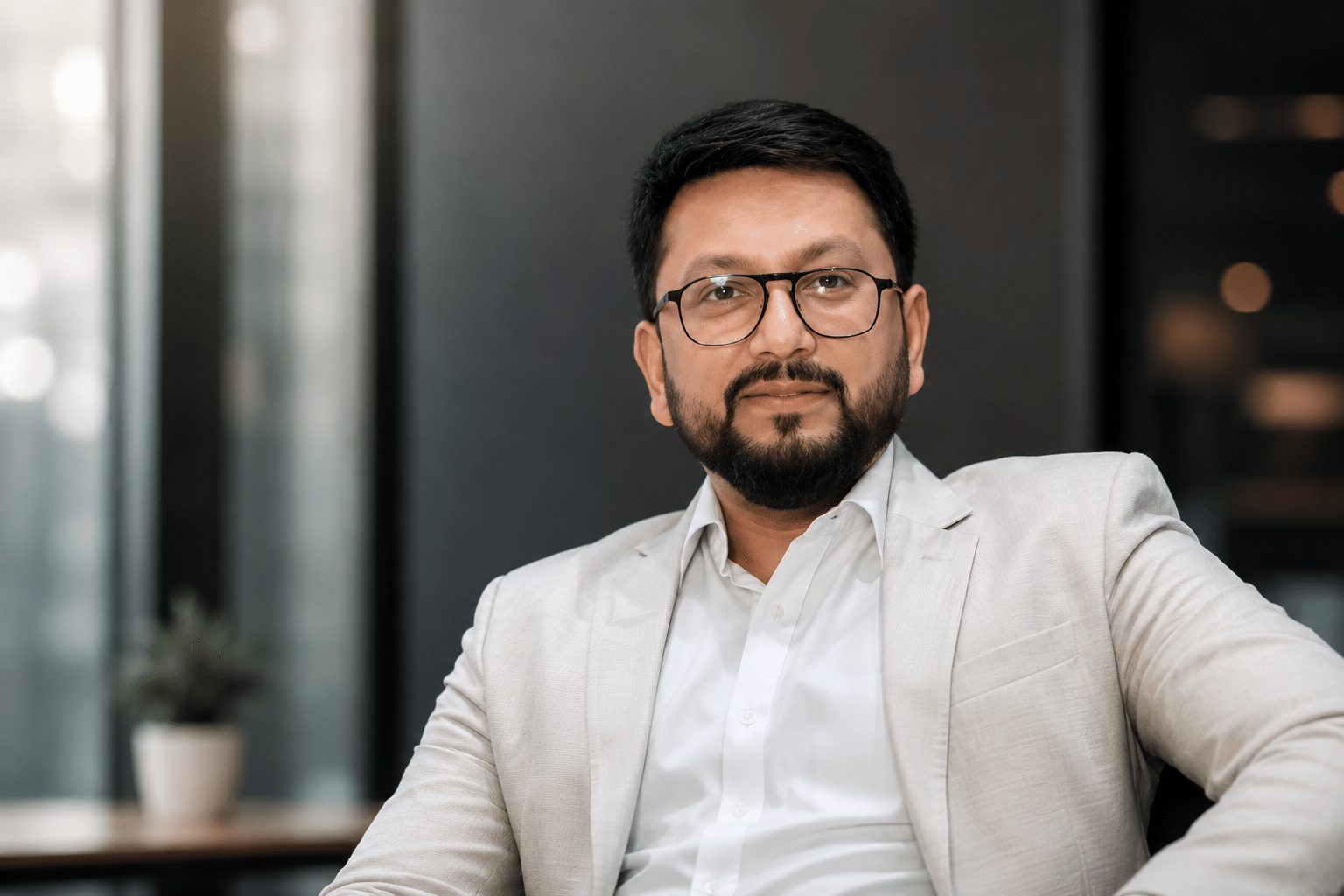
For T Mark Fernandes, Head HR – Corporate, Kotak Life, that is where the real governance conversation begins. "AI can augment authority, but AI cannot replace accountability," he says.
It is a distinction many organisations are yet to fully appreciate. As AI tools become embedded into decision-making, there is a growing tendency to view technology as an objective source of truth. The risk is not that AI will make decisions on behalf of organisations — the risk is that leaders may stop interrogating those decisions with the rigour they deserve.
Governance, Fernandes argues, must be anchored in a simple question: who remains accountable when decisions informed by AI create people, reputational, or ethical consequences? The answer can only be human.
The danger of outsourcing judgement
One of the biggest misconceptions about AI is that vast processing power translates into context-rich answers.
AI operates without any understanding of organisational culture, power dynamics, or human relationships. It can identify patterns and surface recommendations, but it cannot appreciate the context within which those recommendations must land.
"AI is context-neutral. It is culture-neutral. It is authority-neutral," Fernandes explains.
That neutrality is both its strength and its limitation. What AI produces may appear logical and data-driven, but problems emerge when leaders accept outputs at face value and move directly to implementation without applying human judgement.
The consequences range from flawed people decisions and reputational risks to ethical dilemmas no algorithm is equipped to resolve. Accountability becomes blurred. When a decision fails, it becomes easy to point to the technology rather than examine the human judgement that approved it. That is precisely why Fernandes insists governance must be viewed through the lens of accountability — not technology.
HR's role is becoming bigger, not smaller
Despite widespread experimentation, many employees and leaders are still learning what AI systems can and cannot do. HR's job is not to encourage adoption but to help people understand where AI adds value and where human judgement must remain in control. That begins with demystifying AI and positioning it as a supplement to human effort, not a substitute for human thinking.
The second responsibility is governance. AI is developing at a pace that outstrips traditional policy-making — what appears acceptable today may require a different interpretation tomorrow. Rather than predicting every scenario, HR's role is to equip leaders with frameworks that help them ask better questions before making decisions. The objective is not to remove uncertainty; it is to help organisations make thoughtful choices despite it.
The third is continuous auditing: monitoring how people engage with AI, identifying where it is being misused, and building real cases for organisational sensitisation.
Why digital ethics will remain a moving target
In such an environment, governance cannot be reduced to a checklist. Leaders need to build a culture where decisions are examined through the lenses of fairness, transparency, reputational impact, and human consequence.
For Fernandes, the objective is not to create fear around AI — it is to ensure that enthusiasm for technology does not outpace thoughtful consideration of its implications.
While many discussions focus on automation, job displacement, or algorithmic bias, Fernandes believes the most immediate challenge is far more human.
"The biggest challenge is outsourcing thinking and decision-making to AI."
As AI becomes more accessible, there is a temptation to accept outputs without scrutiny — recommendations copied into presentations, responses adopted without validation, conclusions accepted because they appear authoritative. What gets lost is critical thinking.
Fernandes is careful not to frame this as a battle between humans and machines. "It should be man and AI, not man versus AI." Technology should strengthen human capability, not diminish human responsibility. That distinction may ultimately determine whether organisations use AI as a tool for better decisions — or become dependent on systems they no longer fully understand.
Trust and transparency will define the next phase of AI governance
As AI becomes more deeply embedded into workplace systems, Fernandes believes two principles will matter above all else: trust and transparency.
Employees, customers, and stakeholders will want to understand how decisions are made, what data informs them, and who is accountable for outcomes. No system should become immune to questioning. Every AI-driven recommendation should be challengeable. Every decision-making process should be explainable. Every escalation path should be clear.
Without transparency, organisations risk creating black-box environments where biases remain hidden and accountability erodes. For leaders, this means looking beyond outputs and paying closer attention to the mechanisms that produce them — data sources, decision models, representation within datasets, governance structures.
The future HR leader sits at the intersection of technology and behavioural science
Fernandes does not believe AI will fundamentally alter HR's purpose. What will change is the expertise required to deliver on it.
"Every HR professional will have to build tech awareness and partner with technology better," he says. But technology fluency alone is not the answer. The profession's next evolution will depend equally on a deep understanding of human behaviour.
"The way forward for HR is the marriage of behavioural science and technology."
Why the one-size-fits-all rulebook is reaching its limits
The implications extend well beyond AI. Fernandes believes the traditional workforce model itself requires reinvention. Policies and structures built for a relatively homogeneous workforce no longer fit an environment where organisations are simultaneously managing multiple generations, growing contingent workforces, shorter tenures, and increasingly diverse career aspirations.
"The one-size-fits-all model will change," he says.
What replaces it will be more adaptive: personalised employee experiences, flexible structures, and micro-cultures capable of supporting different workforce segments without losing coherence. That shift — from standardised to bespoke — will quietly reshape how organisations think about people, not just technology.
Hear more of his insights at People Matters BFSI Talent and Tech Summit 2026, happening on June 4, 2026 at Taj Santacruz, Mumbai as he is taking these conversations further in sessions like Navigating Governance Expectations In A Human-AI World.