








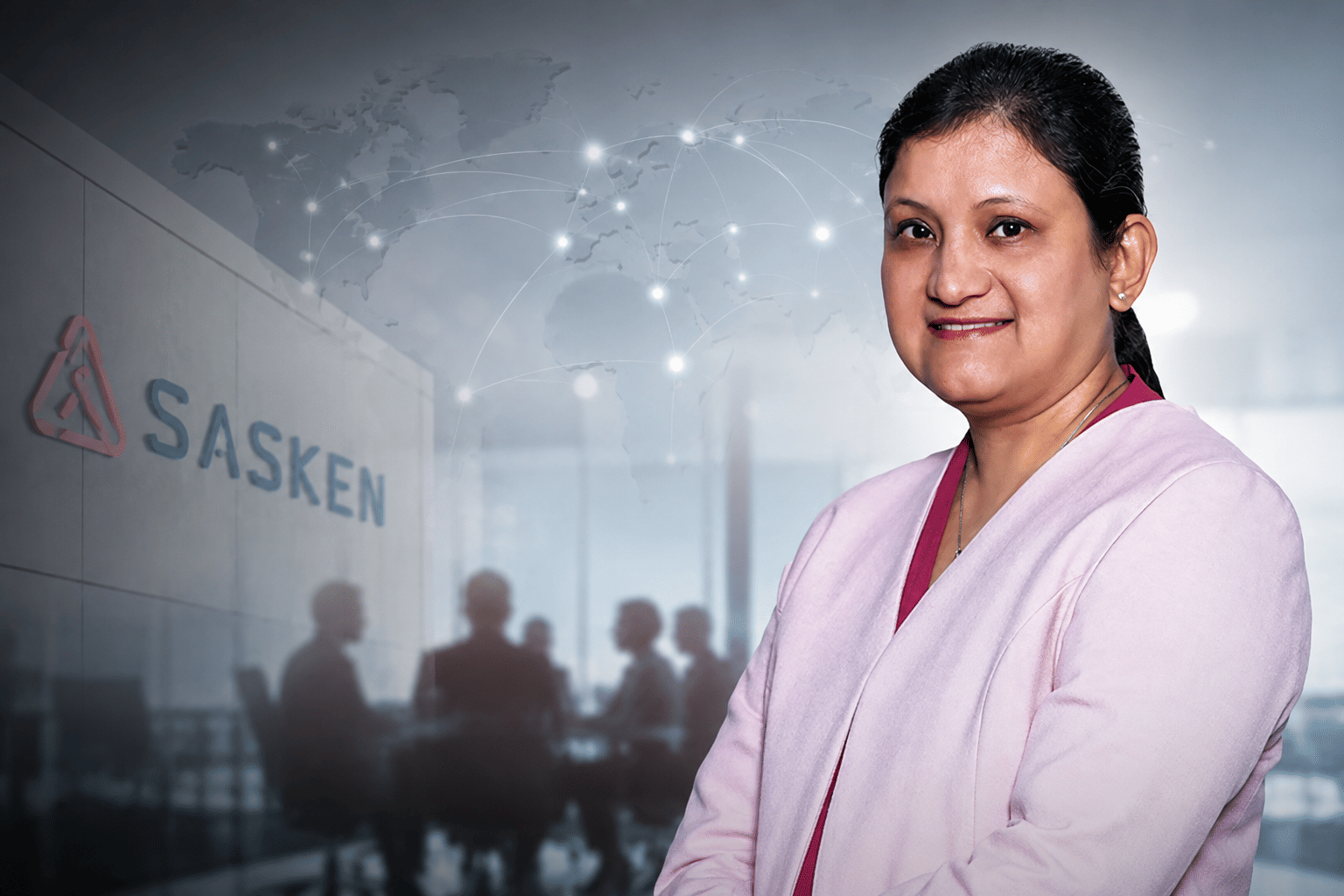
Geopolitical uncertainty is no longer reshaping supply chains alone. It is steadily changing how organisations hire, retain and develop talent.
According to Moumita Kurup, VP and Global Head of Human Resources at Sasken Technologies, workforce strategies built for stable conditions are becoming less effective as businesses navigate trade shifts, regulatory changes and economic volatility.
Speaking to People Matters, she said organisations must move beyond static workforce planning and build models capable of adapting continuously.
Workforce strategy is becoming a resilience strategy
For Sasken Technologies, which operates in the semiconductor and embedded technology sector, geopolitical shifts have a direct bearing on talent availability.
"The talent we need is specialised, and the geographies we draw from are increasingly being shaped by forces beyond our control," Kurup said.
She explained the company has become more deliberate about where it hires from, how quickly talent can be onboarded and whether it has sufficient capability in reserve instead of relying on reactive hiring.
"Volatility has made just-in-time hiring a riskier strategy."
Retention has also taken on greater importance. Rather than focusing solely on compensation, the company is investing in structured career paths, regular one-on-one conversations and closer engagement between Business HR partners and critical talent.
"It is not just about compensation. People stay when they feel seen, heard, and growing."
Kurup also described AI enablement as both a skilling initiative and a retention lever.
"When employees see the organisation investing in preparing them for the future, it builds loyalty."
She added transparency becomes especially valuable during periods of uncertainty. "Trust is what holds teams together when the external environment feels unpredictable."
Risks organisations may not be discussing enough
Kurup believes some workforce risks remain underrepresented in leadership conversations despite becoming more pronounced.
She highlighted:
- The mental load on employees, where prolonged uncertainty creates anxiety around job security and organisational direction.
- Middle management fatigue, as managers absorb constant change while being expected to communicate and implement it effectively across teams.
"If we don't support them well, they become a bottleneck rather than a bridge."
Why learning agility is becoming a hiring priority
As business priorities change faster, Kurup believes organisations need to rethink how they assess talent. Her approach rests on three principles:
- Hire for learning agility, not simply existing skills.
- Look internally before hiring externally through greater internal mobility.
- Make learning continuous rather than episodic.
She said Sasken looks for evidence of people who have successfully adapted across different roles or industries during recruitment.
"In a volatile environment, someone who can adapt, unlearn, and relearn is more valuable than someone who is a perfect skill fit today."
On capability building, she said the company has invested in internal academies and a dedicated capability-building team, with AI enablement forming a significant part of its learning agenda. "The goal is to create an environment where learning is simply part of how we work."
Resilience is increasingly about people
Business continuity plans remain important, Kurup said, but organisations are discovering resilience depends just as much on their workforce as on operational safeguards.
"The contingency plan rarely saves the day, it is the managers and leaders who communicate honestly, the employees who trust leadership, and the teams that pull together that make the real difference."
She pointed to research from Deloitte showing workforce adaptability is now ranked among the highest resilience priorities.
Within Sasken, resilience has become closely tied to capability depth, knowledge continuity and organisational culture.
"The concept of resilience itself has evolved from a defensive, risk-mitigation posture to an offensive capability."
"The question is no longer just can we survive disruption, it is how quickly we can bounce forward."
Leadership matters more when certainty disappears
Kurup identified three leadership capabilities she considers essential during prolonged uncertainty:
- Communicating with clarity during ambiguity.
- Making decisions without complete information.
- Creating psychological safety.
"What people need during uncertain times is not false reassurance, but honest, consistent communication."
She said leaders increasingly need to make informed decisions before every variable becomes clear, while remaining willing to adjust course as circumstances evolve.
Psychological safety also plays a central role.
At Sasken, one initiative designed to reinforce this culture is Unfiltered Hour, where leaders openly discuss failures and the lessons learned from them.
"When leaders model vulnerability, it gives everyone else permission to do the same."
"That is the beginning of a truly psychologically safe culture."
Balancing long-term plans with constant change
Kurup does not see long-term workforce planning and agility as competing priorities.
Instead, she believes organisations should separate long-term direction from flexible execution. "Long-term workforce strategy should set the direction... But the execution has to be flexible and reviewed frequently."
She said many organisations are moving away from rigid annual planning cycles towards rolling, scenario-based planning.
She also expects workforce models to become increasingly blended, combining permanent employees with contract talent and broader ecosystem partnerships to improve responsiveness without repeated cycles of hiring and layoffs.
Skills, rather than fixed job roles, are becoming the most reliable foundation for workforce planning.
Referencing research from the World Economic Forum, she said investment in transferable and cross-functional skills remains one of the strongest indicators of organisational resilience.
At Sasken, she said learning, innovation and people remain consistent priorities even as business needs evolve.
Culture becomes the real differentiator
Looking ahead, Kurup believes organisations will be distinguished less by their risk frameworks and more by the strength of their culture. "Strategy can be copied. Culture cannot."
She argued organisations with established people-first cultures are better positioned to absorb external shocks because trust and purpose already exist before disruption begins.
She also cautioned against reducing investment in workforce development during periods of pressure.
"The temptation during uncertainty is to cut, consolidate, and wait."
Instead, she pointed to Sasken's Technical Competency Benchmark (TCB) framework as an example of sustained investment in capability building.
"Maintaining that kind of investment in capability building, even when times are tough, signals to your people that you believe in the future."
Kurup believes organisations able to think long term while responding quickly to immediate challenges will be the ones best placed to navigate an increasingly fragmented world.
"They will be the ones that kept their people at the center, invested in their growth, and never lost sight of where they were headed, even when the path was unclear."