The CHRO role has undergone more significant evolution in the past three years than in the entire decade prior.
Modern HR leaders are tasked with a complex mandate: driving AI integration, reimagining workforce structures, developing leadership talent, overseeing new technologies, and maximising organisational output through continuous adaptation. In this evolving landscape, simply reacting to change is insufficient; the new imperative is to actively direct it and orchestrate growth.
That is precisely why thousands of HR leaders, business executives, technology innovators, and workforce experts will gather at People Matters TechHR India, the premier destination for HR and WorkTech innovation across Asia, happening at the Yashobhoomi Convention Centre in New Delhi on August 6-7, 2026.
Returning with increased scale and deeper significance, this landmark conference serves as a critical forum where the architects of tomorrow’s workforce converge to challenge, create, and command the next era of work.
This year’s question is not whether technology will transform work, it already is.
The real question is: who is shaping that transformation — and are you in the room where it happens? Two days. Four stages. 5,000+ leaders. One defining conversation.
1. The theme is not a tagline — it's a directive
"Lead The Legacy. Orchestrating Growth With A Human Edge." That is the charge at TechHR India 2026, and it does not arrive as a motivational banner. It arrives as a provocation.
The world of work is not only being reshaped by single forces but by overlapping ones, moving simultaneously and at speed. In that environment, reacting well is not leadership, designing the outcome is. The conference is built on a single, uncompromising premise: 2026 is the year to industrialise AI with an elevated human edge — to curate, collaborate, and orchestrate it in ways that elevate both people and performance.
The shift this year is from adapting to orchestrating. If your organisation is still in reactive mode, this is the room you need to be in.
2. A keynote lineup that pulls no punches
Setting the tone for Day 1, Holger Mueller, VP and Principal Analyst at Constellation Research, to take the Centre Stage with How To Make AI Your Enterprise's Competitive Edge — a no-nonsense roadmap to turn AI from a set of experiments into a true performance engine, covering how to redesign workflows, empower people at machine-level speed, and build governance that keeps AI safe, ethical, and trusted.
Day 2 opens with Marc Effron, Author and President of The Talent Strategy Group, delivering Leading With Talent Philosophy: How Modern Leaders Turn Beliefs Into High Performance — a sharp, framework-driven session on the invisible force that separates high-performing organisations from those still managing processes and hoping for results.
The closing conversation of the two days features a frontier-thinker asking the hardest question of all: The World Your Workforce Will Inherit — And How To Build Them Ready For It. With creative leaders like Prasoon Joshi on stage, this is the session that expands the frame at exactly the moment when the conference is about to send everyone back to their desks.
Then there is Chetna Gala Sinha, Founder and Chairperson of Mann Deshi Bank, whose session on Building a High-Performance Enterprise for Inclusive Transformation tells the story of mission-driven institution-building that every leader in the room will carry out differently.
These are not keynotes but are course corrections.
3. Four stages, zero filler
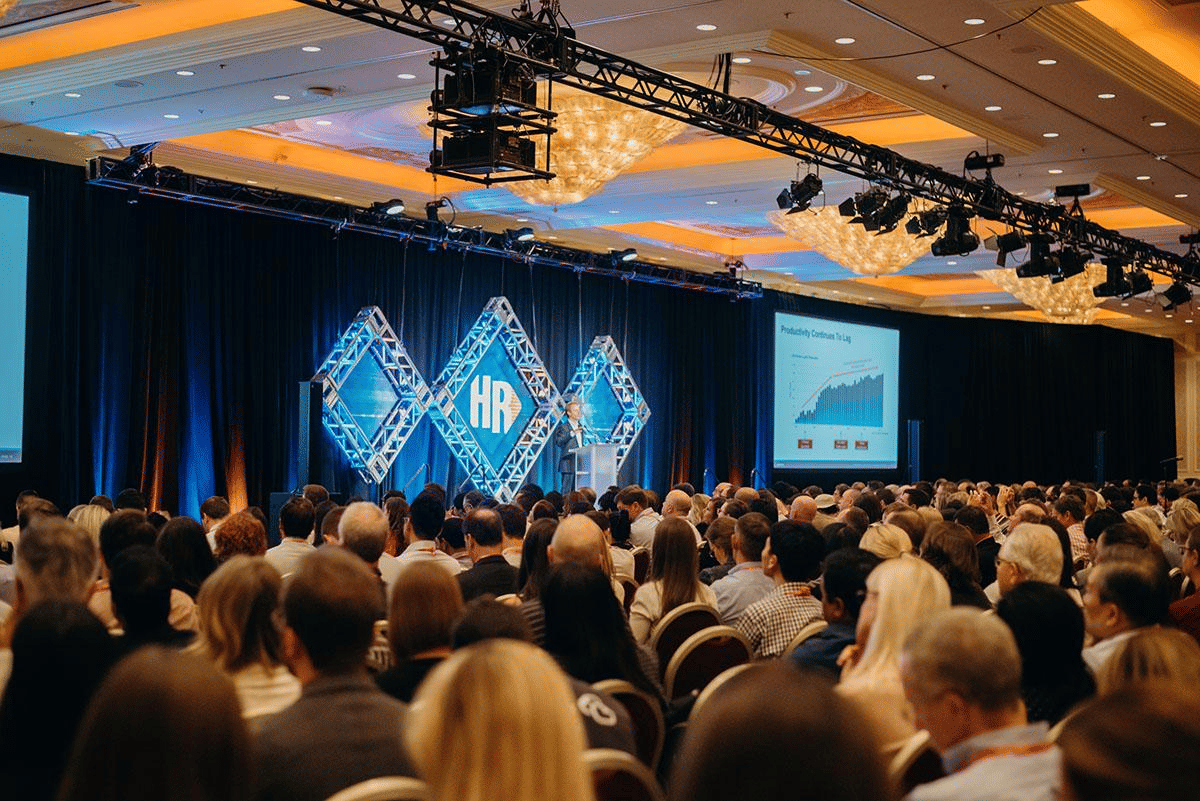
Most conferences have a main stage and an afterthought but this conference has four distinct stages, each built for a different kind of thinking.
The Centre Stage carries the mega keynotes and big ideas — the sessions that set the intellectual agenda for the conference.
The Growth Stage is where bold conversations and impact stories unfold, featuring fireside chats, candid CXO exchanges, and the Legacy Unplugged series.
The Think Tank Lab hosts masterclasses and provocative discussions in formats that demand active participation rather than passive listening.
One of the most interesting and uniquely designed stage, Unconference which runs live Q&As, fast debates, and experiential sessions — including an AI for HR Quiz Show and a rapid-fire succession planning deconstruction that does not spare anyone.
And the How To AI @ Work Playground is exactly what it sounds like: hands-on, practical, and built for leaders who are done being sold transformation and need to deliver it. One hundred-plus learning hours spread across five stages means you will never be stuck in a session that does not apply to you — and you will likely leave wishing you could have been in three places at once.
4. An agenda built around four powerful pillars
The TechHR India 2026 agenda is organised around four interconnected lenses, each pointing to a deeper redesign of work: The New HR Operating System (HROS) Edge, The Leadership Edge, The Human+Tech Experience Edge, and The Sustainable Innovation Edge. Every session maps to one of these pillars, so whether you are a CHRO rethinking your operating model, a business leader navigating AI strategy, or a talent head trying to make skills-based models actually work, there is a track designed for the decisions you are carrying.
The sessions are built around the questions that organisations are wrestling with right now. Should HR lead AI strategy, or enable it? Can a right-to-disconnect policy survive the leaders who sign it? Is organisational health the most underrated predictor of long-term value — and if so, why is almost no one measuring it? Are career ladders truly dead, and what replaces them for a Gen Z workforce? These are not abstract conference topics. They are the conversations that are happening in boardrooms and being avoided in leadership meetings — and TechHR India brings them into the open.
5. Sessions that reflect the 'real' state of business — Not the 'ideal'
The agenda this year is striking for how little it indulges comfortable narratives. Take the session HR Tech Is Growing, ROI Isn't: What Are We Getting Wrong? — a direct reckoning with why increasing spend on HR technology has not translated into proportional business impact, unpacking poor problem definition, low adoption, fragmented tech stacks, and weak ROI frameworks. Or Take The Leap: From Pilot Fatigue to ROI-Driven Enterprise AI, which confronts why most GenAI deployments stall at experimentation and what it genuinely takes to scale.
And the Day 2 conversation Hyperscalers Are Here: What Does That Mean for the Talent Market? is perhaps the most urgent session on the roster — examining the second-order talent effects of Google, Microsoft, and OpenAI's combined $32 billion commitment to India's data infrastructure, and what it does to salary benchmarks, hiring competition, and workforce strategy for every other organisation in the country.
6. The Think Tank Lab and Masterclasses: Learning you can use Monday morning
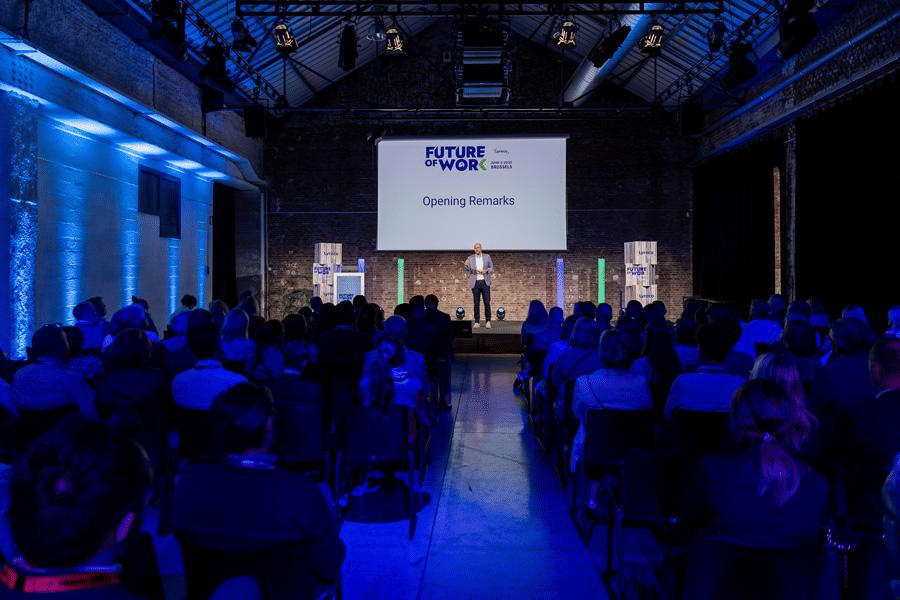
Beyond the stages lies a parallel track designed for leaders who want to leave with tools, not just inspiration. The Think Tank Lab runs sessions including Recognition-as-a-Platform: Reinventing Everyday Motivation, The Talent Experience Era: Personalisation at Scale Across the Hiring Lifecycle, and the ambitious HROS Hackathon: Recode, Reinvent, Reimagine — where teams take a broken HR process, rebuild it through systems thinking and AI tools, and pitch their prototype in five minutes.
Pre-registered masterclasses go even deeper. Adaptive Leadership Bootcamp: Scenario Planning, Rapid Response and Change Navigation puts participants into real-world simulations. Conversational Intelligence for Leaders: Difficult Dialogues Made Effective equips leaders to handle the performance conversations, conflict moments, and feedback sessions that most managers silently dread. Seeing the Unseen: How AI + Org Network Analysis Will Redefine Work blends conceptual depth with practical cases that change how you see the informal dynamics inside your organisation.
Marc Effron himself runs the flagship workshop on Day 2: Building a High-Performing HR Team — covering the six factors that differentiate strong HR team members and the eight steps to high performance. For HR leaders who want to raise the bar inside their own function, this is the session to pre-register for.
7. C-Suite Huddles and the Change Leaders' Lounge: Where peers get real

The most valuable conversations at any conference happen in smaller rooms, with fewer people, around problems that are too specific and too sensitive for a panel. TechHR India 2026 deliberately architects these moments.
C-Suite Huddles are facilitated closed-door exchanges around pressing themes — AI governance, workforce transformation, leadership succession in a polycrisis world, and geopolitical volatility. These are peer-to-peer spaces designed for leaders who want to test ideas in a context of genuine trust and leave with clarity and actionable perspectives, not consensus thinking.
8. Beyond the stages: The experiences that stay with you
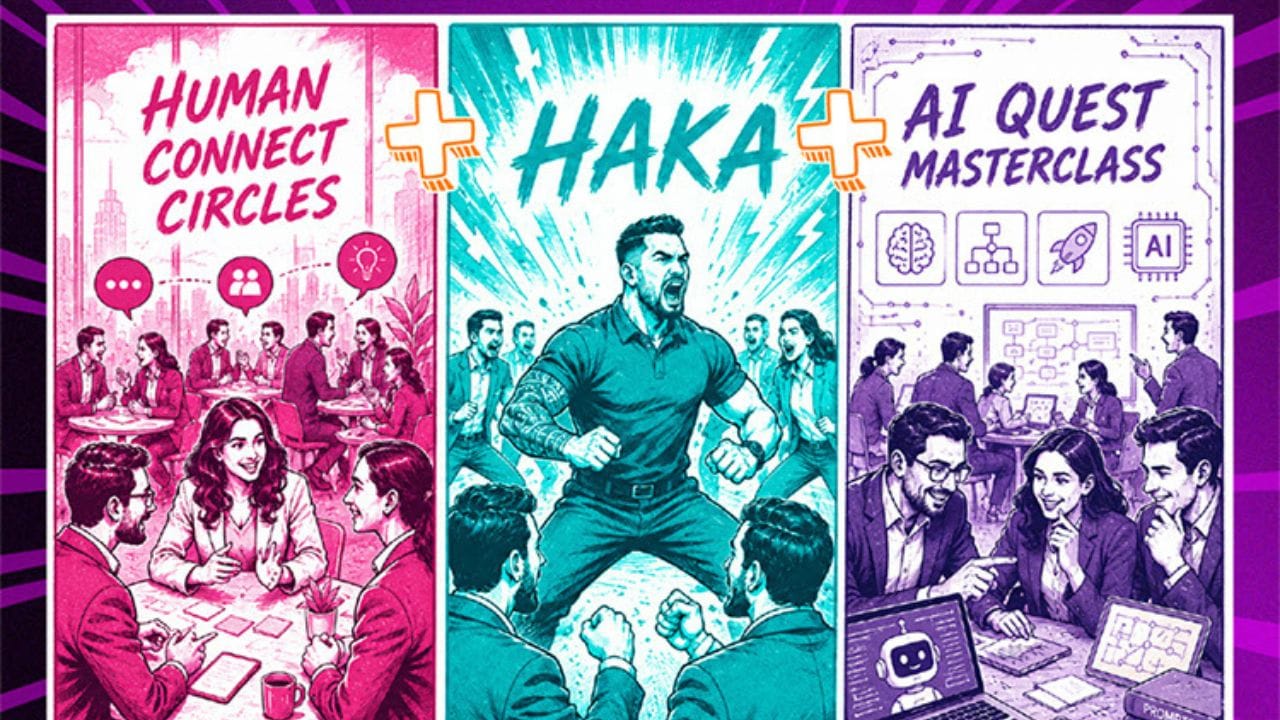
TechHR India 2026 understands something that most conferences get wrong: the experiences that change how people think rarely happen while they are sitting down.
The Humans @ Work Lounge is designed for exactly the opposite of optimisation. A guided networking experience is built to spark real conversations across roles, industries, and perspectives.
Human Connect Circle takes networking beyond badge-swapping. Curated experiences with sharp prompts and rapid group exchanges are designed to connect the sharpest minds shaping the future of work — and to make those connections feel human, natural, and memorable.
Haka is unlike anything else on the programme. A high-energy collective experience that builds confidence, strengthens conviction, and demonstrates what becomes possible when individuals move as one. It is the kind of moment that sounds unusual on paper and becomes the thing people talk about for years.
AI Quest brings hands-on AI applications into the experience — a practical playground for leaders to explore smarter ways of working and leading with greater clarity, without the hype.
And Day 1 closes not with a networking drink, but with TechHR Night Fest — a full musical spectacle followed by dinner. Because the day is for ideas, and the night is for the conversations that start after the formal programming ends.
9. The startup pitch stage and the innovation ecosystem For leaders who want to understand where HR and WorkTech is headed, not just where it has been, the People Matters TechHR Startup Program — in partnership with Mynavi — brings emerging innovators onto a dedicated stage across both days. Seventeen startups pitch actionable strategies and technology solutions for the most pressing workplace challenges. This is where the next generation of tools and models announces itself — and where early-adopter organisations get a look at what will be mainstream in eighteen months. Alongside this, Asia's largest HR and WorkTech expo runs through both days, with 150+ partners on the floor. Whether you are evaluating platforms, exploring integrations, or benchmarking the market landscape right now, the expo offers the most concentrated view of the WorkTech landscape available anywhere in Asia — and it is built into the fabric of the event, not bolted on as an afterthought.
10. The scale creates its own energy — and its own opportunity
There is something irreplaceable that happens when the sharpest minds in HR and business share a space for two days. The hallway conversations, the chance encounters at the coffee station, the follow-up introductions from a panel you both attended — these are not incidental to TechHR India. They are part of what it is designed to produce.
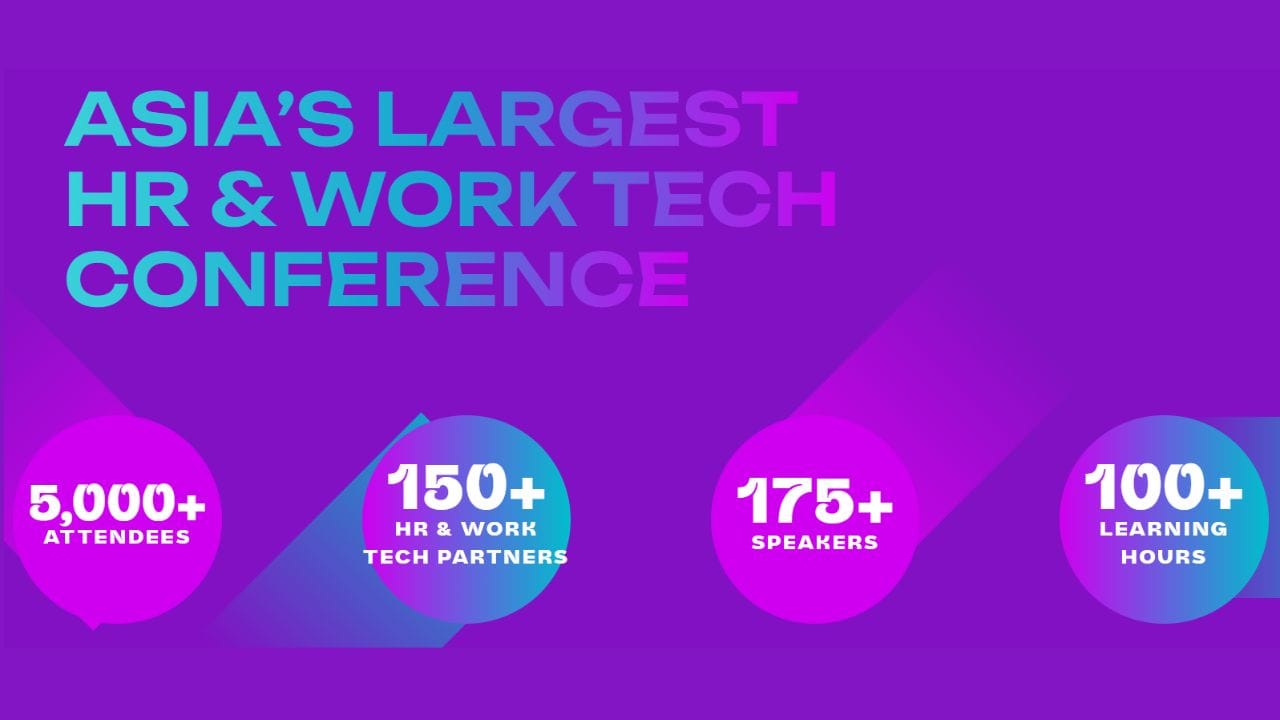
5,000+ attendees. 175+ speakers. 150+ partners. 100+ learning hours. Twelve editions of earned trust from the community it serves.
The future of leadership will be shaped through the people you meet, the conversations you remember, and the experiences that stay with you long after the conference ends. This conference is built to deliver all three.
Join us at TechHR India 2026. The conversation is already taking shape—and it won't be the same without you.