








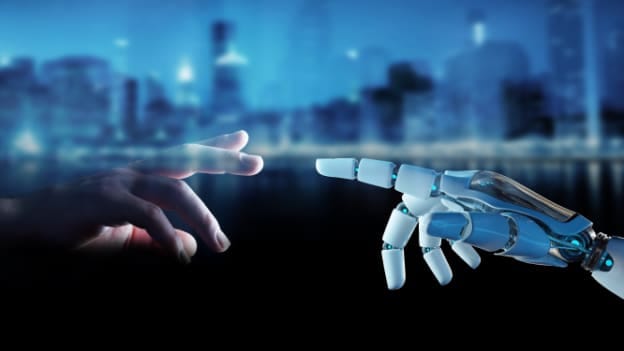
Humans are born with emotional intelligence while it’s easier for AI to suggest what to do when you are feeling low. When John McCarthy and Marvin Minsky founded Artificial Intelligence in 1956, they were amazed to witness how a machine could perform incredibly difficult puzzles quicker than humans.
However, it turns out that teaching Artificial Intelligence to win a chess match is actually quite easy. What would present challenges would be teaching a machine what emotions are and how to replicate them.
We are surrounded by technology and it has become so normal that we don’t even think that we are using tech. We attend weddings, conferences, birthday parties virtually, cooking using tech, planning our day with the help of tech and all of this becomes a part of us. In a way, we have ‘humanized technology’. And the fact is it has immense potential and we need to learn the opportunities and challenges.
As tech becomes more intelligent, it also needs to become more human friendly. Needless to say that technology is raising people’s expectations across the board and this is the ideal time to understand the potential, risks, and opportunities in Humanizing Technology.
Five reasons why technology needs to become more human:
The distant element that decides whether a technology will be adopted is not technical at all. The most essential aspect is how well technology can support our human cognitive capabilities and enhance how we do things naturally. It needs to be easy-to-understand, convenient, well-engineered and optimized around people and their habits.
- Convenience: Consumers are affected by information overload. They want personalized, quick, and easy access to the information or results that are relevant to their specific situation.
- Emotive: Technology is cold and flat, humans are not. They like to be vivid and varied. A Performance Management System can incorporate visuals or graphic representations of current status, as opposed to a box that asks you for percentage completion. Engagement can mean more than surveys and focus-group discussions. You can sense the pulse of an employee every day if you use simple means of gauging their state of mind through mood polls, emoticon-selection techniques, behavior during work.
- Simplification: Technology is supposed to reduce the complexity of our daily lives, which is partly caused by technology itself. Advancing technology will continue to help it become more human-oriented to help us to simplify, assess, and filter.
- Experience & Integration: Technology makes it possible to access personal, relevant content and take action when and where we need to. Companies should foster such a culture that supports employees to maintain their work-life balance and monitor their health and well-being with the help of technology.
- Inclusion: The speed at which technology is advancing bears the risk of excluding less tech-savvy people from its benefits. For example, people who don’t know how to operate a search engine, smartphones, or apps, will have difficulties to access information that may be relevant for them. But, tech companies like Google, Cisco, Facebook, and others are trying to customize the technology for the new entrants and making it easily accessible.
Going forward, we need to continue the moderate pace of humanizing the technology; it will require more up-gradation to continue the collaboration between humans and technology, especially in the field of work.