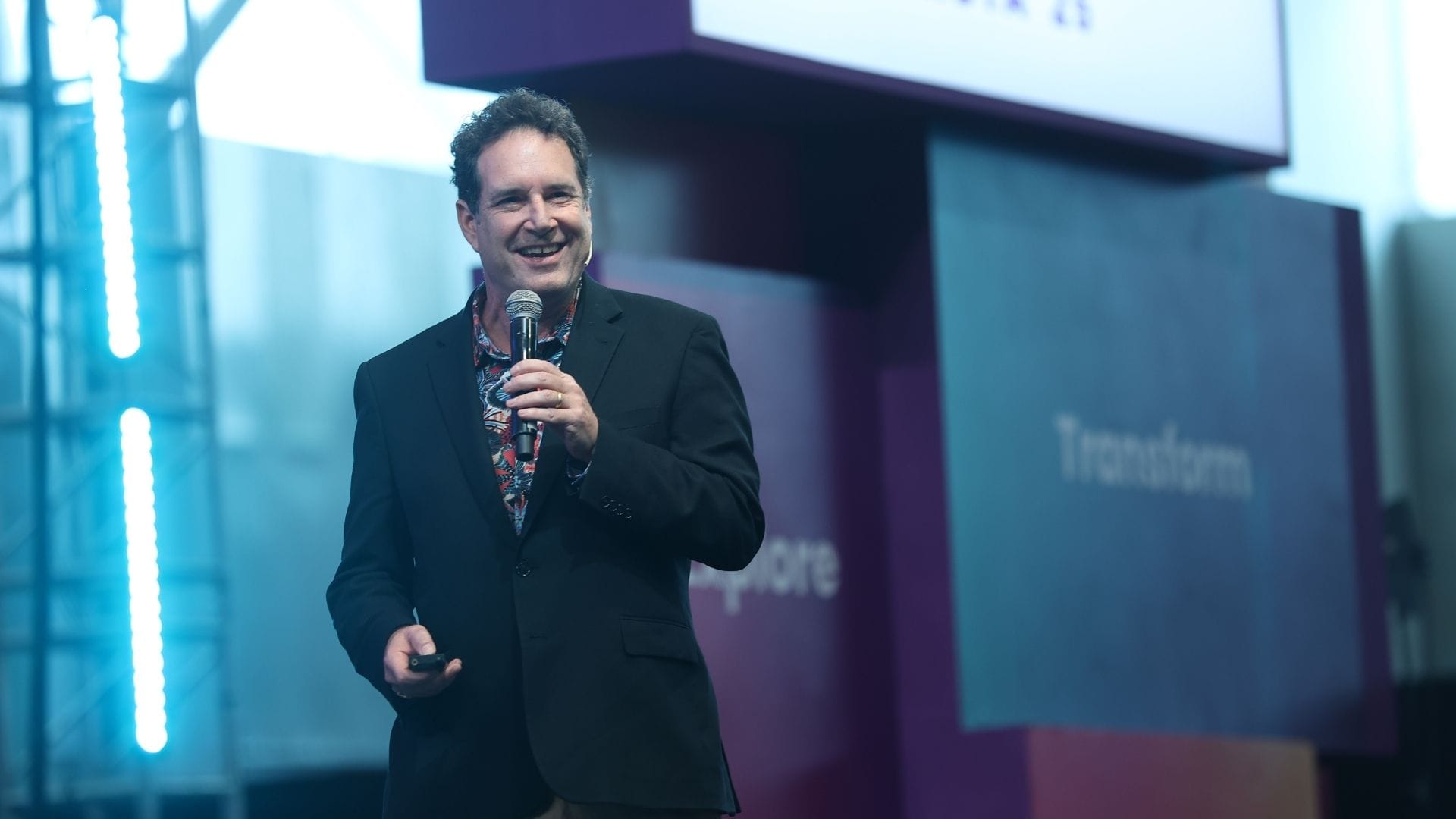
On the second day of People Matters TechHR India, Professor Hod Lipson, a renowned researcher, author, and Professor of Engineering and Data Science at Columbia University delivered a riveting keynote that transported the audience into the rapidly evolving world of artificial intelligence. With a dynamic blend of real-world examples, data-driven insights, humour, and visionary foresight, Lipson urged attendees to do more than just understand AI. His challenge was clear: lead with it, collaborate with it, and guide it toward meaningful human progress.
As the session unfolded, it became increasingly evident that the world has moved beyond traditional technology into the era of next-generation AI. From high-definition videos generated by text prompts to real-time language translation, from driverless cars to AI-based weather prediction, AI is no longer on the horizon; it is shaping the workplace and society today.
“You can’t walk away from AI. You can either lead it or be dragged by it,” said Lipson - the message cutting through with remarkable clarity.
This call to action set the tone for a deeper exploration into the transformative power of AI and its implications for business, leadership, and humanity at large.
AI Is here to stay and it’s moving fast
Lipson opened the session with a bold assertion: AI is not coming, it’s already here, changing everything from education to entertainment to engineering. With the ability to generate high-definition videos and multilingual translations in real-time, AI is shaking the foundations of industries once thought safe from automation. Lipson illustrated this with deepfake examples of public figures speaking languages they never learned and described how AI teaching assistants are now outperforming human counterparts in universities.
The exponential nature of AI development has been such that while humans intuitively think in linear progressions, technology has grown at a compounding rate. “We believe that the progress we will see next year is the same as last year, but that’s never been true for technology,” Lipson said.
Supporting his point with data, he charted the meteoric rise in AI investment, from mere millions a decade ago to $200 billion in the U.S. alone today. Comparing this rise to ‘AI Tsunami’, he estimated that the computing power available per dollar has exploded, and by 2035, it will be nine teraflops per dollar, enough to run powerful AI models on a postcard.
AI’s evolving role: From assistants to innovators
Beyond the raw computation, AI has also entered a new creative frontier. Lipson spotlighted how generative AI is moving from replicating human language to creating entirely new artifacts, from software and music to pharmaceuticals and materials. He gave an example of how AI designed a satellite antenna more effective than any human-made one. Another one was its impact on the Pharma industry, where AI is helping scientists discover new antibiotics and climate-ready materials at unprecedented speeds.
Lipson argued that this shift could mark the beginning of the fourth wave of AI, the one that is focused not just on recognition or prediction, but on creativity and design. “Generative AI isn’t just about creating text and images. Its real power lies in engineering i.e. designing things we can’t even imagine.”
AI to AI: A new economic paradigm
Lipson emphasised the symbiotic relationship of how AI works, where it creates an AI ecosystem and trains each other's system gazillion times per second. That led to him sharing an unique idea - the rise of A-to-A (AI-to-AI) commerce.
According to Lipson, the rise of agentic AI may lead to services being marketed to digital agents acting on the behalf of humans. “You might be selling to an AI that represents a customer, a family, or a company,” he added.
Lipson’s call to stewardship: Don’t Fear, Steer
While the pace of this change may feel overwhelming, Lipson ended with a powerful call to action. “AI doesn’t know it needs to solve cancer or climate change. It’s up to us to guide it.” According to him, the technology is neutral and what would actually matter is how humanity chooses to use it.
He left the audience with a lasting message, “Don’t fear. Steer. AI is not going to slow down. You will never catch up and nobody else will either. We are in this together.”