








How do you do get employees to adopt self-paced learning in the organization? Will our attempt at doing away with an appraisal system work? How do we improve our new hire retention?
Today the HR function worldwide is attempting to solve problems that have never been attempted earlier, or never been solved earlier through conventional problem solving techniques. Design Thinking brings a new approach towards solving the unsolved.
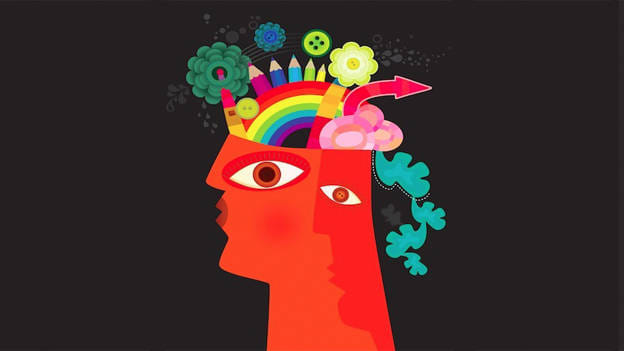
As described by Prof. Bhawna Katyal in her article on Design Thinking for People Matters, Design Thinking broadly refers to the application of design methodology to management science. It involves the use of both the left brain (logic) and the right brain (creativity) to seek connections for problem identification, ideation and solution.The philosophy of Design Thinking assumes your stakeholders hold the answers to your challenges.
There are many descriptions of the Design Thinking process, but one of the most widely accepted is the Double Diamond (developed by The Design Council):
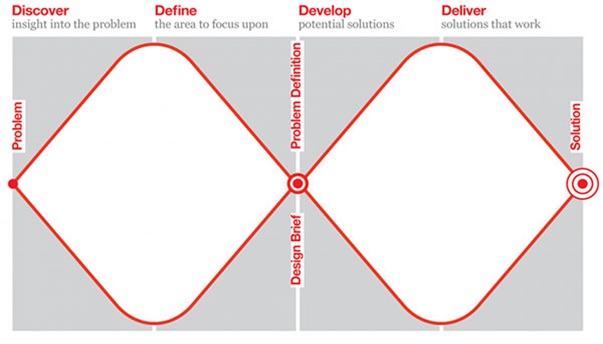
While one has to go through all the stages(and these stages are iterative) to really benefit from it, I find the Discover stage particularly pertinent for HR. The different methods applied in this stage can be a valuable tool in the Diagnostics arsenal for Human Resource Professionals.
Diagnostics using Design Thinking:
- How to derive maximum value: In Design Thinking, maximum value lies in a solution at the centre of viability, desirability and feasibility. Over the years, in their attempt to be partners to business, HR professionals have taught themselves to think of solutions that are viable for business, and technically feasible. A solution that is undesirable for the end consumers of the solution, will never succeed for long. Case in point, the black Ford Model T’s. We are the primary champions of peoples’ aspirations, and Design Thinking brings that into focus as we design process and experience.
- An inside out perspective: One popular approach while evaluating a change, is secondary research and external benchmarking. Design thinking requires that you go back to your stakeholders to seek insights. Human-centred design is about getting to the people you’re designing for and hearing from them in their own words. Remember Voice of Customer?
- Bringing science into HR: Often HR loses credibility because we don’t appear to have strong data or science to back up our recommendations. Design Thinking enables us to have a deep understanding of people and organisations – the kind of insights offered by Ethnographic studies, social psychology, group dynamics, behavioural economics, organisational change and systems thinking. Design Thinking enables us to see things with new eyes and gather insights which even big data tools may not be able to capture.
- Introducing newtools for Diagnostics: Design thinking leads us to look beyond surveys and descriptive analytics.
Design thinking approach laid out by IDEO recommends 4 methods to discover insights:
Observing
Here we typically look at a day in the life of our stakeholder. Observation can distinguish what people really do as opposed to what you are told they do. Observation pushes you to examine the emotional highs and lows of people as they experience and interact with current state. It is keen observation that also helps you in developing empathy for the stakeholders. I have found the AEIOU framework (originated in 1991 at Doblin by Rick Robinson, Ilya Prokopoff, John Cain, and Julie Pokorny) to be a good framework to improve your observing skills.
Learning from Extremes
Design Thinking can help you build a solution for everyone. You speak with users at the far extremes of your target audience, as well as those in the middle. For eg. While redesigning your performance management system, you not only talk to supervisors and seasoned users, but you also gather thoughts from a campus hire who has not experienced a formal performance management system or has had her first experience with a performance management system.
Interviewing
Design Thinking led interviews are open ended, focus on the WHY’s, build an emotional connect with the user, discuss what-if scenarios, and most importantly generate stories and not just facts.
Empathy immersion
Empathy is the soul of Design Thinking,because it helps us look beyond our assumptions. You gather insights by experiencing what your stakeholders are experiencing. When was the last time you filled those multiple joining forms yourself to understand what a new joiner goes through on the joining day?
Design Thinking can have a wide range of applications in HR – culture diagnosis, designing employee centred policies, finding new insights to retention issues, and address aspects like self-esteem while designing HR process.
Remember, it is not an easy path – Design Thinking requires you to collaborate,because your solution may lie with another department. It requires to you have a bias for action as you rapidly develop prototypes, it requires to you be open to failing-fast, and reflecting to make progress. Sounds like you are running your own start-up!
With empathy and innovation at its core,Design Thinking can help HR stay relevant, and build better experiences and value for its stakeholders.