








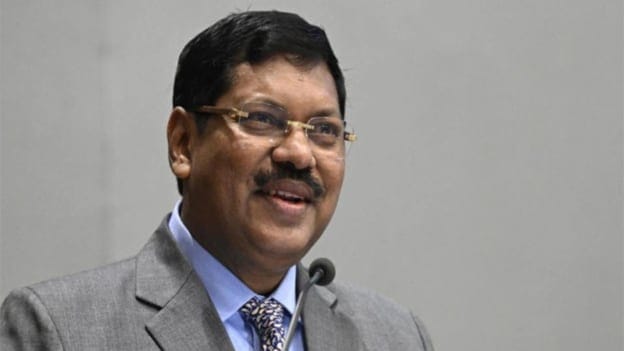
Justice Bhushan Ramkrishna Gavai has sworn in as the 52nd Chief Justice of India—a moment that marks a quiet yet significant shift in the country’s institutional narrative. Beyond the ceremonial headlines, his appointment offers a deeply resonant example for leaders committed to Diversity, Equity, Inclusion (DEI), and systemic transformation—especially within the workplace.
Justice Gavai is the first Buddhist and the second Dalit to hold the office of Chief Justice. This intersection of caste and religion reflects the layered identities that shape lived experience in India. It also brings into focus the idea of intersectionality, a concept often spoken of in academic and advocacy circles, but still emerging in day-to-day HR practice.
Why intersectionality must inform policy and practice?
Coined by Kimberlé Crenshaw, intersectionality highlights how different aspects of identity—such as caste, gender, religion, sexuality, and disability—interact to produce compounded forms of discrimination or exclusion. Justice Gavai’s identity as a Dalit Buddhist, navigating decades of underrepresentation within India’s legal and administrative corridors, illustrates this precisely.
It’s a powerful reminder for organisations that DEI cannot afford to be a single issue. Focusing solely on one category—be it gender, disability, or generational diversity—risks erasing the nuanced realities of those who live at the intersection of multiple marginalisations. The elevation of Justice Gavai serves not just as a historical milestone but also as a prompt: Are our DEI strategies capable of seeing the full person?
What does this mean for HR leaders?
For HR and talent leaders, Justice Gavai’s story offers three important takeaways:
- Representation is more than optics: Justice Gavai’s rise is not symbolic—it is systemic. His appointment is a reflection of a career built on merit, resilience, and an ability to navigate institutions not originally designed for inclusion. In the corporate space, representation at leadership levels must follow the same path, not as a performative checkbox, but as a genuine outcome of access, mentorship, and structural support.
- Design for overlap, not isolation: Too often, policies are designed around isolated identity categories. But real inclusion demands we ask tougher questions: What are the experiences of women from marginalised castes? How does disability intersect with rural backgrounds or linguistic exclusion? Justice Gavai’s story reminds us that people do not experience the world in silos—and our workplace policies shouldn’t either.
- Leadership must mirror society: Justice Gavai’s appointment expands the mental model of who belongs in power. For organisations, this is a chance to rethink leadership pipelines. It’s not enough to be open to difference; we must actively enable it. This means reimagining recruitment, development, and succession planning with an eye on potential as well as possibility.
A legacy of resilience
Justice Bhushan Ramkrishna Gavai’s journey to the highest position in the Indian judiciary began in the modest lanes of Amravati, Maharashtra, where he was born in 1960. He attended a local municipal school, where classrooms were often overcrowded and under-resourced. He has spoken of sitting on classroom floors—early experiences that quietly shaped his understanding of equity and opportunity.
Those formative years gave him a deep respect for learning, justice, and a steady sense of purpose. His rise through the legal system reflects personal perseverance and a broader shift towards more inclusive representation in public institutions.