Financial services firms are continuing to lose critical talent despite sustained salary increases because compensation alone no longer determines whether employees stay, according to Niren Srivastava, Group CHRO at Motilal Oswal Financial Services.
In an interview with People Matters, Srivastava said the sector’s retention challenge is increasingly being shaped by leadership quality, career growth, work environment and evolving employee expectations rather than compensation alone.
“Compensation opens doors, but does not guarantee retention,” he said.
His comments come at a time when banks, insurers, NBFCs and investment firms are facing rising competition for specialised talent across investments, research, technology and data functions.
Opportunity is overtaking pay as the real differentiator
Srivastava said compensation levels across financial services have increased steadily, but so has the market value of experienced professionals.
“Professionals handling larger clients or more complex portfolios are priced at a premium and are consistently approached with better roles, not just higher pay,” he said.
According to him, many firms continue to operate with limited organisational layers, reducing opportunities for vertical progression. At the same time, emerging firms are willing to offer compensation premiums that established players often struggle to match.
He also pointed to a broader behavioural shift among high-potential employees.
“Many prefer to continue as individual contributors rather than take on leadership roles that come with higher risk and accountability,” Srivastava said.
The commercial and entrepreneurial nature of the sector further contributes to employee mobility, he added.
“In this context, compensation becomes a baseline, while opportunity becomes the real differentiator.”
Early and mid-career talent remains hardest to retain
The most difficult workforce segment to retain today is early to mid-career talent, according to Srivastava.
He described this group as highly employable because of its market-relevant skills and openness to exploring new opportunities.
Roles in research, investments, technology and data are currently among the most competitive areas within financial services hiring.
“What has changed is the mindset,” he said.
“Earlier, people valued stability and stayed longer to grow within a system. Today’s talent is more focused on accelerated growth, diverse experiences, and greater ownership of their career journeys.”
Srivastava said employees increasingly want:
- Clear career progression
- Meaningful work
- Faster role transitions
- Broader exposure across functions
- Greater ownership of career decisions
Instead of committing early to a single employer, many professionals now prefer to test multiple opportunities before settling into long-term roles.
Work culture and leadership are becoming stronger retention levers
While compensation remains central in a commercially driven industry, Srivastava said non-monetary factors are carrying greater weight in retention decisions.
“People are looking for meaningful work, purpose, strong learning opportunities, and clear career growth,” he said.
He added that work-life balance has evolved from being viewed as an optional benefit to becoming a baseline expectation.
“Employees today are more aware of what they want from work, and they value how they feel at work just as much as what they earn.”
Srivastava also stressed that manager quality has become one of the strongest influences on employee retention outcomes.
“A common reality holds here. People often leave managers, not organisations,” he said.
According to him, employees increasingly assess leadership credibility and managerial reputation before joining companies.
“Many are willing to turn down higher offers if they are unsure about the manager or team,” he added.
He argued that strong managers help employees grow, build confidence and create healthier work environments, while poor leadership can push employees to leave even when compensation is competitive.
Firms are diagnosing attrition more scientifically
Srivastava said BFSI organisations are becoming more structured and data-driven in understanding employee exits.
Companies are increasingly relying on:
- Employee surveys
- Exit interviews
- Internal workforce data
- Engagement analysis
- Internal mobility tracking
Focus areas now include manager effectiveness, career progression and workplace environment rather than relying only on compensation benchmarking.
However, he noted that compensation continues to be the fastest short-term tool available to organisations facing retention pressure.
“As a result, it is often used as a short-term fix even when deeper issues exist,” he said.
While companies are showing greater intent to address structural causes of attrition, he described execution consistency as “still a work in progress”.
BFSI firms may need structural redesign to improve retention
Looking ahead, Srivastava believes financial services firms will need deeper organisational changes to improve retention sustainably.
“Going forward, the focus needs to shift from managing performance to building capability,” he said.
He argued that organisations must invest more heavily in managers who can coach and develop employees rather than only drive business outcomes.
He also highlighted the need for leaner structures and broader role design.
“Reducing reporting layers and leveraging technology can create broader roles, with faster decision-making and greater ownership,” he said.
Another critical area, according to Srivastava, is career clarity.
“Clear career paths and cross-functional exposure will help with the need for growth and variety.”
His comments reflect a broader shift underway across the BFSI sector, where retention strategies are increasingly moving beyond salary interventions towards leadership quality, organisational design and employee experience.
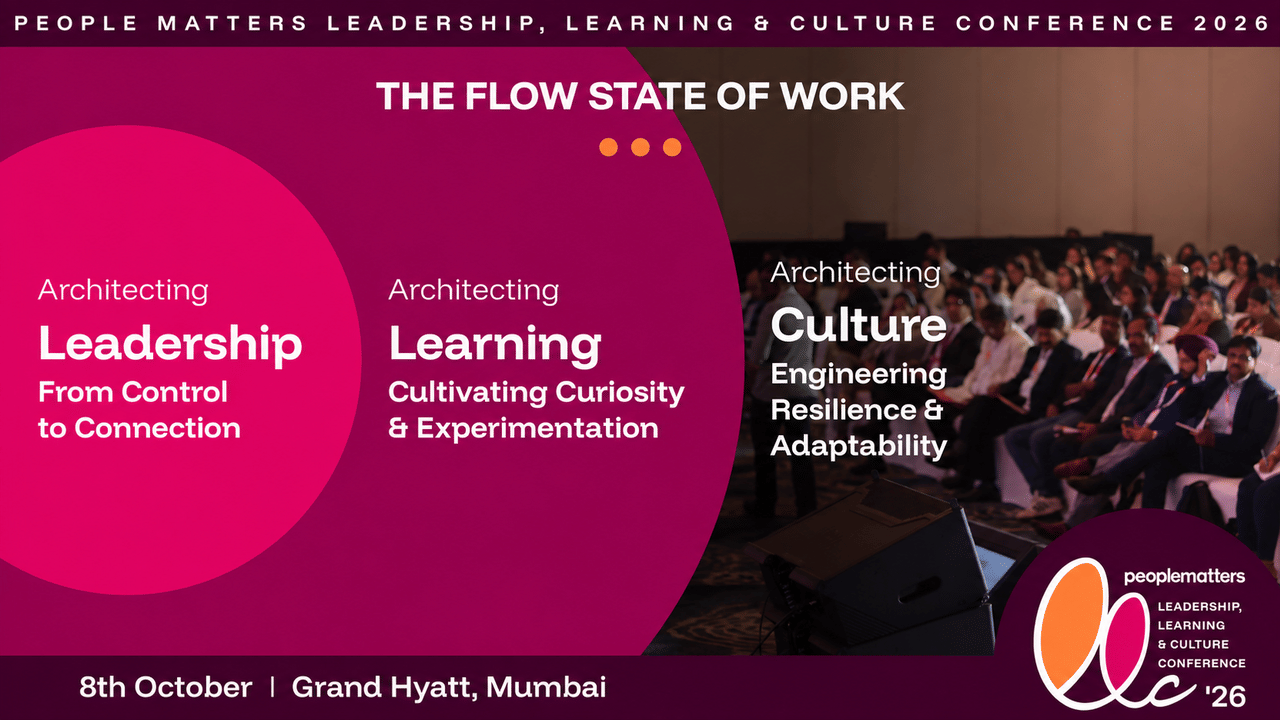
Bringing together CHROs, business leaders and transformation heads from across banking, financial services and insurance, the summit will focus on what it truly takes to build future-ready leadership, stronger managers and high-performing teams in an AI-led BFSI landscape.
Register now to join India’s leading BFSI talent and tech gathering.