








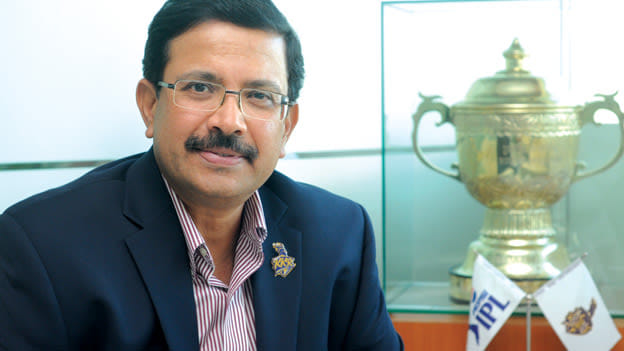
What are the challenges that a CEO of a high profile team such as Kolkata Knight Riders faces?
Managing an IPL team has several challenges. First of all, every member of the team is a high potential and it is tricky when tough decisions have to be made for the team’s best interests. The Kolkata Knight Riders (KKR) has always been a star-studded and high profile team with players of international repute. The first and foremost agenda for building a successful team of high potentials is ensuring that there is a definitive vision and focus. It is the management’s job to reiterate the vision and focus to the team. The importance of a vision and focus is to have every individual believe in a higher sense of purpose and look beyond immediate and personal successes. The second agenda is to create a path for success and sustainability. A CEO’s plan should not be just about success in the current and near-term, but about building a base for creating a legacy of success. Subsequently, aspects of attitude and culture become especially important for the management and leadership.
The biggest challenge as the CEO of KKR was to break perceptions that the brand was represented by a single individual, the iconic star of Indian cinema, Shah Rukh Khan. Khan, or SRK as he is more popularly known, has a huge brand influence on KKR. SRK and KKR’s fortunes are even more entwined because he owns a sizeable stake in the franchisee. Resisting the temptation to ride on such a powerful brand as SRK, therefore, is tough but necessary. It was important for the franchisee to manage the KKR brand separately to drive the hunger for success and create a legacy of longevity. It is crucial for the leadership to get to the drawing board and obtain answers to what the team stands for and what value the team brings to the field. That is how a strong brand is built over a period of time.
How did KKR bring forth the transformation of getting into the winning habit?
KKR went through a radical shift of focus in management to bring about positive changes. Part of the change was to make the owners dissociate themselves from the management of the team. The team had not tasted success in the first three to four years and we got the first opportunity four years back during the IPL auctions. This was the time to re-haul and rejig the entire team and carefully select the set of players to align with the team’s strategy. It would be unfair to say that everything can and did work according to plan because there is a crucial element of luck involved with any auction. It still gave the team the chance to create a strong team backed by a strong plan. Secondly, a very important change brought forth was the element of empowerment. The management of the team had the authority to take decisions and consult industry think-tanks for strategy, vision and competency mapping. The management was also empowered to set a new direction to the team. While there can be no absolutely right strategy and direction in the world of cricket, the outcome of this empowerment was that the management strongly felt that it was the right thing to do. Conviction and belief are key to making any execution strategy successful.
The key message that every individual in the franchisee stands up to is the message that team KKR comes first. Every individual in the team is unified by this cause and works toward this direction. A definitive direction also helps resolve some of the most challenging impasses either in the form of team selections or game strategy. This is the core ideology that the team has been following in the last four years. And the last four years can clearly count as the more successful phase for the team compared to the previous phase.
The ideology of “team-first-individual-second” is a pervasive guiding principle to accommodate diverse personalities and ideologies and work together as a team. A key barrier to achieving this was the barrier of communication. The owners bestowed the task of communications to the people on the ground rather than establish top-down lines of communication. It is very important for people on the ground such as the coaches, technicians, and advisors to translate the vision of the stakeholders and management to the team players. The transition to an active working ideology can only happen effectively if people who are in the thick of the action are communicating directly with the team.
What is the CEOs role in making a team work as a winning unit?
Creating a framework or a baseline about the composition of the team is central to the formation of an effective team that can execute against strategy. The first step in the process is role definition. In the new setup, the management went to the drawing board before selections and defined the roles and specific skills needed. Post that, we started looking at options who are able to fill those roles. There has to be significant effort invested in research about players and their specific contributions they are likely to bring. In the effort, the management has to make the choice to leave out certain high potential prospects and candidates because they do not fit in the scheme of things. The management should have both the strength and the conviction to make such hard choices.
Selection is central to a team’s strategy. It is the management’s responsibility led by the CEO to build and develop the selection strategy and create contingency plans. Contingency plans are very important because selections are heavily a matter of luck. The situation is very similar to the challenges in talent acquisition in any business or profit-making organisation.
The role of leaders in a team should be very clearly defined. The role of the CEO is to set direction and strategy. After the CEO drives the strategic framework of the organization, the execution is best done by the people who have specific roles within the team. The CEO’s role in execution has to be that of a facilitator. Inputs from people on the ground is invaluable for a CEO in building a solid execution plan. At KKR, the Head Coach plays the role of the people manager. Trevor Bayliss is the Head Coach and does a wonderful job of connecting with the members in the team. The role of setting the direction of the team has to be done by experts who may be internal or external to the organization. The cricketing world, fortunately, has the wealth of many experts that a CEO and a team can reach out to. The Head Coach is also responsible for steering the team in the direction that the team aims to move toward.
There is a great deal of responsibility on a CEO to ensure the ethical integrity of his team and his organization. The cricketing world lately has been rocked by several controversies and scandals and the whole industry of cricket has suffered consequently. Ensuring good governance in the industry is a collective responsibility of every CEO. High profile industries, especially the sporting industry, are significantly more susceptible to the risks of misconduct and ethical compromises because of their high value commercial impacts. Putting together a governance structure, though challenging, should be at the heart of a CEO’s goals. If the industry is not clean, then the efforts and endeavours of all individuals and teams add up to very little.
In the cricketing industry, several CEOs are at the forefront of driving ethical governance. CEOs of respective teams and franchisees act as advocates to keep the game clean and devise ways to ensure that ethical standards are complied with. While one cannot claim that everything is going perfectly in the cricketing industry, positive change will occur only when CEOs continue to act as advocates.
Winning gives a great impetus to any team and sets the precedence for future wins. In a format like the IPL, all teams are equally balanced and team selection provides a level playing ground. Getting into the habit of winning provides the confidence to handle crisis situations, develop a strong sense of belief and bounce back from any form of morale issues.