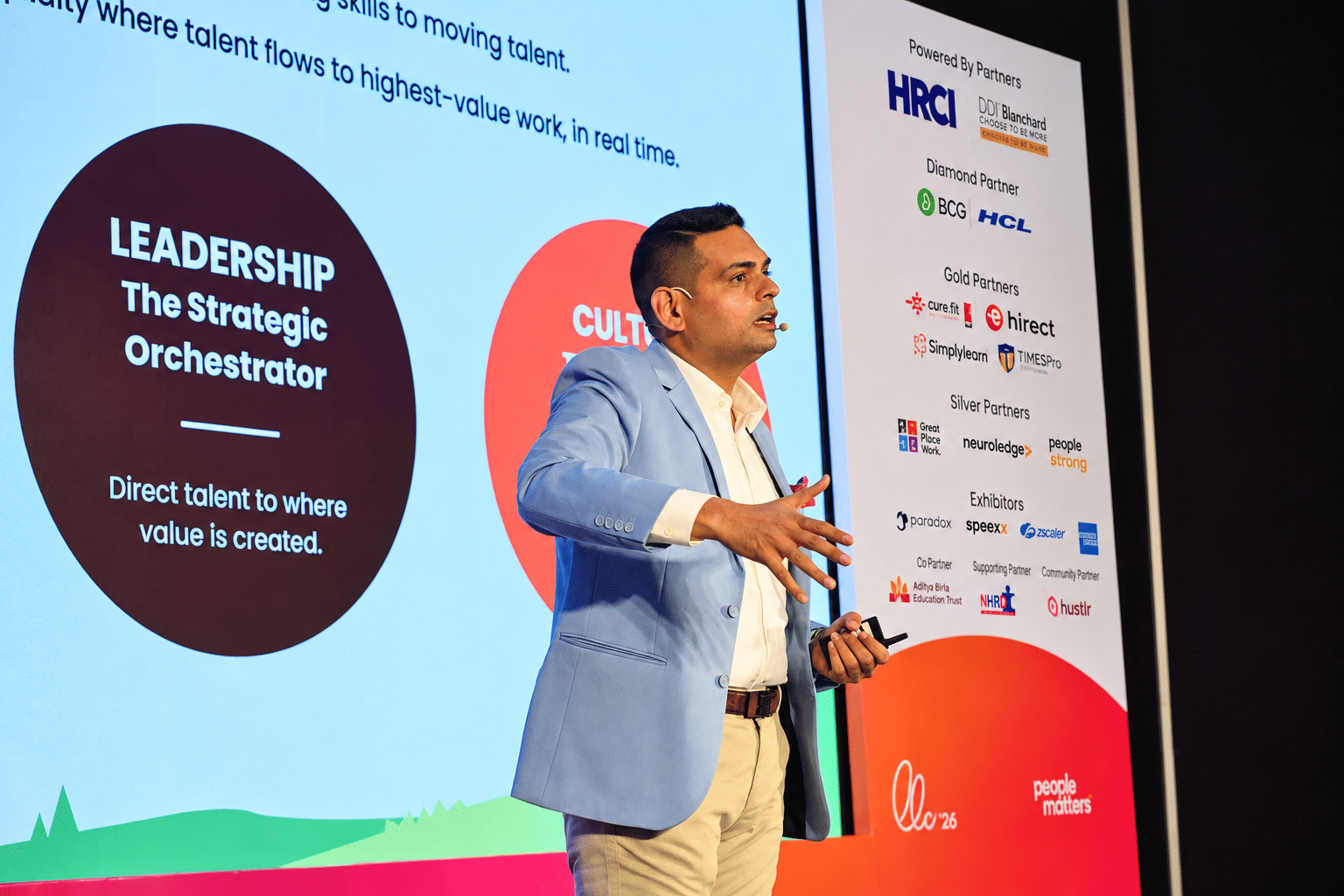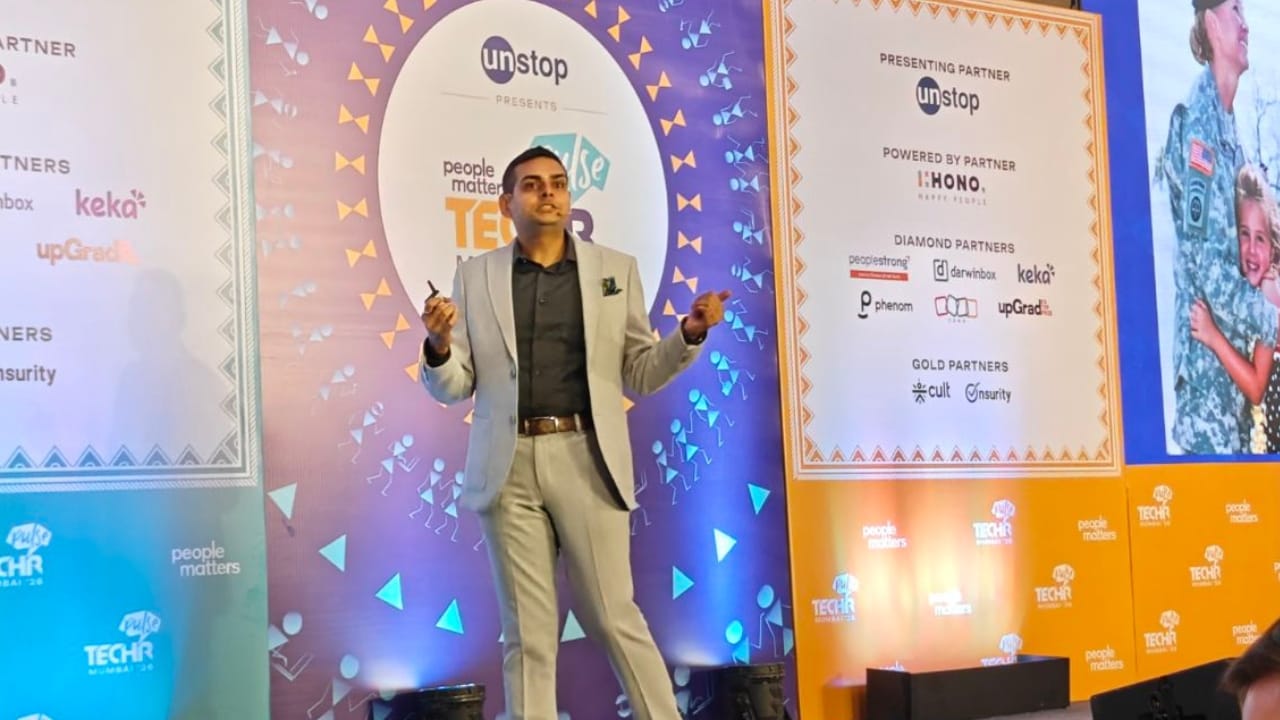
In a keynote brimming with energy and candour, Pushkar Bidwai, CEO of People Matters, took centre stage at TechHR Pulse Mumbai 2026 to deliver a rallying call for HR leaders. His address, rich with insight from the latest SHRPA – State of the HR Industry 2025–2026: India Insights research and lived organisational stories, outlined the seismic shifts set to redefine the HR landscape, the pressing challenges ahead, and the imperative for what he calls “informed fearlessness”.
Through compelling data and the inspiring Seagate transformation story, Bidwai mapped out not just what is changing, but how HR must lead the charge—by closing persistent gaps and orchestrating growth with a distinctly human edge.
Three shifts that will disrupt HR
Bidwai’s keynote crystallised three transformative shifts that will shape the future of HR and work.
The first, he argued, is that business growth now hinges on global talent. In a world where change occurs overnight—where, as Bidwai quipped, “you sleep at night, next day morning, you see something’s exported somewhere”—organisations must master the art of synchronising their people, processes and strategies to the pulse of global disruption.
The second shift is aligning change readiness with AI readiness. Bidwai was unequivocal: “If our change readiness is not equal to AI readiness, then we are getting it wrong”. This readiness is not simply a matter of technical skill, but of culture—creating environments where experimentation is encouraged, failure is fast, and learning is constant.
Third, and perhaps most crucially, Bidwai asserted that tech adoption—not mere implementation—is the new currency of transformation. Too often, organisations stop at rolling out new tools or platforms, but real value is realised only when these technologies are truly integrated into the fabric of daily work. The difference between ticking a box and achieving meaningful adoption, he warned, will be the difference between thriving and stagnating.
The biggest challenges facing HR leaders
Backed by data from one of the largest HR tech and transformation studies in the SHRPA – State of the HR Industry 2025–2026: India Insights - drawing insights from over 3,100 organisations—Bidwai painted a vivid picture of the top challenges HR leaders are predicting. In India and across Asia, the most significant impact is expected in leadership development. The demand for fearless leaders in the C-suite is acute, with organisations recognising that change cannot be driven by technology alone; it requires managers at every level to become champions of transformation.
AI and emerging technologies are the next great disruptors, intensifying the pressure on employee productivity and performance. As Bidwai noted, “There are going to be tougher questions ahead of us. How do we orchestrate that?” The answer, he suggested, lies in sophisticated workforce planning and skills orchestration. CHROs are now expected to lead not just with empathy, but with a sharp focus on balancing human and AI decision-making.
However, a concerning gap remains in AI adoption. Only two in ten leaders report using AI in truly transformative ways—beyond automating emails or simple workflows. The main barriers? A lack of internal expertise and, to a lesser extent, resources and investment. Bidwai challenged the notion that resources are the main stumbling block, urging HR to build stronger business cases and invest in internal capability: “If you are unable to adjust, that’s the kind of change we’re talking about.”
Informed Fearlessness: The new leadership imperative
What does it take to lead in this climate of relentless change? Bidwai’s answer is “informed fearlessness”. This is not recklessness, but a blend of courage and clarity—acting boldly with the best available data, even when the path ahead is uncertain. He dismissed the idea of waiting for a perfect blueprint, insisting that today’s leaders must be willing to “fail fast, learn from it, and move forward”.
Nowhere is this more evident than in the Seagate success story, which Bidwai spotlighted as a masterclass in transformative HR leadership.
Seagate: Reinventing with the team you have
As the storage technology sector faced existential upheaval—declining revenues, eroding profitability, and fierce competition from tech giants—Seagate’s leadership faced a stark choice: embark on a costly hiring spree for external AI talent or reinvent with its existing 30,000 employees. Under the stewardship of its CHRO, Patricia Frost, a US Army veteran with no traditional HR background, Seagate chose the latter.
Patricia’s philosophy was simple yet radical: “I will leave no one behind.” Drawing on her combat experience, she likened business transformation to going into battle with the team you have, trusting in culture and cohesion over merely assembling new skills. Seagate launched a sweeping, empathetic reskilling initiative, offering every employee—whether CEO or entry-level—the same access to AI tools and learning opportunities.
Rather than dictate new roles, Seagate empowered staff to reinvent their own roles with AI. This democratisation of transformation, backed by robust skills orchestration and a talent marketplace, delivered stunning results. Within two years, the company posted a 40 percent increase in revenue and reached its highest-ever market cap. The key difference? HR, not IT, sat at the centre of this change, working hand in hand with the CIO and CEO to ensure technology was an augmentation, not a replacement, of human capability.
Gaps that need closing
Despite such shining examples, Bidwai cautioned that significant gaps remain for the broader HR community.
AI Evidence Gap: Organisations fall into two camps—those struggling to get started with AI, and those who believe they are “AI ready” because they have rolled out some tools. Both miss the mark; the former lacks momentum, the latter confuses access with true adoption.
Value Realisation Gap: There is a growing disconnect between investments in HR technology and measurable business outcomes. HR and vendors alike must focus on richer analytics and the ability to demonstrate concrete impact.
Effectiveness Gap: Ultimately, HR’s own effectiveness in navigating these changes is the biggest barrier. Capability building, data fluency and outcome-focused deployment are imperative.
Where investment and innovation are headed
The People Matters research report reveals that the lion’s share of HR tech investment in India is now going into talent development and upskilling, identifying and retaining top talent, and attracting new high-potential hires. On the provider side, the emphasis is on AI-assisted skill management, generative AI-enabled learning, and advances in talent acquisition.
Yet, there is misalignment. Vendors speak of security and cost optimisation, while HR leaders call for better business impact measurement and, crucially, a “unified integration ecosystem”. The future, Bidwai suggested, may not lie in a single, all-encompassing platform, but in hybrid orchestration—where HR leaders creatively bolt together best-in-class solutions to fit their unique contexts.
Looking Ahead: Three imperatives for HR
Bidwai closed his keynote with three imperatives for HR leaders in 2026 and beyond:
Data Fluency and AI Readiness: From start to finish, HR must become comfortable with data and AI, not as buzzwords but as core competencies.
Shift to Outcome-Based Technology Deployment: HR must demand outcome promises from vendors and focus relentlessly on adoption, not simply deployment.
Make Leadership, Talent and AI Excellence the Core Agenda: The future of work will be shaped by those who can orchestrate growth with a human edge—where technology and people are not at odds, but partners in progress.
As the People Matters community continues to grow—now spanning nine countries and half a million HR and talent leaders—Bidwai’s call to “orchestrate growth with a human edge” resonates more than ever. In a world where the pace of change is only accelerating, the challenge for HR is clear: to sit not at the sidelines, but at the very heart of transformation, wielding both courage and clarity to shape the future of work.