








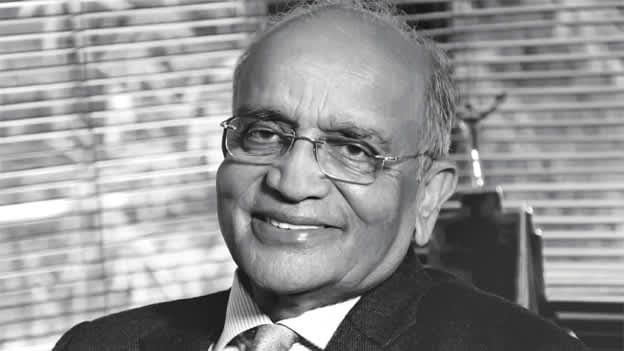
Q. You were the first managing director of Maruti Suzuki since its inception and have been instrumental in its success. How has the journey been so far and what are your key learnings from Maruti’s milestones over the past three decades?
A. The first lesson was that even a PSU can work if there is total commitment of the political leadership to the success of that PSU. The head of the political system must want that project to succeed, only then can you get things done. Overall, I’ve felt that even though in a special circumstance a PSU can still do well, it is not likely to be replicated very often. The second lesson we learnt through the various events was that a grave risk in PSUs relates to the frequently changing leadership of the ministry, which controls the PSU. The minister or the secretary doesn’t last for too many years on that post. How that ministry reacts and works with the PSU is very much an individualistic phenomenon. While some will support you in whatever you want, others feel that they are the controlling deity of the PSU even though they don’t have any kind of accountability. So the risk factor in a PSU gets multiplied several times for reasons which have nothing to do with the structure of the PSU, the legal system or even the political system; it has to do with individual attitudes. It is something that doesn’t work well in the private sector, where there is a much more stable ownership environment. The ministry is really the owner and if the owner keeps changing, it does not bode well for the PSU. Hence, the PSU is not the right way to work. You have to have private ownership, accountability and competition.
Q. You worked with the Government of India as an IAS officer and later public sector giant BHEL before joining Maruti Suzuki in 1981. Was it a difficult transition from a government undertaking to a private sector company? What were your key challenges?
A. The transition is not all that difficult if you understand that the objective and the focus of a person is to do well in whatever he is doing. Everything else is secondary to that. If you want to attain status or recognition, then it is best attained in the long term by doing better than most people. If you do that, then you will succeed in attaining the other objectives of your life. If you want to attain them without being too concerned about organizational success, that success will never be lasting. Quite frankly, even if you value your own self, you will realize that what gives you maximum satisfaction in life is doing something irrespective of what others say or don’t say. Whether you are in government or outside, you still want recognition. You want people to respect you for what you are and not just for the chair that you occupy for no one holds it forever. That should ideally extend beyond the period that you sit in the chair but that doesn’t happen all the time, especially in government where the recognition and respect disappears in a lot of cases. I’ve seen that happen very early in my life and I learnt a lesson.
Q. In an event, you talked about how one should put the organization first and the individual the last. But, the new generation is looking at self first and organization later. What’s your view on that?
A. I believe that lasting success only comes through your association with organizational or institutional success and not through other means like networking and PR. If you look at people who are recognized for what they are, then they have built good organizations over a period of time. Don’t think of your personal career path. Just concentrate on what you are doing and get recognized for the ability to do an excellent job, whatever the job is. Better jobs will come because excellence in whatever you do gets you rewarded.
Q. Who have been your mentors and what have you learnt from them?
A. The learning process comes from all kinds of people and not just mentors. You learn things from very ordinary people also. When I was in the IAS, I kept changing jobs. I was working for the Planning Commission in UP, then I worked in a district for about a year-and-a-half. Then I went to J&K where I was the Agriculture Production Commissioner. It was an area that I knew nothing about. The only way I could learn was to be with the people who worked in all the various functions – the director of animals, of sheep breeding, horticulture and so on – and asked them how it worked. You can’t just sit in a chair and say that I know everything because you are the boss. That’s the lesson I learnt, so throughout my life I’ve tried to look for people who know something about what I’m doing that I don’t know and then I ask to them to impart that knowledge to me.
Q. Not many CEOs look at the people lever as an important one that correlates to business success. How important is the people component for business success and how do you address that gap in today’s context?
A. I believe the only thing that ultimately determines the success of any business, organization or industry is the people. Whether it is technology, marketing, advertising or sales, it is all done by people. There is nothing in business that can be done in an excellent manner unless you have the people doing that in equal excellence. What CEOs and heads of companies need to recognize is that for the long-term success of the company, it is the people who matter. They need to understand that their most valuable resource is people. I’m not sure how many CEOs look upon themselves as Chief HR officers. I believe that a CEO has to spend a good part of his time on developing people.
Q. What comes in the way of the CEO spending time with the employees?
A. The day-to-day operations like external relations, government relations, looking at marketing, production, costs and profits, dealing with investors etc. seem to take away all his time. So, he doesn’t value the HR function as important as the rest. Only when an HR manager would bring a contentious issue like wage revision, would he look at it. He is not constrained to create a workforce, a total workforce moving in one direction ie the growth and competitiveness of the company. The HR function requires somebody to have a long-term plan and not just short-term vision.
Initially, the Japanese wanted 95 per cent attendance in the company. In most Indian organizations, the attendance is around 85 per cent. So how do you motivate your employees not to take leave? Effective working hours today are five-and-a-half out of eight. There is an enormous loss of quality, cost and productivity due to high absenteeism. We have the same problem with temporary/casual workers. The CEO thinks he is cutting costs by employing casual workers and can be better controlled in terms of discipline. But this is a short-term view. If you look at a long-term view of the same, there is no learning curve or commitment to the company for these guys. How can you then expect the same kind of performance from them like you do from a permanent employee? The CEOs need to understand the short-term and long-term issues and do something about them instead of just talking about them.
Q. So what can the HR leader do in this context? What do you think HR needs to do to improve its capabilities?
A. The HR leader has to understand what the company’s objectives are. The company objectives need to be ratified by the CEO and the Board. There is an adversarial relationship between the management and the workers. Even if they are on good terms with each other, there is very little contribution from the workforce to continuous improvement being made in the company in terms of better quality, higher productivity and lower costs each year. That’s why the Indian industry has not become as competitive as its global counterparts. Workers are very capable people, provided they feel that they are recognized and their work is being given due credit by the management.
Q. What has been the biggest challenge or the darkest period while you have been at helm at Maruti Suzuki? What gives you sleepless nights?
A. Nothing keeps me awake at night (laughs). We are a Japanese-controlled company, but the bulk of our managers are Indians. How to develop the confidence and the trust between the Japanese and the Indian managers so that there is full, free and frank communication and to see if the systems and values of the Japanese are understood well… these are some of the issues that we worry about. The biggest challenge I would say would be the period from the middle of 1995 to 1997 when Suzuki was locked in a dispute with the government. That was a bad period for the company and its repercussions were later felt in the strike of 2001. We faced no problems at all from 1981, when we were constituted, to 1995-96 as the people in the ministry had a positive attitude to the company and had no personal agendas. The management and the workers have to develop trust in each other and their objectives have to be the same. If the management has no personal agendas, then they will be able to educate the workers on the objective of strengthening the company. It is not difficult to educate the workers that their future in terms of job security, career prospects and financial well-being are all essentially linked to the growth of the company. If they find that the management has a personal agenda other than the well-being of the company, then they doubt what you are telling them. The only way to create the mutual trust is for the management to set the example that there will be no misuse and they are working for the further growth and benefit of the company.