India’s talent story has been told so often, it risks becoming shorthand.
Large workforce. Deep technology skills. Global delivery. Scale.
For global pharma, this vocabulary is no longer enough.
The industry is becoming more digital, more data-driven and more interconnected. AI is entering workflows. Specialised skills are in demand. Work increasingly crosses the boundaries between science, technology, regulation and business. In such an environment, simply having a large pool of qualified people solves only part of the problem.
The harder part is finding people who can connect the pieces.
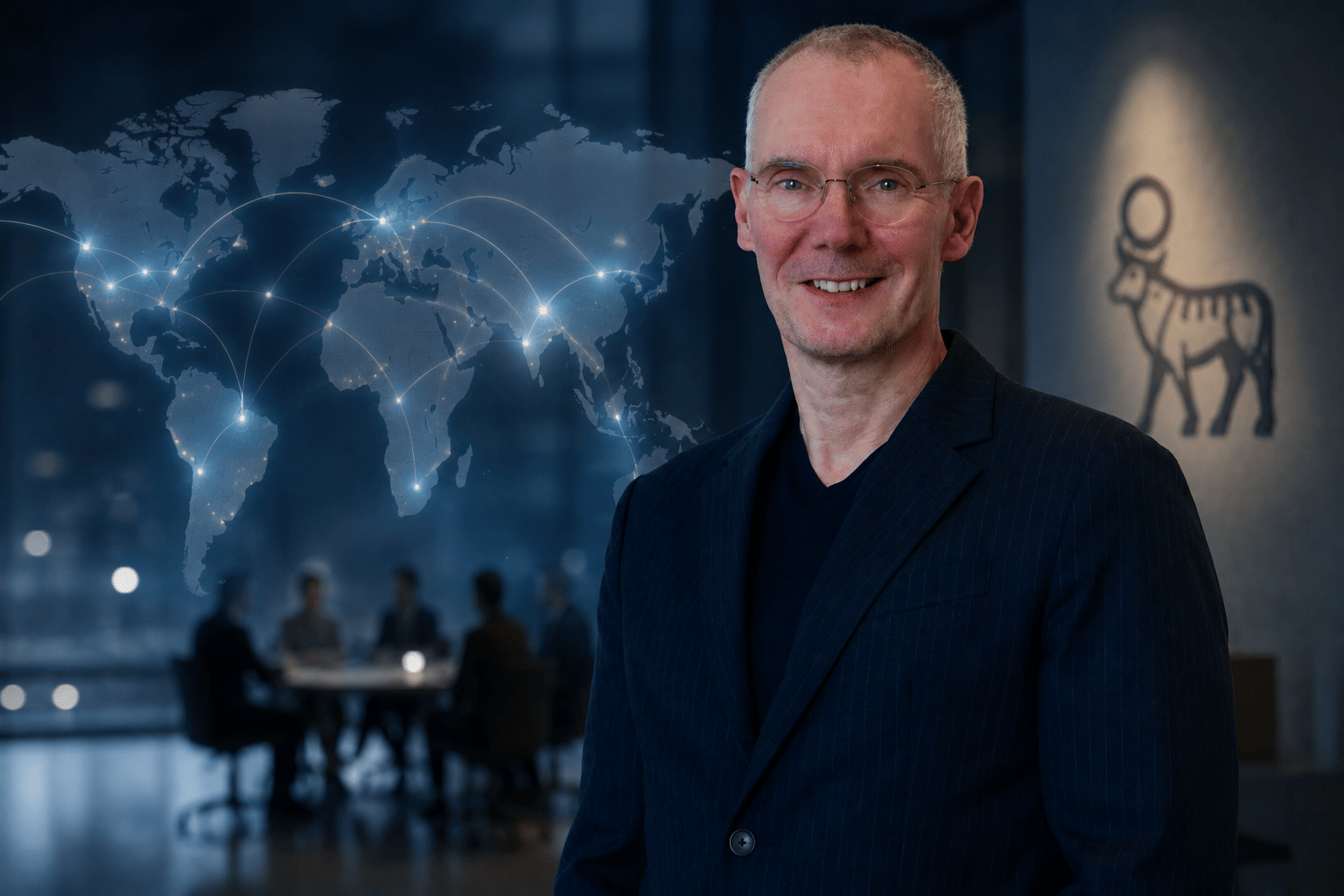
For John Dawber, Vice President & Managing Director, Global Business Services, Novo Nordisk, this is where India’s proposition is changing.
“India is no longer part of a cost-arbitrage equation, it is central to a skills, scale and capability led decision making.”
It is a useful way to frame the shift. Global pharma is not simply asking how much work can be supported from India. The more consequential question is what kind of capability can be built here, how deeply it can connect with the global business, and how much responsibility it can carry.
In an exclusive interview with People Matters, Dawber spoke about this changing equation, the rise of multidisciplinary talent, the need for a new breed of “orchestrators”, the limits of AI in people decisions and why India’s next test will be impact, not headcount.
India’s talent advantage is becoming less about the number of people
India has scale. But scale is hardly rare enough, on its own, to explain why global pharmaceutical companies would deepen their presence in a market.
The more interesting advantage lies in the combination.
“India brings together a rare combination of depth and breadth of talent across life sciences, medicine, engineering, analytics, technology and business services.”
For pharma, this mix matters because the work itself refuses to stay inside tidy functional boxes.
Clinical development needs data. Digital transformation needs domain knowledge. Technology operates within regulatory boundaries. Business decisions can carry patient impact. A team may have excellent specialists and still struggle if nobody can connect their expertise.
Dawber sees this multidisciplinary capacity as one of India’s stronger differentiators.
“What stands out about India's workforce is its ability to combine scientific depth with digital capability at scale. Few markets offer access to large pools of clinicians, pharmacists, statisticians, engineers, analysts and technology professionals who can work together on complex pharmaceutical programmes.”
The phrase “work together” carries much of the weight.
The opportunity is not simply to put a clinician, engineer, statistician and analyst in the same city. It is to build teams capable of solving problems across functions.
“Those qualities are becoming just as valuable as technical expertise.”
Dawber also points to the global mindset of Indian professionals.
“They are accustomed to working across geographies, cultures and functions, collaborating with teams spread across multiple markets and bringing different perspectives together to solve complex problems.”
At Novo Nordisk GBS in Bengaluru, he says teams contribute and assist stakeholders across almost every stage of the pharmaceutical value chain, including research, clinical development, regulatory affairs, supply chain planning, commercial operations and digital initiatives.
“The ability to bring together diverse expertise in one location allows us to solve problems more effectively and create value that extends well beyond any single function.”
This is a considerably bigger proposition than moving tasks from one geography to another.
“The work anchored in India is not simply about delivering tasks for the global organisation.”
Instead, Dawber says, “It is about building & anchoring specialised capabilities with rare individuals who could connect business with technology, which would lead to strengthening decision-making, improving ways of working and supporting global priorities with speed, quality and purpose.”
And in pharma, capability comes with a caveat. Technical brilliance cannot sit apart from scientific rigour, compliance or accountability.
“The talent we build must not only be technically strong, but also able to operate & support with scientific rigour, compliance, accountability and a clear understanding of the impact our work has on patients.”
The bar, in other words, is moving from having the skill to understanding the consequence of using it.
Pharma still needs specialists. It also needs people who can connect them
The list of hard-to-find skills is growing.
Dawber sees particularly strong demand across:
- Clinical sciences
- Biostatistics
- Regulatory affairs
- Pharmacovigilance
- Artificial intelligence
- Advanced analytics
- Digital technologies
“These capabilities are becoming increasingly important as pharmaceutical companies accelerate research, improve development timelines and make more data-driven decisions.”
Yet the answer to greater complexity may not be endless specialisation.
Dawber introduces another kind of professional into the conversation: the “orchestrator”.
“For me, the foundation of future GBS talent should focus on building ‘orchestrators’, who understand the full execution ecosystem, can move confidently across functions, and know how to connect capabilities to deliver impact at scale.”
It is an interesting counterpoint to years of talent strategies built around deeper and deeper expertise.
The specialist is not disappearing. Pharma still needs scientists to understand science and regulatory experts to understand regulation. But somebody also needs to see what happens between those disciplines.
“This breadth is becoming as critical as depth, because the value of GBS comes from how well we bring different parts of the organisation together with quality, discipline and purpose.”
So the talent shortage may be more complicated than a shortage of skills.
Companies also need people capable of making different skills work together.
This becomes harder when the shelf life of expertise itself is shrinking.
“The pace of technological change also means that today's skills can become outdated much faster than they once did. That places greater emphasis on learning agility, curiosity and adaptability alongside technical expertise.”
For employers, hiring their way out of every new capability gap is unlikely to be a sustainable answer.
“The organisations that succeed will be those that create environments where people continue developing throughout their careers rather than relying solely on external hiring to fill emerging capability gaps.”
The job description is quietly getting wider
Digital investment is not merely adding technology skills to existing pharma roles. It is changing what organisations expect from people already inside them.
“The pharma & life science talent ecosystem has become far more strategically interdisciplinary because digital investment is changing how decisions are made.”
Dawber sees expectations moving beyond operational and functional delivery.
“In a science-led and regulated industry, the expectation from talent is expanding from operational & functional delivery to stronger systemic expertise, better interpretation of data, and the ability to contribute to decisions that carry real business and patient impact.”
The employee side of the equation is changing too.
“People want exposure to global work, emerging technologies and continuous learning, but they also want purpose and clarity on impact.”
This creates a two-way challenge. Employers want adaptable people. Employees want organisations capable of giving them room to adapt.
“Talent today gravitates towards organisations that can offer continuous learning, global exposure and work that remains meaningful as the industry evolves”
For Dawber, the strongest professionals increasingly occupy another intersection.
“The strongest professionals today are those who can work at the intersection of domain expertise and automation fluency.”
Not everyone needs to become an AI specialist. But domain expertise increasingly has to coexist with an understanding of how automation changes work, decisions and accountability.
AI may automate the activity. It does not inherit the accountability
The conversation around AI often becomes a debate about which tasks disappear.
Pharma has a more complicated question: when a machine does more of the work, who remains responsible for the decision?
At Novo Nordisk GBS, Dawber says critical decisions remain with qualified experts.
“At Novo Nordisk GBS, AI is deployed within a human-in-the-loop framework, where critical decisions remain with qualified experts.”
AI-enabled solutions are being incorporated into workflows rather than treated as isolated technology interventions.
“Digital and AI-enabled solutions are being embedded into our workflows rather than treated as standalone technology interventions.”
Dawber points to clinical reporting, review processes and quality checks as areas where routine and data-intensive activities can be automated, allowing people to spend more time on strategic and value-adding work.
“Striking this balance is essential, because in pharma value chain, innovation and compliance need to be built as mutually reinforcing disciplines.”
Agentic AI pushes this tension further. If technology begins performing more specialised tasks, it would be easy to assume human involvement becomes less important.
Dawber sees the opposite possibility.
“As Agentic AI begins to take on more specialised tasks, the human-in-the-loop becomes even more important, not less.”
The distinction is important. Automating a task and delegating judgement are not the same thing.
“The real differentiator will be people who understand the broader value chain, know where judgement is required, and can ensure that technology strengthens decision-making rather than simply automating activity.”
This is where the future talent conversation becomes less about humans versus AI and more about the quality of the relationship between them.
You cannot recruit your way through permanent disruption
If skills keep changing, the traditional cycle of spotting a gap and hiring somebody to fill it begins to look increasingly reactive.
Dawber believes pharma companies need a longer view.
“I believe that pharma GCCs companies are having to think about talent as a long-term capability system, rather than a recruitment exercise.”
This changes the hiring question.
Instead of asking only what a candidate knows now, organisations have to consider how well the person may navigate what comes next.
“We hire not only for what someone knows today, but also for their ability to learn, adapt and grow over time.”
Careers are changing alongside this expectation.
“People are moving across functions, developing broader capabilities and taking on increasingly global responsibilities.”
At Novo Nordisk GBS, Dawber says partnerships with BITS Pilani, IIIT Bangalore, ISB and Manipal Academy of Higher Education support research, capability building, industry-academia collaboration and long-term talent pipelines.
Internal movement also plays a role.
“We also encourage internal mobility and cross-functional experiences because they help people develop a broader understanding of the pharmaceutical business and prepare them for future leadership roles.”
The broader idea is difficult to reduce to a training programme. Building adaptable talent requires giving people opportunities to move, learn and understand more of the system around their own jobs.
“The real focus must be on creating an environment where people can continue learning as technology, science and patient needs evolve.”
AI can map skills. It cannot fully read a person
The use of AI in talent management creates another boundary.
Technology can identify patterns. It can support learning. It can make processes faster.
But Dawber is clear about what it cannot fully assess.
“AI can help identify skills, improve learning pathways and make processes more efficient. It cannot fully assess potential, resilience, leadership maturity or the growth trajectory of an individual.”
Those judgements remain stubbornly human.
“Those would require conversation, observation, feedback and leadership commitment.”
It is a useful reminder at a time when organisations are increasingly looking to technology for answers to people questions.
Retention, too, is more human than algorithmic.
“People stay where they feel seen, supported and stretched.”
And for pharma, there is another factor which cannot be separated easily from the employee proposition: purpose.
“The opportunity to contribute to developing medicines and improving the lives of millions of people around the world continues to be a powerful reason why people choose to build long-term careers in the pharmaceutical industry.”
GBS is no longer sitting at the edge of the enterprise
India’s changing talent story also reflects a larger change in what Global Business Services centres are expected to do.
“The role of Global Business Services centres in the pharmaceutical industry has evolved fundamentally.”
Dawber says these organisations increasingly own specialised capabilities connected to innovation, scientific excellence and business performance.
“For me, GBS is at a critical juncture between enterprise strategy and executional excellence.”
This is where the evolution becomes particularly relevant for pharma.
Innovation may begin with an idea, but an idea still has to move through scientific, regulatory and operational systems before it can create meaningful impact.
“In pharma, that intersection carries real significance because innovation delivers meaningful impact only when it can move through scientific, regulatory and operational systems with rigour, trust and pace.”
GBS, in this framing, sits closer to the machinery which turns strategy into execution.
“India has become an important capability anchor for Novo Nordisk’s global priorities.”
Dawber says teams in India support work across the pharmaceutical value chain, from development and regulatory processes to global operations and enterprise-wide transformation.
He expects the role of GBS organisations to keep expanding.
“As the pharmaceutical industry becomes more interconnected and data-driven, GBS organisations will play an even greater role in shaping how global companies innovate, collaborate and create value.”
India has won the scale argument. Now comes the harder one
India’s next phase as a global pharma hub may be more difficult to measure.
Headcount is easy to count. Offices are easy to announce. Scale makes for a clean number.
Impact is messier.
“India already has the scale, talent and maturity that global pharmaceutical companies value. The opportunity now is to deepen specialised capabilities and continue evolving from a talent hub into a centre for global leadership and innovation.”
The next phase, Dawber says, will require continued investment in advanced scientific capabilities and digital expertise, alongside stronger collaboration between industry, academia and the broader research ecosystem.
Leadership may become one of the clearest tests of progress.
“Equally important will be developing leaders who can work across disciplines, lead global teams and drive transformation at an enterprise level.”
Some of this shift is already visible.
“We're already seeing more global process owners and functional leaders emerging from India, and I expect that trend to accelerate.”
This is perhaps where the phrase “talent destination” starts to feel too small.
A talent destination supplies people. A capability hub owns expertise. A leadership centre influences decisions.
India’s opportunity is to move further along this spectrum.
Dawber’s final measure for success is therefore not another scale metric.
“I also believe success will increasingly be measured by impact rather than scale.”
For global pharma, India’s pull may still begin with talent. But the bigger opportunity lies in what happens after the people are hired: the capabilities they build, the disciplines they connect, the judgement they exercise and the global responsibilities they eventually own.
“The organisations and countries that lead the next decade will be those that combine scientific excellence with technology, data and strong leadership to solve increasingly complex pharma challenges.”
India has already shown it can build large talent ecosystems.
The next question is whether it can become one of the places where global pharma’s most complex work, and increasingly its leadership, takes shape.