








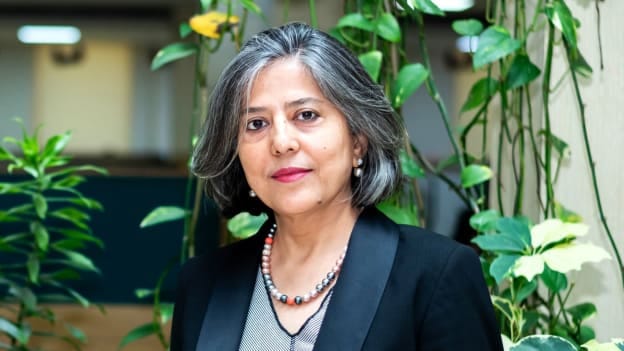
Renu Bohra, a seasoned HR professional with over 20 years of experience across diverse industries, brings a wealth of knowledge to her role as CHRO at National Engineering Industries Ltd. (NBC Bearings).
In today's dynamic business environment, where the engineering talent landscape is fiercely competitive, Renu acknowledges the constant challenge of balancing immediate needs with strategic workforce development. In this interview with People Matters, she sheds light on her core HR priorities and the innovative strategies NEI employs to navigate this complex terrain.
Here are some excerpts from the conversation.
What are the core priorities that drive your HR agenda? How do you balance these priorities with the dynamic needs of the business?
We are in a VUCA (volatility, uncertainty, complexity and ambiguity) world where priorities keep changing in response to the fast-paced changes of tomorrow and at times to create a better tomorrow. My core priorities are focused on navigating the evolving talent management landscape and ensuring that our organisation attracts, engages, develops, and retains top talent effectively. Here are the key priorities driving our HR agenda:
- Orbit Shift: Drive organisation transformation to a new growth trajectory, with a focus on a growth mindset, and new behaviours, and create a modern and inclusive workspace.
- Employer Branding and EVP: Building a strong employer brand is crucial for attracting top talent. We showcase our company culture, values, and commitment to employee development and well-being. This not only attracts high-calibre candidates but also helps retain our current workforce by fostering a sense of pride and belonging.
- Diversity, Equity, Inclusion & Belonging (DEIB): We are committed to implementing proactive DEI strategies to attract and retain diverse talent. By fostering an inclusive culture and addressing systemic biases in our recruitment processes, we ensure that all employees feel valued and supported, leading to a more innovative and collaborative workforce.
- Skills-Based Hiring: In today’s dynamic job market, we prioritise candidates with relevant skills and experiences over traditional qualifications. This approach allows us to quickly adapt to changing business needs and ensures we have the right talent to drive our strategic objectives.
- Investment in Employee Development: Continuous learning and development are key to employee engagement and retention. We invest in robust development programmes, mentorship initiatives, and upskilling opportunities to help our employees grow their careers within our organisation.
- New-Age HR: As we undergo a transformation, the need for new-age HR practices is being felt. We have to step up the competencies of the internal HR team, particularly their understanding and response to IT and tech skills. We are good at supporting business, what we need is to enhance our capabilities to become an effective business partner.
Balancing these priorities with the dynamic needs of the business requires continuous adaptation to changing market dynamics and workforce trends. By staying aligned with our organisation’s strategic goals, we ensure that our HR agenda supports overall business success. This involves regular evaluation of our HR strategies, soliciting feedback from employees and leaders, and being agile in our approach to meet both current and future talent needs.
How can organisations balance the need for immediate talent solutions with the strategic development of their internal workforce in a competitive engineering talent landscape?
These are some of the strategies we have in place:
- Hybrid Talent Strategy: We are combining external recruitment for urgent skill gaps with internal training programmes to develop existing employees. Our target is at least 25% of internal hiring needs are filled with internal talent.
- Continuous Learning: By investing in ongoing education and professional development to upskill current staff, we are ensuring they stay ahead of industry advancements. We have an emphasis on Industry 4.0 and are running programmes to create internal trainers who will help build continuous learning focus within teams.
- Talent Pipeline: Using Talent Review and Talent Conversations, we identify talent, assess their aspirations, and build internal career progression paths. We also partner with top engineering colleges to create a steady stream of fresh talent.
- Succession Planning: Developing clear succession plans to prepare internal candidates for future leadership roles, reducing reliance on external hires.
- Agile Workforce Planning: We regularly assess workforce needs and adjust strategies to balance immediate requirements with long-term goals.
How does NEI leverage diversity and inclusion (D&I) to not only enhance employee engagement but also drive measurable business performance improvements?
We have been successful in putting in place a robust governance framework to support D&I over the years. This entails raising awareness and educating people about POSH, offering a secure workplace for women, and giving female employees access to advantages like flexible scheduling, childcare, leave, and cab/transportation. We will keep adding to the good number of women who work in our production facilities. As long as the population remains lop-sided, we have a long way to go. Our goal is to increase the proportion of women in the workforce by recruiting more of them. We also want to establish an Employee Resource Group to further enhance and build the talent pipeline in order to empower women and help them harness their skills.
Beyond automation, how can organisations utilise new-age HR technologies to fundamentally transform the employee experience and improve talent management outcomes?
Technology is drastically changing the hiring process in several ways, allowing businesses to maximise their efforts in finding and hiring talent. Automating tedious and time-consuming administrative processes in recruitment, such as screening resumes, finding candidates, and setting up interviews, is made possible by technology. AI-powered chatbots, application tracking systems (ATS), and other automated tools should be used by HR to expedite these procedures and free up recruiters' time for more strategic tasks like relationship- and candidate-building. The recruitment industry is undergoing a change because of advanced analytics and data-driven insights, which give HR professionals the useful information they need to make wise decisions. Advanced analytics and data-driven insights are revolutionising recruitment by providing HR professionals with actionable intelligence to make informed decisions. Hiring analytics should be used by HR to monitor important performance indicators such as candidate quality, cost per hire, and time to hire.
Organisations can provide a more customised and interesting application experience for candidates at every stage of the hiring process thanks to technology. HR could use technologies like chatbots with artificial intelligence (AI), VR simulations, and video interviewing platforms to give candidates engaging and immersive experiences. With the increase in remote work, technology has made it possible for organisations to access talent pools that are geographically dispersed through virtual onboarding and recruitment procedures. To effectively engage and onboard distant applicants, HR should make use of digital onboarding platforms, virtual recruitment events, and video conferencing capabilities.
What specific skills, experiences, and mindsets do you believe are crucial for talent success in today's dynamic business environment?
India's manufacturing industry is changing, and because of economical costs and better facilities, tier II cities are becoming important centres for talent. India's automobile component manufacturing industry is expanding rapidly, especially in tier II towns. Because of our ties with educational institutions and our skill development programmes, we anticipate hiring more people from these locations in the future.
Key trends shaping the talent management landscape include:
- Vocational Training and Skill Development: A focus on specialised training programmes to build competencies in automation and advanced industrial procedures.
- Technological Developments: Growing Need for Industry-Proficient Professionals IoT, AI, and robotics are examples of Industry 4.0 technologies that promote creativity and efficiency.
- Employee Engagement and Retention: To keep qualified workers, we prioritise offering competitive pay, chances for professional advancement, and a supportive work environment.
- Sustainable Manufacturing: As the industry moves towards more environmentally friendly production, there is an increasing need for knowledge of green technologies and sustainable processes.
- Diversity and Inclusion: Attempting to create a diverse workforce by encouraging inclusive workplace policies and hiring people from a range of backgrounds.
Upskilling in fields like automation and data analytics is becoming more and more necessary as manufacturing becomes more and more technology driven. In manufacturing, diversity recruiting is especially important since it can draw more women into areas that have historically been filled by men. To draw and keep diverse talent, businesses must foster inclusive work cultures and provide flexible scheduling.