








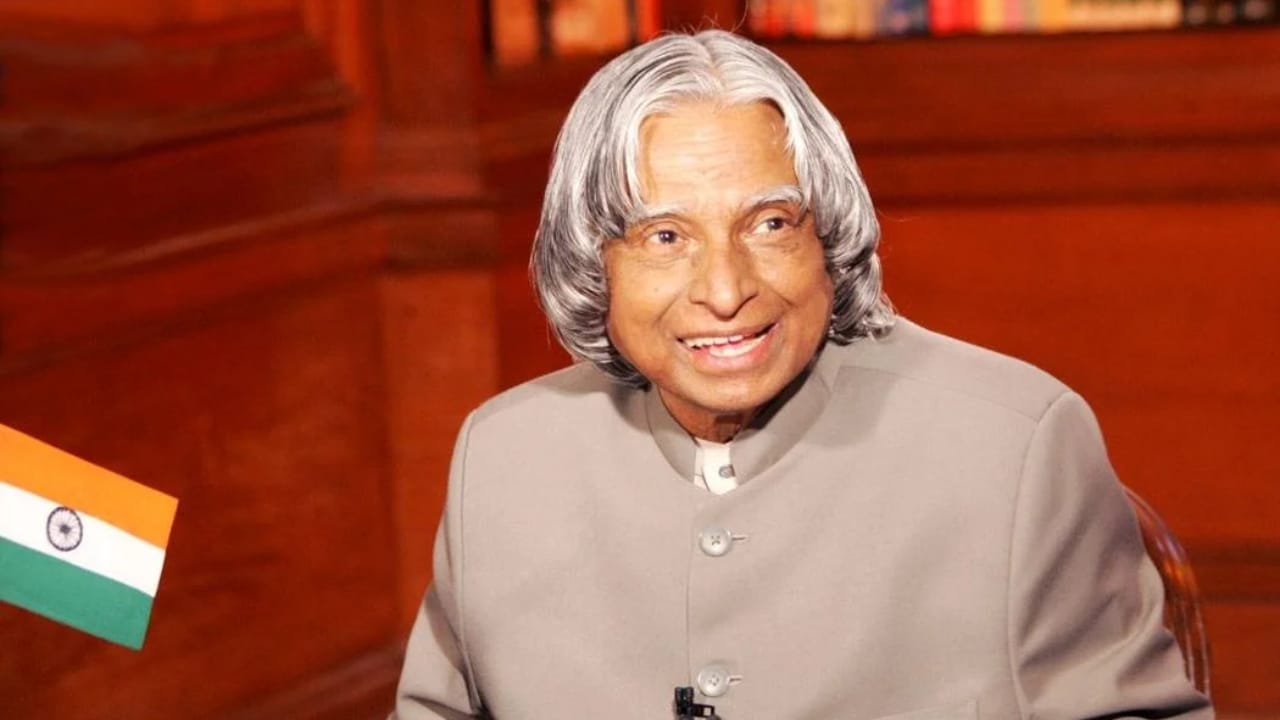
Today marks the birth anniversary of Dr. A.P.J. Abdul Kalam, India’s “Missile Man” and 11th President.
Remembered globally for his role in advancing India’s space and defence capabilities, Kalam’s greatest legacy may lie in his approach to people. He made talent development his mission — creating opportunities for young scientists to lead, shielding teams during failure, and building a culture of empowerment that continues to shape India’s institutions.
He often reminded colleagues that the strength of an organisation lay not in structures but in the people who drive it. His actions consistently reflected that principle.
Giving the young the stage
At ISRO in the 1970s, Kalam led the Satellite Launch Vehicle (SLV-3) programme. Colleagues including former chairman K. Kasturirangan recall how he placed junior scientists at the forefront, encouraging them to present their work directly to senior leaders.
By pushing emerging talent into the spotlight, Kalam built both confidence and capability. Those moments of responsibility accelerated careers and raised the overall quality of the institution.
When failure came, he stood in front
In August 1979, the first experimental flight of SLV-3 failed to put a satellite into orbit. As project director, Kalam faced the press and the government alone, taking full responsibility.
A year later, when SLV-3 succeeded, he reversed the script. It was his junior colleagues who addressed the media, taking the credit. This pattern — shielding teams during failure, spotlighting them during success — became the hallmark of his leadership.
Creating leaders for tomorrow
The results were visible. Scientists who came up under Kalam went on to lead India’s aerospace and defence projects. At DRDO, where he launched the Integrated Guided Missile Development Programme in the 1980s, young teams led subsystems of projects such as Agni and Prithvi.
Official records credit the programme with creating an entire cadre of missile technologists, many of whom later became project directors themselves. This deliberate handover of responsibility made talent development part of the system, not just an individual trait.
Linking growth to national purpose
Kalam consistently tied individual growth to a larger mission. For scientists, he framed their work as service to the nation’s self-reliance. As President from 2002 to 2007, he extended the same principle to young people across India.
Rashtrapati Bhavan archives show that he delivered hundreds of talks to students, speaking about science, innovation and national service. For him, talent development was inseparable from the goal of nation-building.
Resilience as a training ground
Kalam also treated setbacks as part of the learning cycle. Missile tests at DRDO failed in their early phases, but official programme histories note that he used each failure as a teaching moment, reinforcing resilience and feeding technical lessons back into the next attempt.
By making resilience part of training, he prevented attrition and kept teams together through difficult phases until operational systems were delivered.
Always accessible
Despite senior roles, Kalam was known for his accessibility. Colleagues and students have described how he maintained an open-door approach. As President, he invited groups of young people to Rashtrapati Bhavan for question-and-answer sessions, often listening more than he spoke.
This consistency made him not only a leader of projects but also a mentor to individuals across generations.
Talent pipelines and vision
Kalam’s influence extended into policy. In the 1990s, he was closely involved with the Technology Information, Forecasting and Assessment Council (TIFAC), which produced “Technology Vision 2020”. The document mapped national skill requirements and laid out educational reforms, linking human capital with long-term economic development.
It was talent development scaled to the national level.
Culture that lasts
The systems Kalam left behind continue to shape ISRO and DRDO. Officials credit him with embedding practices of empowerment, accountability and resilience that survived leadership transitions. These institutions still produce leaders who carry forward his approach.
Lessons for today’s leaders
The principles visible in Kalam’s leadership are clear:
Give young employees responsibility early.
Protect teams during failure, share credit for success.
Tie individual growth to a larger mission.
Treat setbacks as training, not endpoints.
Stay accessible and engaged with people at every level.
These were not abstract philosophies. They were practices documented through his career — practices that turned India’s scientific institutions into talent factories and laid the foundation for future capability.