








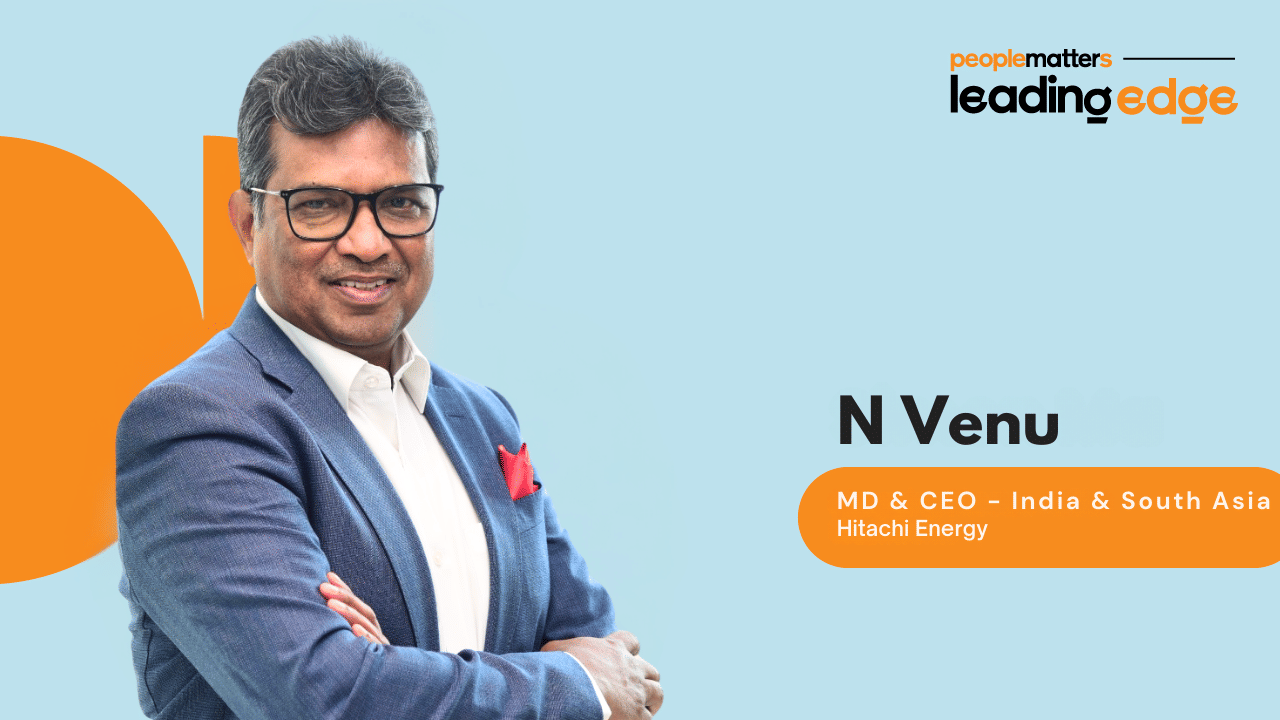
What happens when a CEO and a CHRO join forces to spark a revolution in inclusive leadership? At Hitachi Energy India and South Asia, N Venu, Managing Director & CEO, and his CHRO are rewriting the rules—placing people, purpose, and partnership at the heart of business transformation. As the energy sector faces unprecedented disruption and opportunity, its dynamic collaboration is not just keeping up with the times; it’s setting a new standard. Dive into this LeadingEdge article of how vision, empathy, and trust are powering a fresh era of leadership—one where every voice matters, and the future belongs to those who dare to include.
Curiosity, Purpose, and People: The evolution of a leader
Venu’s leadership journey is a testament to growth through curiosity and a relentless focus on people. “Early in my career, I focused on solving problems and delivering results, but over time I realised that leadership is less about direction and more about inspiration,” he reflects. What began as a pursuit of technical excellence has matured into a mission-driven approach, where each individual is encouraged to see their work as part of a larger, sustainable energy future.
The art of listening and the power of trust
If you ask Venu what truly transformed his leadership style, he’ll point to the seismic shifts of the past few years: the pandemic, the rise of Gen Z, and the growing emphasis on well-being and work-life balance. “I used to think leadership was mostly about giving direction. But over time, I’ve come to realise that it’s about listening,” he admits.
The experience of leading through crisis taught him that people crave honesty, support, and a sense of belonging more than ever.
This realisation has made Venu more open and approachable, fostering an environment where ideas flow freely, and trust is the cornerstone of culture. “People want more than just a paycheck. They want work-life balance, purpose, and the freedom to do their best work,” he observes. For him, building trust means being present, listening actively, and responding with empathy—especially when the path ahead is unclear.
Calm in the Storm: Leading through crisis
Leadership, Venu believes, is most visible during times of difficulty. “People watch how you react more than what you say. The most important thing is to stay calm, communicate clearly, and show that you care,” he says. He emphasises honesty and presence over bravado, focusing on what can be controlled and modelling steadiness for his teams. It’s this calm, grounded approach that cultivates confidence and unity, even when uncertainty reigns.
Technology as empowerment, not replacement
The energy sector is undergoing a digital revolution, with AI and automation at its heart. Venu’s approach is refreshingly human-centric. “Technology should empower, not replace people. The goal is to work smarter, safer, and more meaningfully,” he insists.
By communicating openly about the role of technology, investing in continuous learning, and encouraging curiosity, he ensures that innovation is seen as an opportunity rather than a threat.
Venu’s vision for the future is a blended workforce where legacy expertise meets future-ready capabilities. “The goal is not to replace old skills with new ones but to blend them, creating a workforce that combines experience with innovation,” he says. In his view, true success lies in upskilling and reskilling, and in making every employee an active participant in the company’s evolution.
The CHRO: From policy enforcer to strategic architect
Perhaps the most telling aspect of Venu’s leadership philosophy is his partnership with the CHRO. In his eyes, the role has evolved dramatically—from administrative overseer to strategic architect.
“Our CHRO is a strategic partner in defining growth, culture, and capability priorities. Every business decision now considers the human impact,” he notes.
At Hitachi Energy India, the CHRO sits at the heart of organisational transformation. They drive not just people processes but business outcomes, ensuring that talent strategy is fused with core business goals. This partnership has blurred the traditional boundaries between business and HR, fostering shared ownership of both outcomes and organisational culture.
The CEO-CHRO Collaboration: A blueprint for the future
Venu is unequivocal about the criticality of CEO-CHRO collaboration in today’s workplace. “Both leaders must think ahead and define a shared vision for the organisation’s workforce, ensuring that business and people strategies align and move in tandem,” he explains. The result? Greater agility, responsiveness, and resilience in the face of complex challenges.
The focus is on building future-ready skills, attracting diverse talent, and retaining the organisation’s competitive edge in a rapidly evolving sector.
The CHRO as culture custodian and transformation leader
The expanding scope of the CHRO role is something Venu wholeheartedly endorses. “Every business decision related to growth, sustainability, or digital transformation now requires a people-centric approach. Our CHRO plays a key role in shaping how we lead, collaborate, and build organisational resilience,” he says.
Advice for the next generation of HR leaders
What, then, does it take for a CHRO to lead in today’s complex landscape? Venu’s answer is clear: perspective. “Every decision should be made through a people-first lens, considering impact and intent. Understanding workforce realities, staying authentic, and leading with empathy are vital,” he advises.
The most effective HR leaders, in his view, are those who balance transformation with human connection—ensuring that innovation never comes at the expense of empathy.
A leadership model for the modern era
N Venu’s journey and his partnership with his CHRO offer a powerful model for organisations everywhere. It’s a model built on curiosity, empathy, shared purpose, and a relentless focus on people. It’s about moving from command-and-control to collaboration and co-creation.
And it’s about recognising that in a world of constant change, the strongest leaders are those who inspire trust, champion inclusion, and make every employee a co-author in the story of transformation.
As Venu and his CHRO continue to shape the future of Hitachi Energy, one thing is clear: the power of partnership—not just between CEO and CHRO, but across every level of the organisation—will be the engine that drives sustainable growth and a brighter, more connected energy future.