








India’s GCC narrative is being redefined in increasingly substantive ways. What began as a model centred on operational leverage has evolved into a far more strategic enterprise conversation. Global organisations are now viewing India through the lens of long-term capability, recognising its growing influence on business transformation, product thinking, and enterprise decision-making.
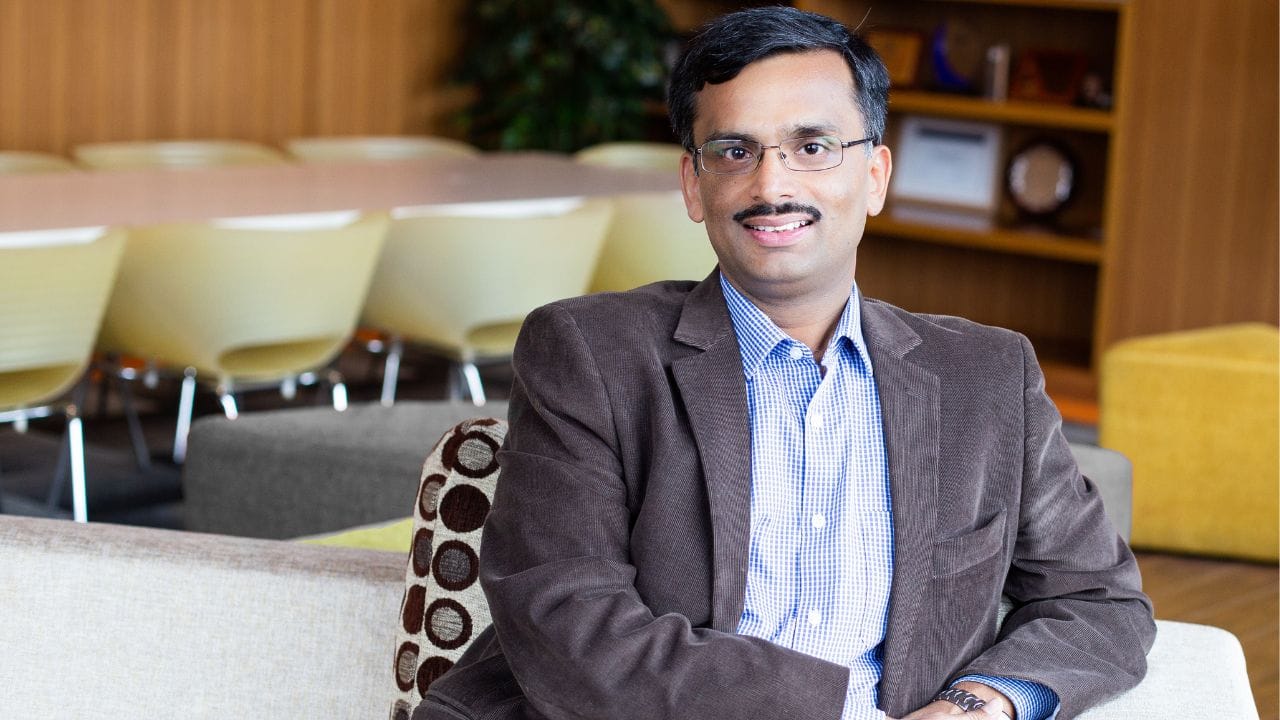
In this conversation, Anshuman Das, Co-Founder & CEO of Careernet Group, examines how India's role within multinational organisations is evolving, why AI is accelerating a new phase of capability-building, and what leadership will need to look like as GCCs move closer to the centre of enterprise strategy.
Careernet Group - comprising Careernet, HirePro, Longhouse, and MyCareernet, is among India’s leading talent solutions ecosystems, with expertise spanning talent acquisition, leadership advisory, recruitment technology, and employer branding.
Here are a few excerpts from our conversation:
Q. For decades, India’s GCC story was closely tied to efficiency and scale. Today, the conversation is far more centred on capability and enterprise impact. How are you seeing this shift reshape the role of India within global organisations?
One of the first things we need to recognise is that organisations themselves do not necessarily think in terms of “GCCs” internally. For a company headquartered in Seattle or New York, an office in India is increasingly viewed as another strategic location for the enterprise, alongside Poland or Mexico.
The larger shift has come from the way technology itself has evolved. Earlier, technology functions were largely operational. Over time, internet-led business models, cloud infrastructure, and digital-first customer engagement transformed technology into the core of enterprise strategy. Covid accelerated that shift significantly.
Now, with AI entering the picture, technology is becoming deeply embedded into how businesses innovate, build products, and create competitive advantage. India’s role has expanded because global companies have realised they can build at scale here in ways that are difficult elsewhere. Today, organisations entering India are thinking with a much longer-term lens. They are asking whether centres here can become centres of excellence, whether innovation can emerge from India, and whether future enterprise leadership can operate from here.
Q. As these centres take on mandates across AI, product engineering, and cybersecurity, what does it take to design a GCC capable of operating at that level?
One challenge India has historically faced is the absence of a direct customer context. Businesses such as large US retailers, healthcare insurers, or cruise companies operate within environments that do not naturally exist in India. As a result, deep contextual understanding of some global industries has traditionally been limited.
That is changing steadily because a significant amount of global Indian talent has returned to India over the years, bringing stronger business and market understanding. AI presents a different challenge. India is rapidly building capability, particularly at the application layer, though foundational AI infrastructure and large language model development remain areas where global leadership largely lies elsewhere.
At the same time, organisations are preparing for entirely new AI-led risks related to cybersecurity, infrastructure vulnerabilities, and governance. So companies are simultaneously catching up on current AI adoption while preparing for the future of AI itself.
Q. Bengaluru continues to dominate the GCC landscape, though cities such as Hyderabad, Pune, and tier-two markets are gaining momentum. What makes a location strategy effective today?
India now offers multiple viable GCC destinations beyond the traditional metro centres. Bengaluru, Hyderabad, Pune, Chennai, and Delhi remain strong ecosystems, while cities such as Coimbatore and Vijayawada are also entering strategic conversations. The way organisations approach location strategy has become far more nuanced. Companies are beginning to separate innovation-led work from operational or shared-services work.
Many organisations are building lean, innovation-focused teams in Bengaluru or other mature ecosystems where specialised AI and product talent are concentrated. Operational work is increasingly being distributed across tier-two and tier-three cities.
The key difference today is that infrastructure maturity outside major metros has improved significantly. Companies are more confident in their ability to deliver consistent employee experience standards across locations.
Q. The journey from an initial team to a scaled capability centre is rarely straightforward. How should organisations approach this evolution more intentionally?
The companies that scale well typically begin by building a few strong success stories first. Many organisations make the mistake of scaling too aggressively before establishing credibility internally. What tends to work better is starting with a focused mandate, delivering meaningful outcomes, and building champions at the headquarters level who actively support the India story.
Leadership also becomes critical as the centre evolves. The leadership model that works for a small centre may not work for a much larger organisation later. Every GCC follows a different journey, which means organisations need to build their own operating playbook rather than replicate someone else’s model.
Q. What should organisations prioritise while building the founding team for a GCC?
The founding team shapes the trajectory of the entire centre. Organisations must prioritise the following requirements:
The first requirement is clarity of purpose. Organisations need to define very clearly what the centre is expected to achieve.
The second is strong sponsorship from headquarters. India needs visible champions within the global leadership structure who actively advocate for the centre.
The third is appointing the right on-the-ground leader from the outset. Many organisations delay this decision and attempt to start with small teams without strong leadership in place. That often results in average outcomes and weak organisational confidence.
The fourth is hiring exceptional founding talent. I describe these early hires as “founding GCC engineers” because they become the foundational layer of the organisation’s long-term capability. The quality of this early nucleus has a compounding effect on culture, standards, and future talent.
Q. How are organisations moving beyond volume hiring to building capability that sustains and compounds over time?
Capability building is never the result of hiring alone. Sustainable capability emerges from the intersection of multiple factors: domain expertise, leadership empowerment, talent quality, organisational investment, and continuous knowledge exchange.
Many organisations focus heavily on cost efficiency while underinvesting in long-term capability development. That creates short-term productivity gains without strengthening the centre’s strategic muscle.
Building capability requires leadership autonomy, stronger domain exposure, and active cross-pollination between headquarters and India teams. Without those feedback loops and knowledge-transfer mechanisms, centres risk remaining execution-oriented rather than evolving into strategic capability hubs.
Q. Looking ahead, how do you see India’s role evolving in shaping global innovation and leadership pipelines?
One of the biggest advantages India offers today is that it is no longer only a talent market. It is also a large and highly complex business market. If you look at examples such as Google Pay and innovations like cash-on-delivery, many solutions built around India’s unique market realities have eventually influenced broader global approaches.
India’s operating environment forces businesses to solve for scale, affordability, low-cost economics, and massive consumer diversity simultaneously. That complexity often drives sharper and more adaptive innovation. I believe India will increasingly become a testing ground for products and business models that can later scale globally.
The profile of the GCC leader will also evolve significantly over the next decade. As India’s role expands beyond technology operations into business innovation and AI-led transformation, future leaders may increasingly come from product, AI, or business leadership backgrounds rather than traditional shared-services structures. Ultimately, India’s long-term ambition should extend beyond hosting GCCs. The aspiration should be for India to become home to a meaningful share of the world’s enterprise headquarters themselves.