








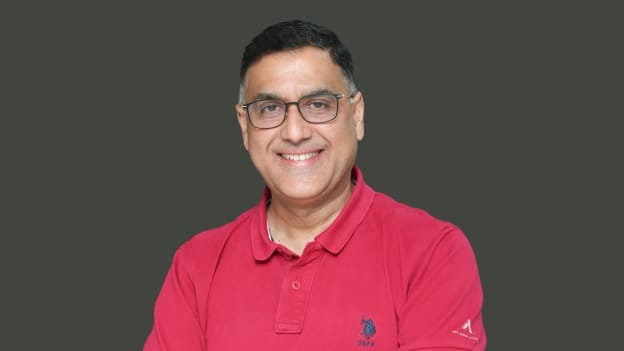
Pankaj Mittal is the Senior Vice President, CHRO, Asia Pacific at American Tower, with over three decades of strategic business experience. He has served on Executive Committees, driving long-term strategic planning and organisation development across the region. Pankaj is passionate about elevating human potential and building future-ready organisations. As Chair of the APAC DEI Council at American Tower, he advocates for nurturing diverse teams and fostering an inclusive workplace culture. He is deeply committed to empowering high-potential managers and mentoring young HR professionals to support the next generation of HR leaders.
In this interview, we explore Pankaj’s insights on DEI policies and practices, strategies for driving long-term success through diverse and empowered teams and more.
Here are some excerpts.
As the Chair of the APAC DEI Council at American Tower, can you share insights into the company's DEI initiatives and the tangible policies put in place to support diversity and inclusion in the workplace?
Cultivating a workplace culture that champions diversity, equity, inclusion and belonging is critical to business success. This requires all levels of the organisation to commit to an honest assessment of bias, discrimination and any other obstacles that stand between them to drive a systemic change.
We strongly believe that empowerment through an inclusive culture that offers every employee an opportunity for growth and a sense of purpose, is followed by a deep sense of motivation and commitment. A strong culture that values diversity, beliefs, and unique behaviours always serves as a powerful force in building a sense of unity and purpose. It is also an important source of retaining and attracting top talent.
We established a dedicated DEI Council in the organisation in the APAC region in 2022 to fully embed diversity, equity and inclusion into the fabric of our culture. At the onset of our journey, we recognised the importance of self-awareness. The first marker was to curate and conduct training to help our people understand the fundamentals of DEI, followed by sessions on unconscious bias and the use of inclusive language so we, as employees, can actively identify any biases and gaps in our day-to-day interactions and learn strategies to mitigate them.
Diversity encompasses the full spectrum of human differences, so ensuring that despite these differences in culture, ways of thinking, gender, and caregiver responsibilities, everyone can show up as who they are, with their authenticity.
This is why we introduced programmes catering to the needs of these unique groups to ensure they are well-supported and empowered. This is where equity and inclusion come into play, because it's not enough to have diversity, it is how you leverage, value, and respect it. Companies that have fully embraced a DEI culture attract high-potential talent. It's a place where people want to work. And for us, inclusion comes first.
In 2024, the Council has sharpened its focus around these core priorities:
Gender representation to achieve fairness and equal opportunities for all genders in the workplace:
- Introduce training like “hiring beyond bias” for managers.
- Celebration of important events like women’s and men’s day to start a conversation around sensitive, but important subjects.
Ethnic and Cultural Inclusion to promote a workplace that values and integrates diverse ethnic and cultural backgrounds.
- Plan and organise inclusive cultural events and celebrations to build a deeper understanding and appreciation of diverse cultures and nuances.
- Promote awareness of significant cultural observances and increase the visibility of diverse cultures.
Working caregivers to provide support and resources for employees balancing work responsibilities with caregiving duties.
- Support returning parents with nursing rooms, flexible work schedules, etc.
- Caregivers Networking Group to connect, share experiences, and provide mutual support.
- Sensitising the rest of the organisation about caregivers' challenges.
Wellbeing Support to prioritise the mental, physical, and emotional health of employees through wellness programmes and initiatives.
- Organise fitness challenges and wellness workshops.
- Establish a well-being resource hub with tools and information.
- Provide Employee Assistance Program support.
So having that right mix and balance between celebrating differences and commonalities helps us get to a place where everyone sees themselves in the DEI mix. Inviting differing opinions, seeking out new perspectives, providing psychological safety, and curating safe spaces where individuals can freely share their thoughts, opinions, and challenges – helps embed DEI into the very core DNA of the company.
How do you actively support underrepresented groups, such as women, minorities, and individuals from marginalised communities, in their career development and advancement opportunities?
To ensure optimum gender representation, our teams monitor and address gender imbalances across all levels of the organisations. We regularly organise events and workshops tailored to the needs of women. We train hiring managers for an unbiased hiring process with the use of inclusive language. We have curated a platform to encourage women to come forward and share their unique stories of overcoming adversity through unwavering strength and commitment – which has also been a great source of inspiration for many women and men. We are creating an orientation module for returning parents to help them cope with balancing childcare responsibilities and deliverables at work, especially after a significant gap.
Talking about budgets, investments, and finances might not always be the most comfortable, but they are undeniably crucial.
We are conscious that sometimes financial planning gets overlooked. To address this, we hosted a Financial Literacy workshop to help our colleagues make more sound investment decisions.
Our Learning and Development team is mandated to ensure a significant representation of women and colleagues from diverse geographies in training programs for upskilling and professional growth. This helps us cultivate a talent pipeline rich in diverse perspectives and capabilities.
From your perspective, how does fostering diversity and inclusion contribute to organisations' long-term success and sustainability, particularly in the context of the rapidly evolving business landscape in the Asia-Pacific region?
According to a study by BlackRock on ‘Lifting financial performance by investing in women’, companies with the most diverse workforces outperformed their country and industry group peers with the least-diverse workforces in terms of return on assets by 29% per year, on average, over the 2013-2022 period. Hence, diversity and inclusion have become critical elements for the success and sustainability of businesses, particularly in the context of the rapidly evolving business landscape, for several reasons:
- Enhanced innovation and problem-solving: A diverse workforce comprises individuals with distinct outlooks, backgrounds, and experiences. This mix of rich and unique perspectives challenges conventional norms, nurtures innovation, and amplifies problem-solving capabilities.
- Employee retention and higher productivity: Inclusive workplaces create a sense of purpose and belonging where employees feel valued, more engaged, motivated, and productive. This in turn helps companies in attracting and retaining top talent. According to a survey by EY, 63% of employees across generations currently prioritise DEI in choosing a company over one that does not, and it’s of even greater importance to Gen Z and millennial talent.
- Improved decision-making skills: Diverse teams bring new ideas and different perspectives during the decision-making process, which ensures a more holistic evaluation of options. Consequently, organisations with diverse teams are better positioned to make well-informed decisions, ultimately enhancing overall performance.
How do you measure the impact of diversity initiatives? Are there any key metrics or indicators used to assess progress and ensure continuous improvement in promoting diversity and inclusion?
We have a biennial all-employee survey which is a clear indicator of the pulse of the organisation. This comprehensive survey features a mix of multiple-choice and qualitative questions specifically tailored to Diversity, Equity, and Inclusion (DEI), providing us with a nuanced understanding of both our strengths and areas for improvement from the perspective of our employees. Despite a VUCA environment, our employee engagement scores remain strong demonstrating our firm commitment to DEI and culture.
Starting this year, we are also launching focused group discussions to gain deeper and qualitative insights into the unique experiences and challenges different employee groups face and brainstorm ideas around how the organisation can support them better. These employee groups will comprise persons from multicultural and diverse backgrounds, genders, working caregivers, and those who need well-being support.
Finally, what advice would you offer to HR professionals and organisational leaders who are looking to strengthen their diversity, equity, and inclusion initiatives, based on your own experiences and observations?
Creating a culture that enables the advancement of diversity, equity, and inclusion is crucial to business success. This requires all employees and all levels of the organisation to commit to an honest assessment of bias, discrimination, and any other obstacles that inhibit systemic change and progress.
- Be willing to accept, unlearn and adapt by embracing new techniques, concepts, and diverse voices. Bring humility around these topics as a leader.
- Be self-aware of unconscious bias and inculcate inclusive language in your engagements.
- Embrace ‘culture add,’ not ‘culture fit’: Culture add consciously embraces individuals from various backgrounds, communities, and demographics.
- Nurture a sense of belonging: Employees need to feel valued, supported and heard. This can be achieved by ensuring transparent communication, providing constructive feedback, and demonstrating tangible actions so that employees are encouraged to bring their whole self to work.
- Recognise and reward right behaviours and check wrong behaviours: Recognising good work by employees for their efforts and contributions can go a long way in creating a thriving workplace where employees feel motivated and empowered to perform their best. When employees know that their voice is valued and feedback heard, they are personally driven, have a sense of purpose, and are deeply invested. Organisations that truly embed DEI, build the right recognition mechanisms that reward outcomes towards the larger purpose over a standard target and articulate these successes through powerful storytelling – drawing devotion and much deeper levels of commitment.
- Lead from the front: Participate personally in events that showcase DEI and lead by example.
- Employees seek personalisation, and the one-size-fits-all model is on its way out. Getting feedback from diverse teams, demonstrating empathy, and acknowledging varying contexts, can unlock the value of this diversity, turn your employees into advocates, and build real shareholders who are deeply invested.
- Bring in more diverse voices at the decision-making table: Diverse teams bring new ideas and different perspectives during the decision-making process, which ensures a more holistic evaluation of options. Consequently, organisations with diverse teams are better positioned to make well-informed decisions, ultimately enhancing overall performance.
- Everyone needs to get involved: Include everyone. It's important to not isolate the work of diversity, equity, and inclusion to marginalised employee groups because it takes all of us working together, every person, every level, every day to achieve meaningful progress within an organisation. It's important that every single person within an organisation, from entry-level employees all the way through to CEOs, are given the space to share their truth, whatever that may be. When everyone across your organisation commits to these practices, you can create a culture where DEI becomes a fixture in the very foundation of the organisation.
Organisation leaders, especially HR professionals, have the unique opportunity to shape the culture of the organisation. I would earnestly invite all leaders to embrace this opportunity to drive positive outcomes!