The global energy industry is once again operating under pressure.
Volatile oil markets, geopolitical uncertainty in West Asia, supply chain disruptions, cost discipline demands and accelerating investment into transition businesses have created an environment where companies are simultaneously trying to protect today’s operations while preparing for a very different future.
That pressure is no longer confined to infrastructure, capital allocation or technology strategy. Increasingly, it is becoming a workforce question.
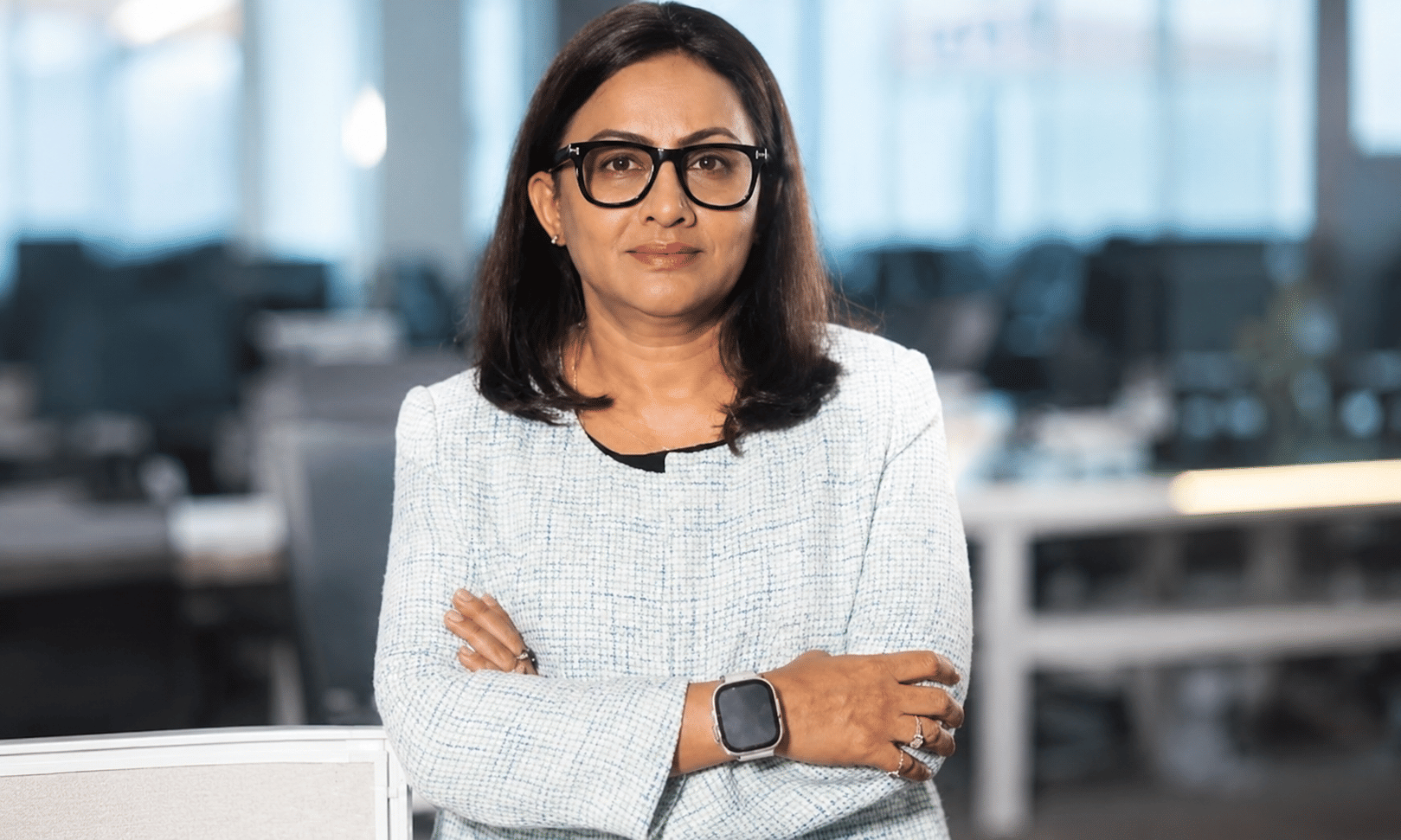
For Dr Jyothi Menon, Global Head of People Operations and HR Advisory at British Petroleum and Director on the board of bp India, the conversation around workforce stability has shifted fundamentally.
“Workforce stability today isn’t about permanence; it’s about preparedness,” she tells People Matters.
In an industry historically built around long operating cycles and deeply specialised roles, the definition of workforce resilience is shifting quickly. Companies are now trying to build organisations that can absorb uncertainty without paralysing employees or slowing transformation efforts.
And according to Menon, the old idea of stability itself may no longer fit the realities of the energy business.
Stability is no longer about permanence
The energy sector has spent the past few years moving through overlapping disruptions.
The transition towards lower-carbon businesses continues to reshape investment priorities. At the same time, traditional energy operations remain critical to economic stability and industrial demand.
That duality is creating a difficult balancing act for employers.
Menon says organisations can no longer promise employees a static environment.
“What really steadies people is not the absence of disruption, but confidence that they can navigate it,” she says.
Instead, she describes workforce stability as an organisational capability rather than a fixed state.
“For us, stability means protecting what must endure — culture, safety, and critical skills — while enabling people to move with the transition.”
That transition, she notes, is already visible inside the business itself.
“As businesses evolve from retail fuels to mobility solutions, from support roles to global capability centres, employees need to feel informed, valued and mobile rather than stranded.”
The language is notable because it reflects how energy companies are increasingly reframing workforce discussions. The focus is shifting away from role permanence and toward employability, adaptability and internal mobility.
Energy companies are planning for multiple futures at once
One of the biggest challenges facing the sector today is unpredictability.
Companies are trying to plan for futures that could look dramatically different depending on regulation, commodity prices, geopolitical developments, technological adoption and energy demand patterns.
Menon says workforce planning has had to evolve accordingly.
“We no longer plan for a single future; we plan for a band of futures.”
That shift changes how organisations think about talent.
Instead of planning around static roles, BP India is increasingly focusing on capabilities that can travel across businesses and operating models.
According to Menon, those include:
- Digital fluency
- Analytics capabilities
- Engineering expertise
- Customer-focused skills
- Project delivery capability
“Workforce strategy has to be capability-led rather than role-led,” she says.
Importantly, she suggests traditional job structures themselves are beginning to lose relevance in long-term workforce planning.
“Learning paths, rather than static job titles, increasingly form the backbone of workforce planning.”
That reflects a wider trend emerging across infrastructure, manufacturing and technology-heavy industries, where companies are trying to create more fluid workforce structures capable of responding to rapid operational shifts.
The old global HR model is under pressure
As disruptions become more localised, global workforce structures are also facing strain.
Energy businesses often operate across highly varied regulatory, labour and geopolitical environments. Menon says traditional centralised HR models are struggling to respond quickly enough in some cases.
“Traditional global HR models were largely built for stability — optimised for efficiency, consistency, and scale,” she says.
“They can struggle, however, when disruption is highly local.”
Instead of fully decentralising decision-making, Menon believes organisations need clearer separation between global standards and local accountability.
“Global principles, platforms, and standards provide coherence and fairness, while decision-making on skills priorities, deployment and partnerships sits closer to the business and geography.”
That distinction has become increasingly important as talent shortages, regional capability gaps and local operational disruptions vary dramatically across markets.
Redeployment is becoming a business strategy
One of the more difficult workforce questions facing energy companies today is how to redeploy talent from legacy businesses into newer growth areas without weakening either side.
Menon says organisations handling this effectively are treating redeployment differently.
“The organisations managing this well have stopped treating redeployment as an HR process and started treating it as a strategic career opportunity.”
At BP India, she says employees are already moving across different parts of the business.
“In India, people are moving from traditional operations into Jio-bp, into our Pune GBS and engineering hub, and into digital and analytics roles as we scale those centres.”
But she stresses that movement cannot be random.
“Movement has to be deliberate and guided by where the business is heading, not just where vacancies exist.”
That point is becoming increasingly relevant across industries facing transition pressures. Companies are discovering that redeployment without structured reskilling often creates capability gaps elsewhere in the organisation.
Cost pressure and capability investment are colliding
The energy sector’s workforce challenge is also unfolding during a period of intense cost scrutiny.
Companies across industries are under pressure to simplify operations, protect margins and improve productivity while still investing heavily in future capabilities.
Menon describes the tension bluntly.
“Every leadership team today is walking the tightrope between prudence and paralysis.”
She says the solution lies in identifying capabilities that remain strategically critical regardless of market cycles.
At BP India, she points to:
- Low-carbon capabilities
- Digital expertise
- Engineering talent
- Analytics and transformation skills
“Reallocation matters as much as reduction,” she says.
The comment reflects a broader shift in how companies are approaching workforce efficiency. Increasingly, organisations are cutting selectively while continuing to invest aggressively in future-facing talent areas tied to technology, automation and transition businesses.
Boards are now treating people strategy differently
Perhaps the clearest sign of how much the conversation has changed is happening at board level.
According to Menon, workforce discussions are no longer episodic responses to crises or restructuring cycles.
Instead, they are becoming continuous strategic conversations.
“The focus has shifted from questions of headcount to deeper questions of capability, leadership depth, and cultural health.”
She says boards are now asking whether organisations have the skills needed “across multiple future scenarios, in the right places, and at the right speed”.
That marks a notable shift in the energy sector, where workforce discussions historically centred more heavily around operational scale, cost structures and industrial manpower planning.
“People strategy now sits alongside business and transition strategy, not beneath it,” Menon says.
The workforce transition inside the energy transition
The global energy transition is often discussed through the lens of infrastructure, technology, emissions targets and investment flows.
But increasingly, companies are discovering that the harder transition may involve people.
As operating models evolve and business priorities shift, organisations are being forced to rethink how they define stability, mobility, capability and resilience inside their workforce structures.
And according to BP India CHRO Dr Jyothi Menon, the companies that navigate this period successfully will likely be the ones that prepare employees for uncertainty instead of pretending uncertainty can be eliminated.
Because in today’s energy sector, workforce strategy is no longer a support function conversation. It is becoming central to how businesses survive disruption itself.