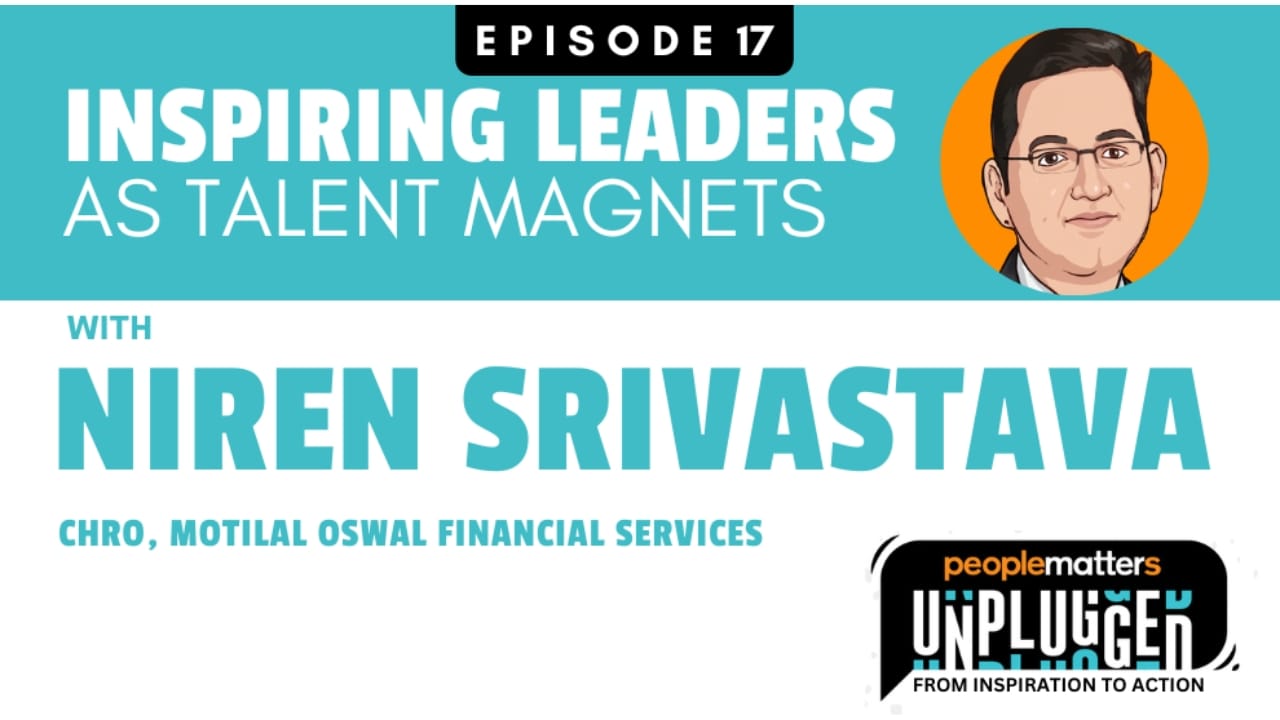
In a business climate where top talent can command impressive compensation packages from nearly any corner of the BFSI sector, what truly makes someone switch jobs – or stay?
According to Niren Srivastava, Group CHRO at Motilal Oswal Financial Services, it comes down to inspiration and belonging, not just the pay package.
People don’t leave jobs. They leave managers, the old adage goes.
But Niren flips the script: “People also join organisations to work with inspirational leaders.”
Anyone can be an inspirational leader
In an era of aggressive talent wars and rising attrition, Niren offers a refreshing, human-centric perspective: money gets people through the door, but leadership gets them to stay.
Inspirational leadership, he insists, isn’t the domain of CEOs or boardrooms. “Even a frontline manager handling five people can be the reason someone joins or stays in an organisation,” he said.
The ability to empower, appreciate, and provide psychological safety – especially the permission to fail – is what distinguishes such leaders. And this trait, crucially, is “hierarchy-agnostic,” Niren said.
The secret to employee retention
The conversation between Niren and host Cheshta Dora, People Matters’ Head of Research and Community, quickly moved from individual leaders to organisational culture.
In a world increasingly shifting from hybrid to in-office, routines and protocols alone aren’t enough. “Culture can no longer rely on physical proximity,” Chesta pointed out.
Niren agreed: “You need to create a culture where people feel at home – even when they’re working hard.”
The HR leader shared that he spent 15 years at his previous employer – through marriage, the birth of his child, and more – all because the culture fostered deep emotional connections. “Work relationships became family relationships,” he recalled. This, he said, is the secret to retention and brand advocacy.
And building that connection is no accident.
Niren advocates for culture documents, a powerful yet underused tool in most firms. Unlike vague value statements, culture documents set the “rules of the game” – not just what performance is expected, but how it should be pursued.
“The way you ask for performance has to be respectful,” he explained.
A manager can either corner a low-performing employee with blame or invite them into a conversation of mutual growth. Culture defines that choice.
A critical culture marker at work
Perhaps most powerful is Niren’s take on how organisations let people go. At a time when layoffs and exits are often handled coldly, he argued that respect during the exit process is a critical culture marker.
People, after all, will always remember how they were treated on the way out. It’s not just an HR philosophy – it’s a brand promise.
So how does one build what Niren calls a “leadership factory”? For the CHRO, it’s about designing a system where inspirational leadership is not the exception, but the norm. Where culture isn’t wallpaper; it’s infrastructure.
And where talent doesn’t just apply for jobs – they queue up, eager to join.