By: Amit Chincholikar
A few years ago, I met a manager who had become the "go-to person" in her business. Every difficult decision found its way to her desk. Team members sought her approval before acting. Customers wanted her involved in key discussions. By every traditional measure, she was a highly successful leader.
During one leadership interaction, she shared a concern. "The strange thing," she said, "is that the better I become at solving problems, the more dependent my team becomes on me." She described returning from a two-week vacation to find that several decisions had been delayed because people were waiting for her input. That conversation stayed with me. What looked like leadership strength on the surface had quietly created a worrying dependency underneath.
For a long time, organisations applauded managers for having the right answers. The expectation was clear. Solve problems quickly, make confident decisions and guide teams with certainty. That model worked in a more predictable business environment, where expertise was concentrated and roles were relatively well defined.
That context no longer exists. The workplace today is shaped by continuous technological disruption, evolving business models and exceedingly diverse, distributed teams. Problems are more complex and rarely sit within the boundaries of a single function or leader. In such an environment, no manager can realistically be expected to hold all the answers.
This is where the definition of leadership must evolve. The question today is no longer, "How quickly can leaders solve problems?" It is, "How effectively can leaders build others who can?"
Leadership is shifting from providing answers to enabling thinking
This shift is subtle but fundamental. Leaders are no longer required to be the primary source of solutions. Instead, they must create the conditions where better thinking emerges across the team.
Consider a scenario : A young sales manager approaches his leader and says: "One of my largest customers is unhappy and may not renew the contract. What should I do?" An advising manager immediately offers suggestions - "Schedule a meeting, offer a revised proposal, and escalate the issue."
Sounds familiar ? Many managers believe they are coaching when they are, in fact, advising. Both have value, but they are not the same. Advising draws on experience to resolve a problem. Coaching requires restraint. It begins with listening, continues with asking better questions and is anchored in helping individuals arrive at their own conclusions.
A coaching leader responds differently - "What do you think is driving the client's concern?"
"What options have you considered?" "If you were in the customer's position, what would matter most?" The conversation takes longer. But something important happens. The difference shows up in behaviour, but more importantly, it shows up in outcomes. When people arrive at solutions themselves, they are more confident in their judgement and more committed to the outcome. Over time, responsibility evolves into accountability, and accountability into ownership.
One interesting observation - Organisations rarely suffer from a lack of capable managers. The challenge comes up when managers overestimate the value of their answers and underestimate the value of their questions.
Ownership grows when managers stop being the default problem solvers
Sport often provides useful leadership lessons. Consider the difference between a captain who fields a team full of talented players and a captain who develops future captains. The first may win matches.
The second creates a winning culture. Many successful captains are remembered not merely for their own performance but for the leaders they produced around them.
Organizations face a similar challenge. When managers step in too quickly with solutions, teams learn to execute tasks. If every important decision must be escalated upwards, growth eventually slows.
When managers hold back and coach instead, teams learn to think. They evaluate options, take informed decisions and build confidence in their judgement. Over time, this transforms how work gets done.
Leadership development must move from instruction to experience
If leadership itself is changing, then leadership development must change as well. For many years, development has been built around knowledge transfer. We have invested in frameworks, models and functional training. While these remain relevant, they are insufficient on their own. Leadership capability cannot be developed through instruction alone. It requires practice, reflection and exposure to different ways of thinking.
This thinking has influenced how we, at the Hinduja Group, approach leadership development through our Catalyst programme. It brings together managers across our businesses to build coaching capability. The emphasis is not on teaching leaders what to do, but on helping them change how they engage. The focus is on moving from directing to empowering, from giving answers to asking better questions, and from managing performance to unlocking potential.
One very real experience was shared during conversations at Catalyst. One senior leader shared a story that perfectly captures the value of coaching. A high-potential employee approached him seeking advice about a major career decision. He expected the leader to tell him exactly what to do. Instead, the leader spent the next thirty minutes asking questions - What energizes you most? Where do you see your greatest opportunity to grow? What decision would you make if fear was not a factor? Years later, the employee recalled that conversation as one of the most influential moments in his career. Not because he received great advice. But because he discovered his own answer.
The most transformative conversations are often those where leaders don't provide solutions; they help people discover clarity.
Coaching must become how leadership is practised every day
The broader lesson, however, goes beyond any single programme. Leadership is ultimately about people and the quality of outcomes they can create together. Sustainable performance is built not only through systems and strategies, but through everyday interactions that either build or limit confidence.
This is why coaching cannot remain a specialised skill or occasional intervention. It must become an everyday leadership behaviour. The quality of conversations between managers and their teams often determines the quality of decisions, engagement and performance far more than formal processes or structures. Coaching is not a technique to be added to a manager’s toolkit. It represents a shift in mindset. It requires leaders to replace certainty with curiosity, control with trust and instruction with meaningful dialogue. While these shifts may appear subtle, their impact on individuals and organisations is significant.
As organisations continue to invest in technology, transformation and growth, equal attention must be given to developing leaders who can develop others. Without this, capability building remains incomplete.
Closing thoughts
Perhaps the more important question for organisations today is not how many leadership programmes they run, but whether their managers consistently leave people more capable than they found them.
Buildings can be replaced. Strategies evolve. Technology becomes obsolete. Even business success can be temporary. But the leaders we develop create an impact that extends far beyond our own careers.
Perhaps that is the ultimate test of leadership. Not how many people depended on us. But how many no longer needed to. Not how many answers we provided. But how many thinkers we created.
That is the promise of coaching. And -increasingly - that is the future of leadership.
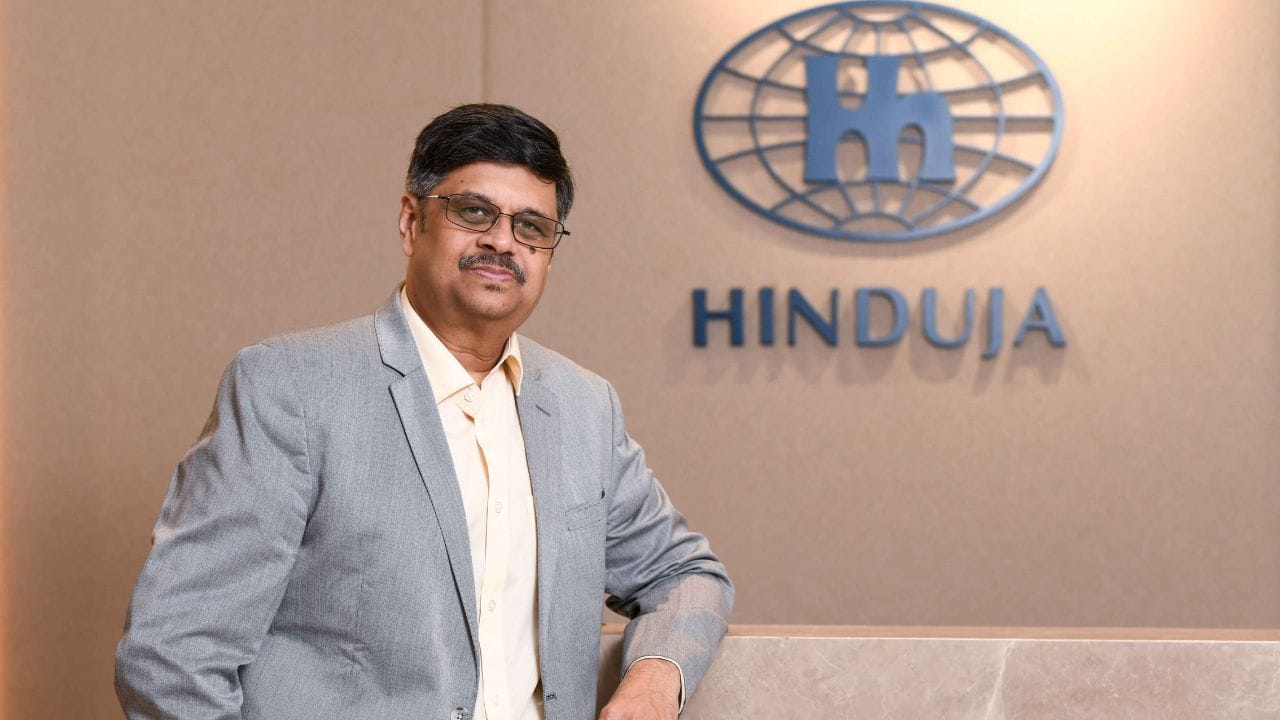
About the Author: Amit Chincholikar is Group President – Human Resources at Hinduja Group, bringing extensive global experience across multiple HR disciplines. He is known for developing and executing business-aligned HR strategies, with a strong focus on collaboration, organizational transformation, and driving people-centric outcomes across diverse markets.