









Generation is usually defined as people born within a similar time frame. However, as per Karl Mannheim (1952), the generational theory states that people who have experienced and shared some important historical and socio-political happenings during their developing phases of life form a particular generational group (Kupper and Schmidt,2000).
The process of generation is influenced by a country's unique socio-economic conditions and the events that occur during one's formative years.
Imagine gathering a group of 10 to 12-year-olds. Their conversations about school, early college days, interactions with technology, favourite products and brands, and social interactions would likely be strikingly similar. This shared experience shapes a cohesive narrative of their generation.
Scholars have made several classifications intrinsically centred on Indian socio-cultural history (Erickson,2009).
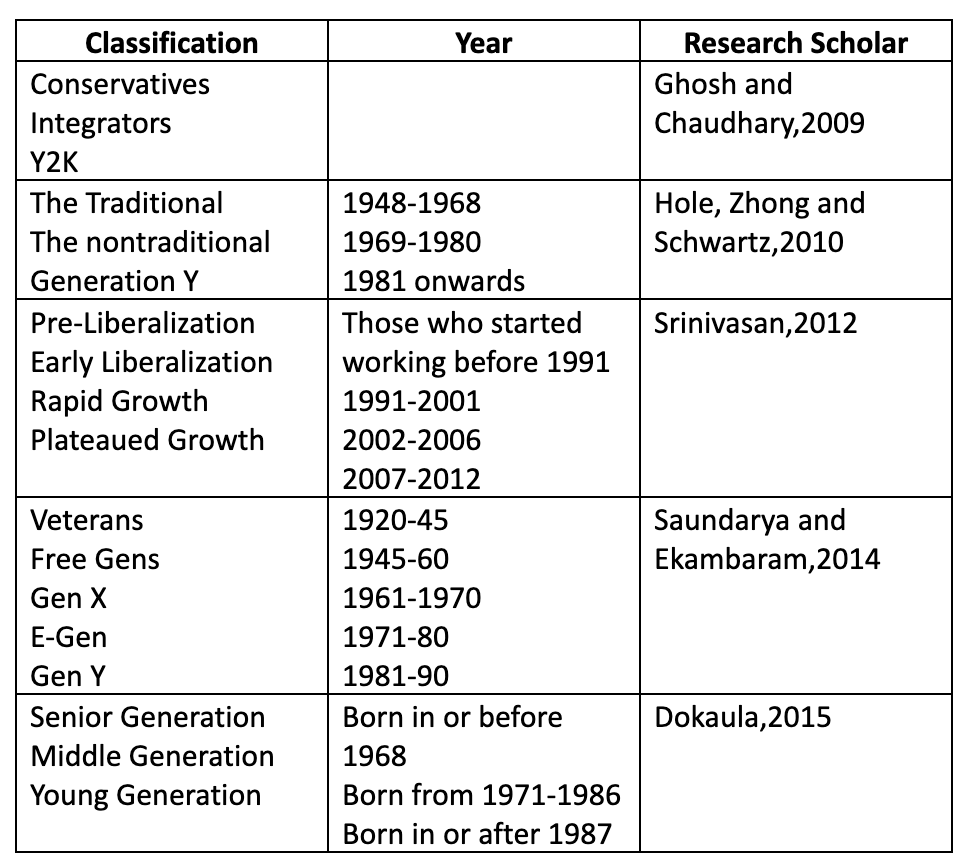
Generational demarcations are commonly defined as follows:
- Baby Boomers: 1946-1964
- Gen X: 1965-1980
- Millennials (Gen Y): 1981-1996
- Gen Z: 1997-2012
This article will explore these widely accepted generational boundaries, focusing on the unique nuances and experiences of Gen X, Millennials, and Gen Z within the Indian context.
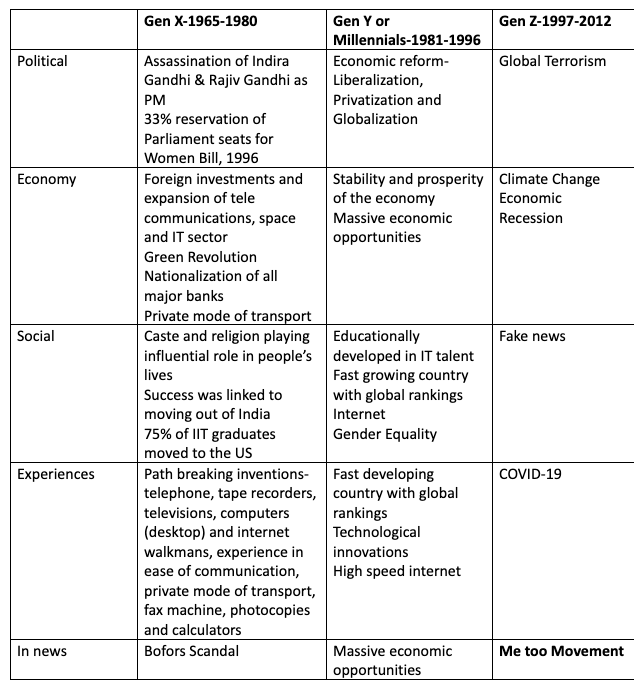
Source-Generations in the workforce- International Journal of Research and Analytical Reviews-2018
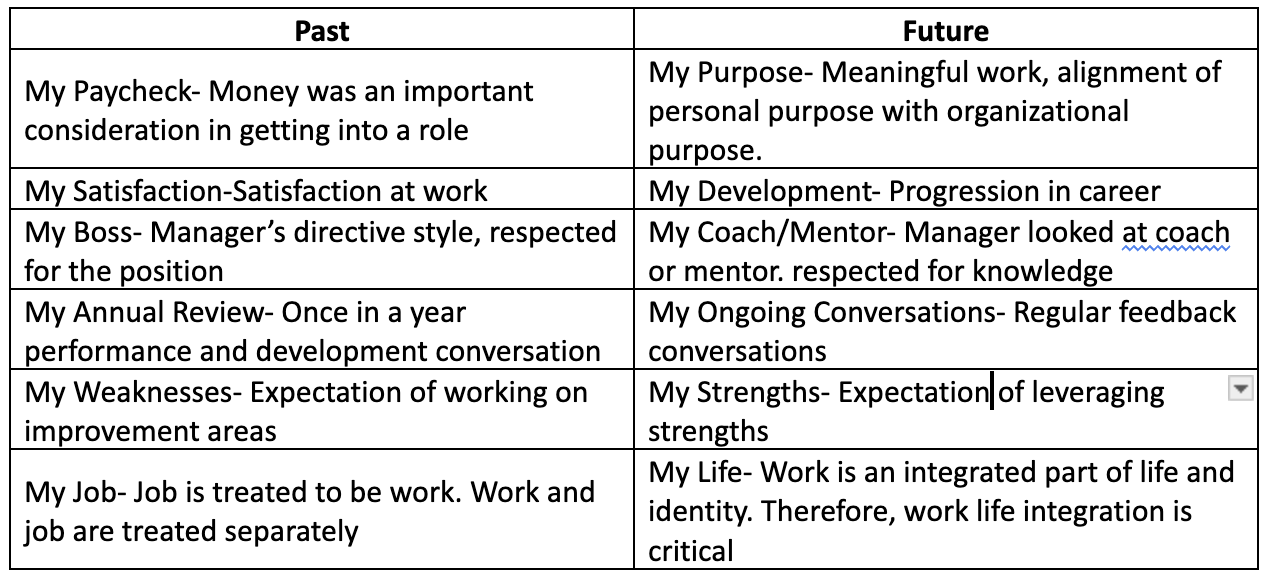
Each generation's experiences influence their upbringing, shaping their perspectives, work styles, and attitudes towards their jobs.
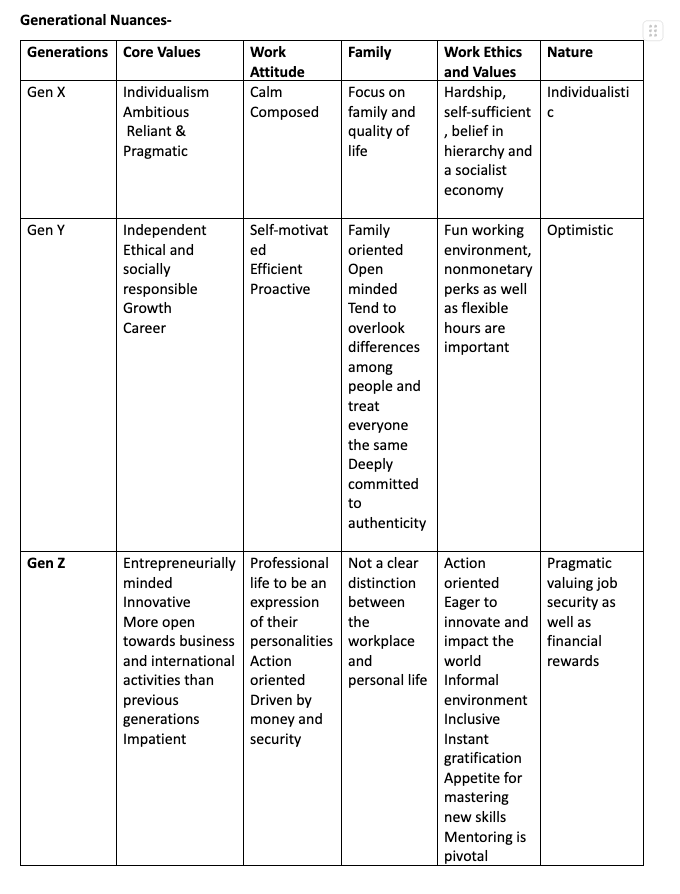
Source-A comparative analysis of values and attitudes of Gen X and Gen Y in India IITM Journal of Management and IT,2021
In today's workplace, Gen X leads Millennials, while Millennials and Gen Z serve as senior leaders guiding teams of Gen Z.
Effort Vs Outcome-
Effort vs. outcome is a long-standing debate. Imagine your child comes home after losing a competition. You'd likely say, "At least you tried, you gave your best." Effort is crucial, and schools often encourage it. However, in professional life—whether in startups, entrepreneurship, or corporate jobs—outcomes are what matter. Managers ask, "Where is the business? Where are the numbers?"
Millennials and Gen-Z were raised to value effort, receiving praise and encouragement for trying. Yet, in the workplace, the focus shifts to results. These generations, shaped by their formative experiences, often seek instant gratification and expect their efforts to be acknowledged and recognized.
Balancing the appreciation of effort with the demand for outcomes is key to navigating this generational shift in expectations.
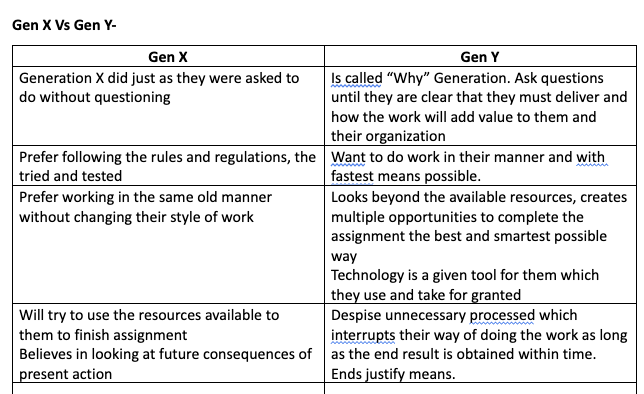
Source-Multi generations in the workforce-Building Collaboration, IIM-Bangalore
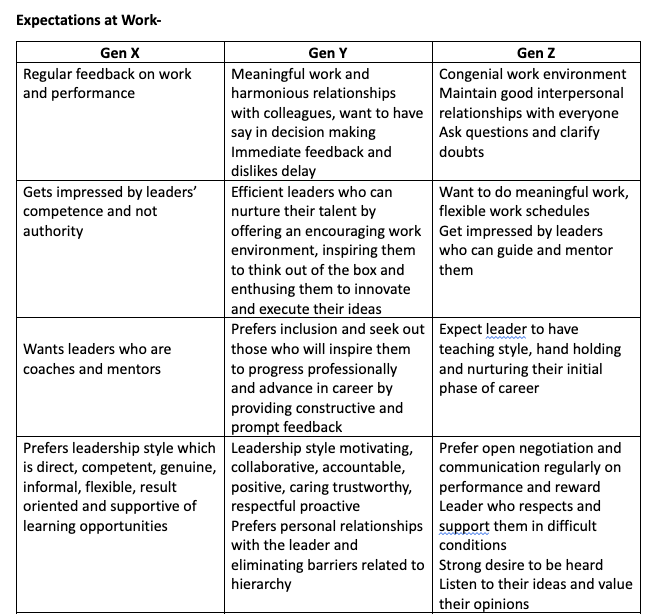
Source- Do leadership behaviour preferences differ among generations? A qualitative study of Gen X, Y, and Z in India, Asian Business and Management,2024
Leadership Preference-
Over time, the definition and style of leadership have transformed significantly. As the years have passed, so too have the expectations placed on managers. With each new generation, these expectations have evolved, reflecting the changing dynamics of the workforce.
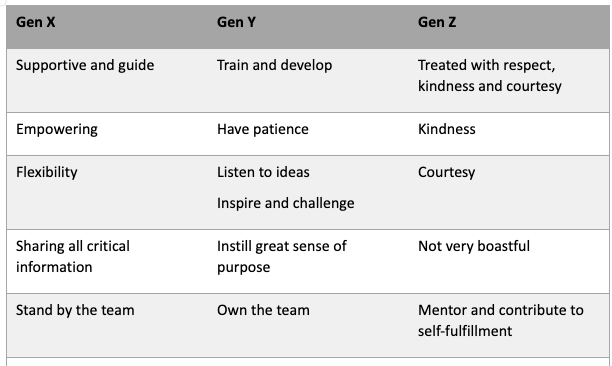
Source- Do leadership behaviour preferences differ among generations? A qualitative study of Gen X, Y, and Z in India, Asian Business and Management,2024
Ways to leverage Generations-
- Stay Curious: While there's extensive research on generations, everyone has a unique mental model shaped by nature and nurture. It's beneficial to stay curious and avoid boxing people into generational stereotypes.
- Be Inclusive: It's not about Gen X vs. Gen Y or Gen Y vs. Gen Z. Organizations should foster inclusive workplaces where all generations work cohesively and complement each other.
- Act as Coaches and Mentors: Managers should act as coaches and mentors. Gen Z expects their managers to be guides and teachers.
- Have Difficult Conversations: Biases are common, and each generation has preconceived notions about others. It's important to address these biases through open conversations.
- Give and Receive Feedback: Millennials and Gen Z crave instant feedback, influenced by the internet and social media. They appreciate knowing how they're performing in real-time.
- Sponsorship, Mentoring, and Reverse Mentoring: Leverage the strengths of a multi-generational workforce. Gen X can sponsor Millennials and Gen Z, Millennials can mentor Gen Z, and Gen Z can provide reverse mentoring to Gen X and Millennials.
References-
- Rajesh, S., & Ekambaram, K. (2014). Generational diversity in the Indian workforce: An exploratory study. International Journal of Managerial Studies and Research, 2(7), 54-64.
- Arora, N., & Dhole, V. (2019). Generation Y: Perspective, engagement, expectations, preferences and satisfactions from workplace; a study conducted in Indian context. Benchmarking: An International Journal, 26(5), 1378-1404. https://doi.org/10.1108/BIJ-05-2018-0132
- Malik, P. (2018). Generations in the Indian workforce. International Journal of Research and Analytical Reviews, 5(4), 2348-1269.
- Bansal, N., & Srivastava, D. K. (2017). Motivation and attitude of Generation Y in India: An exploratory study. Indian Journal of Industrial Relations, 53(1), 115-130.
- Srinivasan, V. (2012). Multi generations in the workforce: Building collaboration. Indian Institute of Management Bangalore. https://doi.org/10.1016/j.iimb.2012.01.004