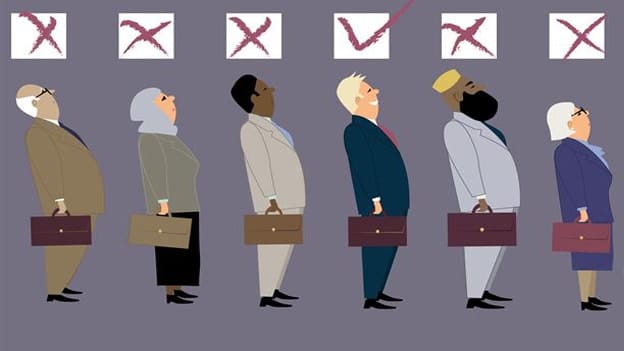
While most organization like to talk about their diversity and inclusion (D&I) policies, not many seem to want to discuss how their diverse workforce is holding up.
The findings of a recent TimesJobs study paint a stark picture of the status of equality in the workforce. The study, which is based on interviews with over 2,000 Indian employees found that almost 45% of its respondents have faced unequal treatment owing to their physical appearance. Here are a few other highlights of the survey:
Bias in the Workplace: Employee Opinion
- 55% of the respondents reported experience unequal treatment and bias on the basis of their gender, ethnicity, or appearance. Physical appearance was the biggest ground for discriminatory treatment, followed by gender.
- A quarter of the respondents (25%) believe that their company’s management is not dedicated enough to meet the needs of employees with disabilities.
- Over a half (57%) denied that their organization openly recruited individuals from the LGBTQ community or people with disabilities.
- 54% of the respondents also admitted to hesitating while openly expressing their sexual orientation and cultural values, thinking, it might impact their career (29%); 26% thought it would encourage colleagues to make fun of them, and 23% feared judgement by their colleagues.
- A little over half of all the respondents (52%) said that their managers treated all employees equally, no matter their background.
- 58% of the respondents said that they were not told about their organization’s diversity and inclusion policies during induction.
Hiring Managers and Recruiters’ Findings
- 65% hiring managers among the respondents said that employees at their company show ‘a commitment to diversity and inclusion’ policies.
- 46% of recruiters stated that the primary objective of diversity programs is to ensure targeted development opportunities for people of varied backgrounds.
- Another 29% were of the view that the goal was to recruit candidates from multiple backgrounds.
- Lastly, 16% of the recruiters thought that the aim was to build a pipeline of diverse leaders.
- 40% of the respondents said that their organization is investing in the improvement of diversity, whereas 32% said otherwise.
Despite the mixed findings of the study, one cannot deny the fact that enhancing diversity and inclusion is on the radar for employers and leaders in India. Ramathreya Krishnamurthi, Business Head, TimesJobs and TechGig says, “With the rising quotient of millennials at the workplaces, the companies are innovating the D&I policies. The market demand is growing for diversity beyond the gender ratio. For example, a lot of organizations are sculpting their D&I programs for the physically disabled and LGBTQ candidates. It's overwhelming to see such progress in both public and private offices in our country.”
However, the impact that these policies are creating needs to be scrutinized. As the results indicate, Indian organizations still have a long way to go in order to ensure that their employees feel truly included in the workplace. If over half the employees still hesitate to express their sexual orientation or cultural values, something is clearly amiss. The study aptly concludes that “It is important to keep the conversations around gender diversity and inclusion going until we can truly claim that people of all genders, backgrounds, and abilities are represented fairly and equally... Businesses in India, both startups and corporates, need to come through on their diversity and inclusion commitment and prove the ways in which they are moving the needle.”