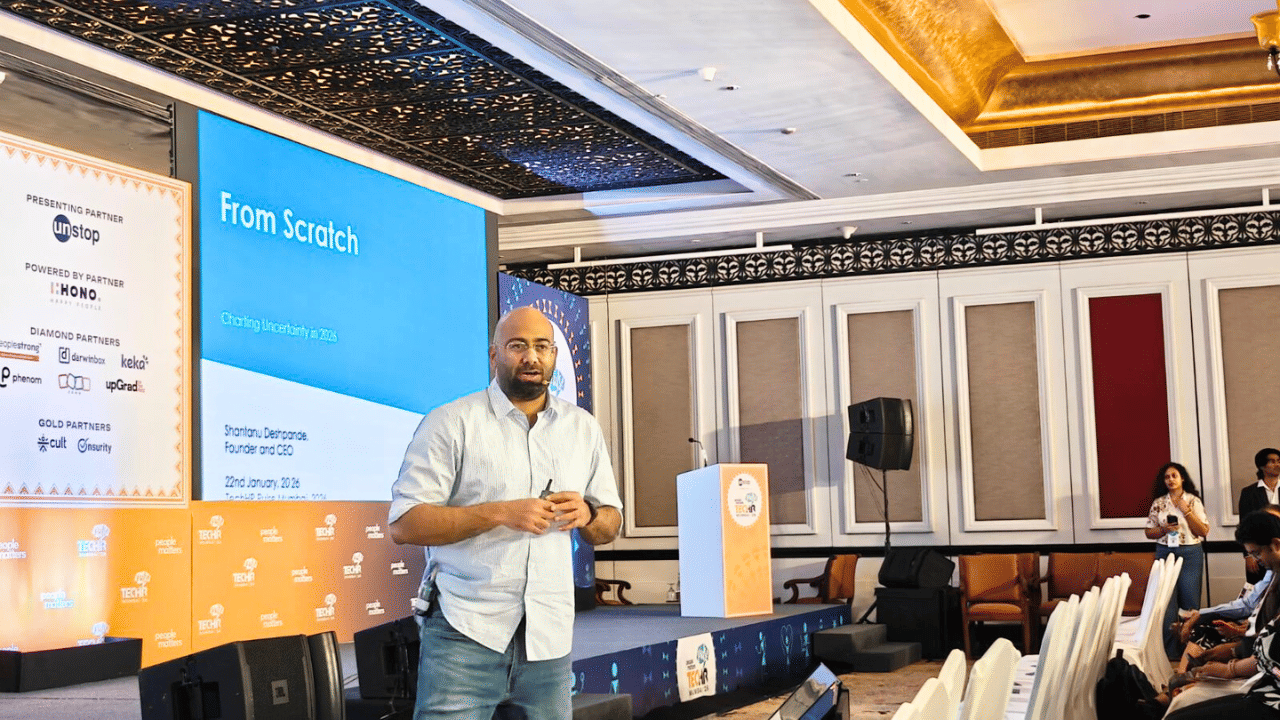
In the frenetic world of Indian consumer brands, few stories capture the collision of ambition, adversity and authenticity quite like Bombay Shaving Company's journey.
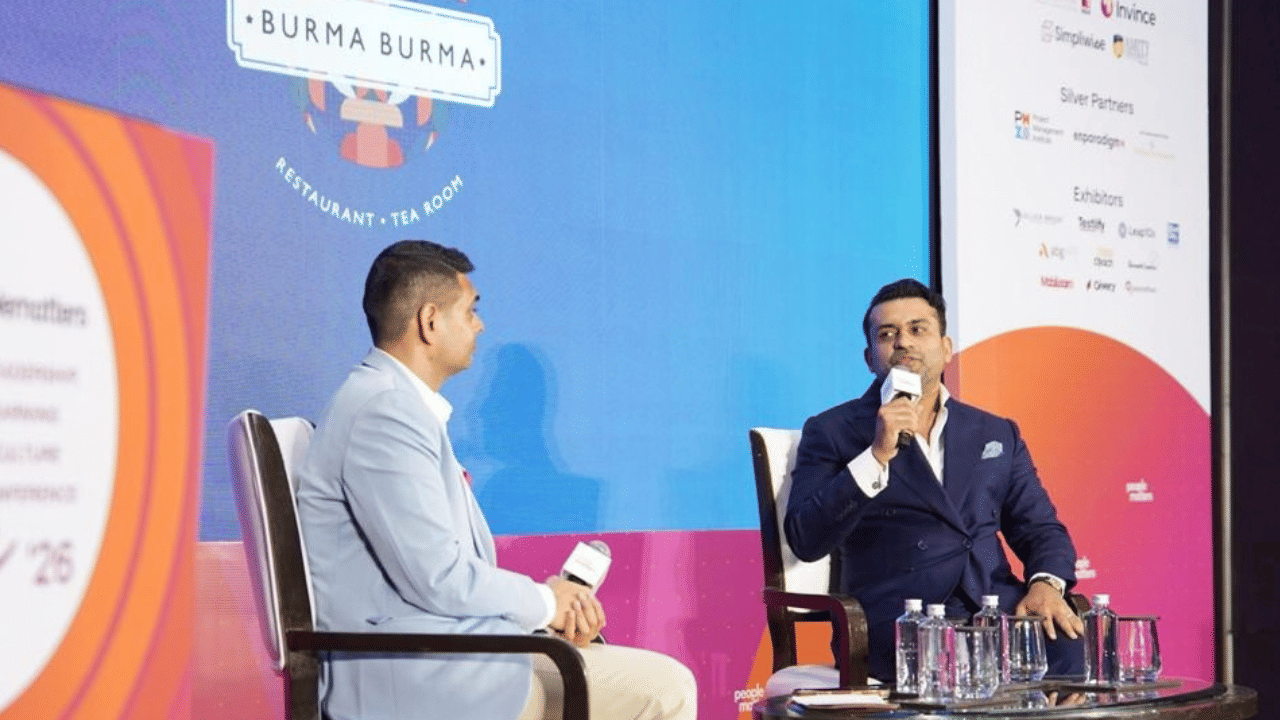
At a recent candid conversation during People Matters TechHR Pulse Mumbai, Shantanu Deshpande, the company’s CEO, sat down with Pushkar Bidwai, CEO of People Matters, to unpack what it means to lead through uncertainty, nurture culture, and build for the long term, especially when the path is anything but straight.
A company born of curiosity and culture
Deshpande opens the conversation with a confession: more than a leader, he’s a learner at heart. “As an entrepreneur, you are more of an island than you might imagine. Your world is so consuming, it’s almost impossible to see what’s happening around.”
This humility, he suggests, is not just a personal trait but a strategic asset. By surrounding himself with thoughtful, young minds, he keeps his own thinking fresh, refusing to be hemmed in by his own experience.
Bombay Shaving Company, now a decade old, is firmly rooted in this ethos of curiosity. What started as a simple hair removal brand has blossomed into a culture-coded, consumer-first business, with products that span men’s and women’s grooming, a thriving offline consulting arm, and even a podcast—the Barbershop—designed to spark cultural conversations.
But this wasn’t always the case. The early years, Deshpande admits, were messy and meandering. “For the first five, six years, we were not winning.
This was the experimentation phase, the phase of uncertainty and grit, where you just have to show up every day.” The company’s growth curve, he quips, looked nothing like the hockey stick that investors crave. It was a jagged line of trial, error and, crucially, learning.
Competing with giants, learning from legends
A recurring theme in Deshpande’s narrative is the presence—and even the necessity—of daunting competition. Bombay Shaving Company’s biggest rival is Gillette, a global behemoth with deep pockets and decades of brand capital. Rather than seeing this as a threat, Deshpande frames it as an opportunity. “We’re standing on the shoulders of giants. Our revenues don’t match theirs, but their example teaches us how to make great products.”
This attitude is more than just rhetoric. Instead of fixating on beating Gillette, Deshpande’s team focused on understanding the Indian consumer in all their diversity and complexity. From the bearded, tattooed millennial to the teenage daughter experimenting with grooming, the company designed products that cater to every member of an Indian family—and every part of their body.
A critical turning point came during the pandemic, when the company’s own employees challenged Deshpande to create products for women. “They came to me and said, ‘We have hair on our arms and legs, and we work in Bombay Shaving Company. How do we not have products for women?” What followed was not a top-down product launch, but a bottom-up revolution, led by customer care staff who understood the unique needs of women. The result was Bombae, a women’s razor designed for longer strokes and a more effective shave in the shower. Today, the brand generates around Rs 11 crore in monthly revenue.
The power of the messy middle
For Deshpande, the so-called “messy middle”—the years of slow growth, relentless experimentation and frequent failure—was not a liability but a crucible. “The moment you start experimenting at rapid speeds, the rate of success climbs slowly at first, but then it starts to build.”
This willingness to embrace uncertainty is paired with a methodical approach to people and culture. Deshpande’s framework is clear: “Identify good people. Do everything you can to make them disproportionately successful. Explicitly ask them to do the same for others.” The result is a workplace where talent is nurtured, not hoarded, and where the departure of a star employee for a better opportunity is seen as validation, not a setback.
Culture: The one thing that can’t be copied
If there is a secret sauce to Bombay Shaving Company’s resilience, it’s culture. Deshpande is acutely aware that products and strategies can be replicated, but the “hustle and heart” of his team cannot. “If you come to our office and walk the corridor, you see the excitement, the culture. It’s built with small objects. It’s built every day by people pouring their hearts into the company. You can never copy that.”
This focus on culture is not just internal. It shapes the way the company interacts with consumers, who are increasingly young, digitally native and hungry for authentic stories. With an average employee age of 26, the company balances youthful energy with seasoned guidance, hiring senior leaders like Kumar Sir, a 67-year-old with decades of experience. “When he joined, the anxiety and insecurity in the team calmed down. His experience brought stability,” Deshpande recounts. Now, the company is actively seeking more senior talent to blend wisdom with youthful dynamism.
Trust, transparency and the power of content
In today’s hyperconnected world, Deshpande believes that trust and authenticity are the only sustainable currencies. He is a vocal proponent of leaders building personal brands—not through slick advertising, but through unfiltered, authentic content. “If I’m able to put myself out there in an authentic way, it gives my consumer so much more. Listening to me today hopefully adds more flavour about Bombay Shaving Company than any advert we could run.”
This approach has paid dividends. The Barbershop podcast, along with Deshpande’s own forays into regional content on Instagram, has built an audience that is engaged, loyal and curious. “Word of mouth is naturally limited in our category. But by creating content, we’re able to build trust and cultural relevance at scale.”
The road to five crore bathrooms
Despite the successes, Deshpande is careful not to rest on his laurels. With a presence in 80 lakh bathrooms and a goal of reaching five crore, he knows there is a long way to go. The vision is simple: three products per bathroom, ten minutes of happiness for every member of the family. For Deshpande, the company’s role is not to reinvent the wheel, but to play a small, meaningful part in the daily rituals of Indian households.
“We are a baby at Rs 600 crores (revenue),” he says, “but we have found wins and built a culture that values grit, learning and trust.” If there’s a lesson to be drawn from Deshpande’s journey, it’s that the messy middle is not just unavoidable—it’s indispensable. For leaders willing to embrace uncertainty, invest in people and stay true to their values, the rewards may not come quickly, but they are always worth the wait.