The future of work in Asia is being built right now. As organisations across the region scale rapidly, they are discovering that speed and technology alone are not sufficient. The challenge lies in redesigning the operating core of work itself - how people are skilled, how decisions are made, and how culture enables performance at scale. With the World Economic Forum estimating that by 2027, nearly 25% of existing jobs will change, while six in ten employees will require significant reskilling, workforce redesign, which used to be an HR imperative, is now becoming a business imperative.
At Home Credit Indonesia, this reality is unfolding at an enterprise scale. Serving millions of customers through a large, frontline-heavy workforce in a highly regulated environment, the organisation is rethinking how its people ecosystem must evolve to sustain growth, trust, and agility together. In this interview with People Matters, Stephanus Wisnu Kumarajati shares how the organisation is translating disruption into deliberate design.
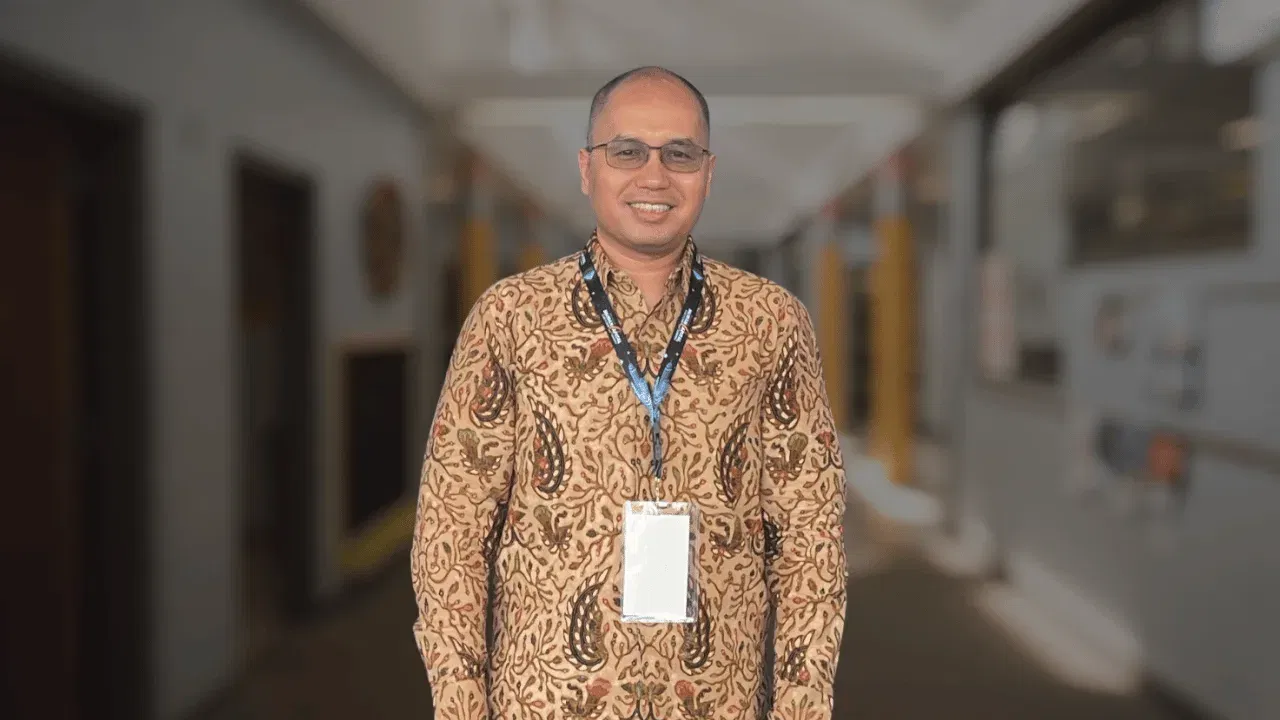
A senior HR and people-operations leader at Home Credit Indonesia, Stephanus heads HR Operations, Process & Technology, Frontline Talent Acquisition, and GA & Facility Management, leading large-scale HR transformation across a diverse workforce. Operating at the intersection of integrated people systems, operational excellence, and employee experience, his mandate goes beyond digitisation, focusing on architecting scalable, human-centred systems that enable performance in a fast-changing environment.
Through Home Credit Indonesia’s journey, this conversation reflects the spirit of futurist leaders in creating the next era of work. As Stephanus shares, HR leads this revolution by architecting the redesign of work to make it agile and sustainable.
(Some of the responses have been edited for readability and flow.)
Q. Home Credit Indonesia has scaled rapidly while serving millions through a large frontline workforce. When you began redesigning HR operations, processes, and employee experience, what was the starting point? What helped you define the “next-generation HCI people ecosystem”?
Stephanus: When we began redesigning HR operations, processes, and the overall employee experience at Home Credit Indonesia (HCI), the starting point was very clear - our rapid business growth had outpaced the capabilities of our existing HR systems. While the organisation was scaling to serve millions of customers through a large frontline workforce, our HR infrastructure was fragmented. It was built on multiple siloed platforms that created inefficiencies and hindered collaboration.
This fragmentation posed two critical challenges:
First, there was a lack of integration across the employee lifecycle. This impacted the quality and consistency of the employee experience.
Secondly, limited ability to support productivity and collaboration, which is essential for a high-performing, distributed workforce.
This led us to define the next-generation HCI people ecosystem. In doing so, we anchored our approach on three strategic principles:
Integration and Scalability: Moving from siloed systems to a unified platform that could scale with business growth and deliver a seamless end-to-end experience.
Employee-Centric Design: Prioritising usability and accessibility to ensure that every interaction, whether it is onboarding, learning, or performance management, feels intuitive and empowering.
Collaboration and Productivity Enablement: Creating a digital ecosystem that not only manages processes but actively encourages teamwork, knowledge sharing, and engagement.
The vision was not just about technology - it was rather about transforming how people experience work at HCI. By aligning HR operations with business objectives and embedding collaboration into the core of our processes, we set the foundation for a future-ready workforce.
Q. HR at Home Credit Indonesia plays a critical role in enabling service efficiency, compliance, and customer trust. How is HR, especially Operations, Process & Technology, and TA, driving strategic business outcomes?
Stephanus: HR at Home Credit Indonesia is positioned as a strategic enabler beyond just being a support function. Through Operations, Process & Technology, we ensure service efficiency. Compliance is achieved by standardising processes, automating workflows, and leveraging data-driven insights for decision-making. This creates a robust governance framework that minimises risk and strengthens our customers’ trust.
On the Talent Acquisition front, our focus has been on building a high-performing workforce aligned with business priorities. By deploying advanced sourcing strategies, predictive analytics, and an enhanced candidate experience, we accelerate hiring for critical roles while maintaining quality and compliance standards.
Together, these pillars drive strategic outcomes by:
Improving operational agility through integrated platforms and streamlined processes.
Enhancing workforce capability to meet evolving customer needs.
Embedding compliance and trust into every HR interaction, reinforcing the company’s reputation in a regulated industry.
This makes HR a catalyst for growth. This is done by connecting people, technology, and processes to deliver efficiency, resilience, and a superior customer experience.
Q. In a fast-moving consumer finance industry, agility and future-ready leadership are essential. How are you shaping culture and leadership mindsets to prepare Home Credit Indonesia for the next 3-5 years?
Stephanus: To prepare Home Credit Indonesia for the next 3–5 years, we are shaping a culture and leadership mindset anchored on agility, innovation, and our eight leadership qualities: Customer Obsession, Entrepreneurship, Operational Excellence, Thinking Big, Digital Savviness, People Centricity, Risk in Mind, and Integrity.
Our approach focuses on the three strategic pillars:
1. Embedding Leadership Qualities into Culture
We integrate these qualities into performance frameworks, talent reviews, and recognition programs. The purpose of this is to make leaders and team members understand what future-ready leadership looks like.
Some examples are:
Customer Obsession & People Centricity: Driving decisions that prioritise customer experience and employee well-being.
Entrepreneurship & Thinking Big: Encouraging innovation, experimentation, and bold ideas to capture new opportunities.
Operational Excellence & Risk in Mind: Building disciplined execution and strong governance to balance speed with compliance.
Digital Savviness & Integrity: Promoting digital fluency and ethical decision-making as non-negotiable standards.
2. Leadership Development for Future Readiness
Our structured leadership programs are focused on:
Agility & Change Leadership: Equipping leaders to pivot quickly and lead through uncertainty.
Digital & Data Skills: Building digital savviness to leverage technology for smarter decisions.
Inclusive & People-Centric Leadership: Strengthening coaching, empathy, and collaboration skills.
3. Culture Transformation Initiatives
The culture at Home Credit Indonesia is encouraged to be agile, collaborative, and innovation-driven. We do this at HCI in the following ways:
Agile ways of working and cross-functional collaboration.
Recognition platforms that celebrate behaviours aligned with our leadership qualities.
Learning ecosystems to keep skills relevant and future-ready.
Q. Your workforce spans diverse groups, from high-volume frontline talent to office-based teams and facility operations. How are you designing personalised, scalable employee experiences across these varied segments?
Stephanus: We are focused on designing personalised yet also scalable employee experiences because our workforce is diverse. Our workforce comprises high-volume frontline talent, office-based teams, and facility operations. This requires a segment-driven, technology-enabled approach which is anchored on consistency, flexibility, and inclusivity.
Explaining below in depth:
1. Segment-Specific Experience Design
Frontline Workforce:
Mobile-first solutions for onboarding, scheduling, learning, and HR services ensure accessibility anytime, anywhere. We prioritise simplicity and speed for high-volume processes like shift changes, payroll queries, and compliance attestations.Office-Based Teams:
Integrated platforms for collaboration, performance management, and career development, with advanced analytics to personalise learning paths and engagement programs.Facility & Support Operations:
Streamlined workflows for attendance, safety compliance, and operational support, combined with recognition programs tailored to their contribution.
2. Scalable Digital Ecosystem
Unified HR Platform:
A single, integrated system delivers consistent policies and processes while allowing customised interfaces and workflows for each segment.Self-Service & Automation:
Omnichannel access (mobile app, web portal, AI robotic solution) empowers employees to manage routine tasks independently, reducing friction and improving satisfaction.
3. Personalisation Through Data & Insights
Employee Analytics:
We leverage data to understand segment-specific needs. For instance, attrition drivers for frontline or development/career aspirations for back-office teams. Then we tailor the interventions accordingly.Targeted Engagement:
Personalised communication, recognition, and learning programs ensure relevance and inclusivity across all workforce groups.
Q. You evaluated multiple platforms before choosing Darwinbox. What convinced you that Darwinbox was the right partner for your HR transformation? How has the partnership helped streamline operations, hiring, and cross-functional collaboration so far?
Stephanus: When evaluating platforms for our HR transformation, we were looking for a solution that could scale alongside rapid business growth, integrate fragmented processes, and deliver personalised yet compliant experiences across a diverse workforce. Darwinbox stood out because it aligned closely with these requirements.
While the full suite of modules is still being rolled out, the implementations completed so far, such as performance management, learning (through Disprz), and recruitment, are already helping us address core business needs across teams. At the same time, we recognise that large-scale transformation is an ongoing journey, and continuous improvement will be essential to fully realise long-term value.
Q 6. If you could share one piece of advice with HR leaders embarking on large-scale transformation, especially in high-growth, frontline-intensive organisations, what would it be?
Stephanus: Start with clarity of purpose and design for both scalability and humanity.
Transformation is not just about implementing technology or streamlining processes. It’s about creating an ecosystem where people and business goals move in sync. And one more critical thing is Think Beyond Technology. Focus on adoption and mindset. Technology is an enabler, not the endgame. Invest in change management, leadership capability building, and continuous feedback loops to drive adoption and sustain impact.
Transformation succeeds when leaders model agility and employees feel included in the journey.
Conclusion: From HR transformation to enterprise reinvention
Home Credit Indonesia’s journey highlights a defining shift: as work evolves at speed, organisations must move beyond incremental change to deliberately redesign how people, technology, and culture operate together. In this environment, HR’s role expands from enabler to architect, shaping systems that can scale performance, trust, and agility in tandem.
As Stephanus Wisnu Kumarajati’s perspective shows, futurist leadership is not about reacting to disruption, but about designing organisations that are strengthened by it. As Asia continues to pioneer new models of growth, conversations like this remind us that the future of work is being created daily by leaders who choose to shape it.