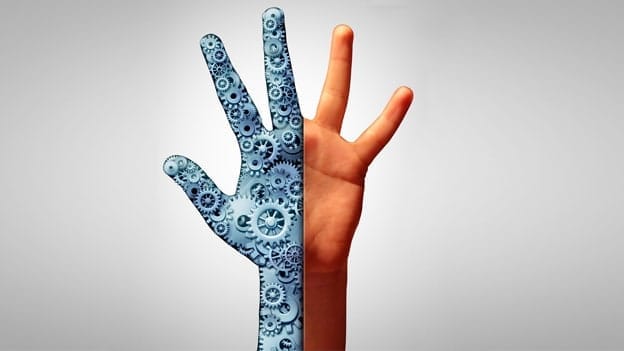
The digital revolution is here and ongoing, with organizations at various stages of digital transformation. Most organizations are in the initial stages, and the predicted positive and negative impacts of the change initiative are yet to come to light. Many organizations have been seen adopting a technology-first approach, where process-systems-technology changes are driven first, and then people and softer changes are addressed. In such a model, managers often struggle to integrate the new technology with their workforce, it is not a sustainable approach for digital transformation. In reality, what is needed is an integrated model, with the design of the workforce going hand-in-hand with the design of the digital strategy.
The need for preparing employees
The impact of digital transformation is often not completely understood by organizations and leaders who lead the change. The processes, workflows, tools, and technologies do change, but more glaring is the change-impact on the flesh and blood who use these i.e. the people. Digitalization demands new ways of working, new values and beliefs, new skills, and new mindsets. Some of the foundational pillars of digital enterprises are virtual working, cross-functional teams, agile processes, and continuous learning. These work-constructs are built on the basis of emerging technologies such as Artificial Intelligence, Machine Learning, SMAC (Social, Media, Cloud, Analytics), Virtual Reality, Augmented Reality and so on. Employees who are used to a certain traditional working ethos stemming from traditional values are bound to falter if they are suddenly expected to use these new tools and resources, especially without the right support. Not only will they be incompetent, but they would lack confidence because humans inherently react to any change with suspicion and fear. Naturally, if an enterprises’ greatest asset i.e. its people falter, it wouldn’t be long before the digital strategy and the business strategy itself falters. Any digital transformation thus encompasses the softer people-aspects, which means that organizations must first ask themselves whether its people are ready for such a humongous change. And if not, how will they be ready?
Assessing the current state to assess change-readiness
Here is where HR’s prowess comes into play, in close association with the business leaders. Once the digital business strategy is in place, next follows the talent strategy that supports this digital strategy. To begin with, HR must first assess the current state to understand the nitty-gritty of the employee psyche, across levels, functions, hierarchies, locations, etc. A few questions to ponder upon may be:
-
What is the demographic mix? What percentage of the population belongs to the digital native segment? This can help understand how to leverage their digital expertise for the transformation journey.
-
What existing digital means do we have- infrastructure, systems, technologies, and most importantly, digital-savvy talent. This may conjure up some tough calls in terms of build-versus-buy talent decisions.
-
What are the current capabilities of our people, and what is the gap against the future desired state?
-
What do our people believe in? What do they NOT believe in? What are their values, vision, and aspirations for themselves and the organization? This assessment-point is critical to identify talent who is aligned with the overall digital strategy, and talent which is not aligned, which the organization may have to let go amicably.
This talent-assessment must be backed up by the business assessment of elements such as the tech infrastructure, digital platforms, etc.
Checklist to initiate the change
-
Assess the mindset: HR must harness the power of technology to understand where people come from--their thoughts, feelings, aspirations, fears and so on. This means designing and developing employee engagement tools which help understand the employee pulse. Build social-sharing and social-networking platforms where employees can freely converse and share their thoughts. Schedule pulse surveys which seek feedback real-time about the change. Carry out culture-building exercises and focus-group discussions to deep dive into the employee psyche. Understanding what values employees hold close, is critical to know who can align and who cannot align with the envisioned outcome.
-
Communicate the WHY: Simply telling people that things are going to change is not enough. You must explain the reason and rationale for the change. An ongoing state of unrest stems from continuous changes. People may give up ownership, lack commitment, and even actively resist the change if they do not fathom the “why”.
-
Involve employees in the design stage: There are often instances of employees coming forth with innovative ideas or suggestions for supporting change. However, typically, workers are seldom involved in such a major change process. Organizations must tap into their collective capabilities, whether it is allowing them to share their thoughts on intranet forums, or proposing ideas for new processes. Involving people helps them relate better to the change, by helping them see “What’s in it for them”. Creating cross-functional, a-hierarchical interaction groups for such conversations also helps develop a sense of togetherness and belongingness for the long haul!
-
Educate and train from the outset: New skills are essential to work productively with new technologies. HR must not think of employees’ L&D needs as an afterthought but build or buy talent at the outset, to create a digital-savvy workforce. For this, it is important to assess the skills-gap between the current and future skills-state and enable people to actually use the digital means to perform better at their jobs. Accordingly, HR must design and deploy the latest learning technologies such as micro-learning, push-learning, multi-device learning, mobile learning, gamified learning, VR and AR learning programs, etc. as the need be. For example, to instill and reinforce the new digital values, L&D can design a virtual, gamified learning module which is not only fun, but ensures high retention of values-education.
-
Inspire and enthuse: All the above agendas must tie-in to one outcome- to inspire employees to embrace the change. Only when each precious talent holds high the flag of the change-agenda, can we wholeheartedly move ahead towards the digital reality.
The above initiatives can give HR and Leadership a clear view of the current state, and help create a concrete plan to reach the desired digital state. Assessment should be followed by periodic reassessment, to check whether the digital transformation is on track, and course-correct early-on. This requires a humongous effort and commitment from leaders, to institutionalize such an elaborate people-plan as an integral part of the digital transformation journey.