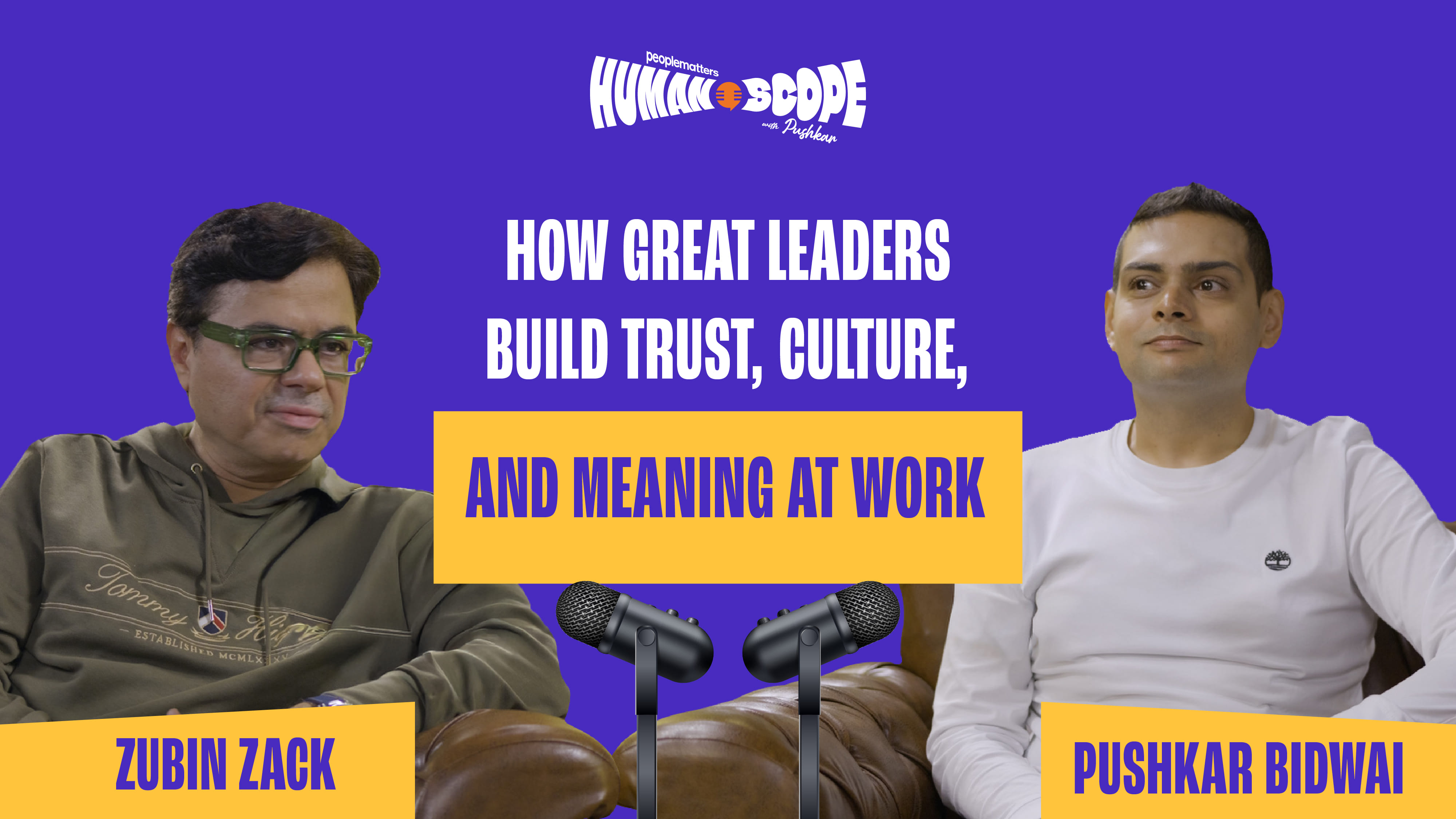
In a world where organisations are increasingly global, leadership today demands far more than technical expertise or functional excellence. It calls for cultural intelligence, authenticity, and a deep understanding of what truly makes people feel valued at work. In this episode of the Humanscope Podcast, Pushkar Bidwai, CEO of People Matters, sits down with Zubin Zack, Managing Director - IMEA, O.C. Tanner, to unpack what it really takes to lead across cultures, build high-performing organizations, and create workplaces where people thrive.
Becoming a global leader: Educate, adapt, and stay human
Drawing from his experience managing teams across geographies, Zubin emphasises that global leadership begins with self-awareness. “You need to know what you don’t know,” he explains. For him, the journey involved formal learning, certifications, and more importantly, unlearning certain instinctive behaviors that worked in one cultural context but backfired in another.
A simple example illustrates this well. Early in his global role, Zubin’s natural curiosity led him to ask many questions. While well-intentioned, the tone and framing of those questions were sometimes perceived differently in the US. The feedback helped him evolve from being an “Indian employee” to a truly “global employee.”
Yet, adaptation does not mean losing one’s identity. Zubin is clear: “Never change who you are.” Authenticity, coupled with sensitivity, is what earns trust. Whether it’s using a fork instead of chopsticks in Southeast Asia or openly acknowledging cultural differences, being transparent and respectful often matters more than rigidly conforming to local norms.
The leadership takeaway is simple but powerful:
Educate yourself about cultural differences
Find the common human thread, purpose, dignity, and meaning
Know the cultural ‘don’ts’ before you learn the ‘dos’
Culture is not what you say, it’s what you do
When asked about cultures where people truly thrive, Zubin points to one defining trait: alignment. “What we say in the boardroom, what leaders say one-on-one, and what employees experience every day must match.” Walking the talk creates psychological safety. Even when decisions are tough or unpopular, clarity and genuineness help employees trust leadership intent. Over time, this consistency allows people to say, “I may not agree with every decision, but I trust the people making them.”
Zubin also addresses a perennial leadership dilemma: performance versus culture fit. His stance is unambiguous, culture alignment comes first, with coaching and time provided wherever possible. However, sustained misalignment does a disservice not just to the organisation, but to the individual as well. Not everyone thrives in the same ecosystem, and helping people find the right fit is sometimes the most humane decision.
What really makes people stay
In a labor market marked by constant churn, Zubin offers a nuanced view of retention. Fair compensation and wellbeing form the foundation but they are only the starting point. What truly drives commitment is what he calls “emotional compensation.”
This includes:
Recognition and appreciation
Opportunities for learning and growth
Flexibility in how work is done
A sense of purpose and belonging
Crucially, these elements must be hyper-personalized. Employees, like customers, value different things at different life stages. A one-size-fits-all engagement strategy rarely works. Organisations that invest in listening through surveys, conversations, and open ecosystems are far better positioned to design meaningful employee experiences.
Recognition vs appreciation: A critical distinction
One of the most insightful parts of the conversation centers on recognition. Zubin draws a sharp distinction between recognition (acknowledging outcomes) and appreciation (valuing the person behind the work). “You can have a lot of recognition in a company,” he notes, “and still have very little appreciation.”
Technology can enable recognition, but it cannot replace sincerity. True appreciation requires leaders to be specific, timely, and emotionally present. A simple, heartfelt “thank you” delivered with authenticity often carries more weight than any automated badge or points system.
Zubin also challenges the idea of “over-appreciation.” If appreciation is genuine and well-articulated, there is no such thing as too much of it. The real risk lies in ignoring great work altogether which silently communicates that effort doesn’t matter.
Good work vs great work
The distinction between good and great work is another theme that resonates deeply. Good work meets expectations. Great work goes beyond them.
Defining this difference clearly removes subjectivity and helps employees understand how they can stretch themselves. Often, people don’t realize they are capable of greatness until someone shows belief in them. That belief, Zubin notes, can be transformative, sometimes changing behavior overnight.
Symbols, stories, and the meaning of milestones
Are service awards and trophies outdated? Not if they are done right.
Zubin argues that symbols matter when they carry meaning. Like Olympic medals, their value lies not in the object itself, but in the story, discipline, and journey they represent. Whether through physical awards or curated experiences, recognition should celebrate impact, effort, and values, not just tenure.
Pushkar shares how People Matters focuses on experiences instead of trophies, celebrating milestones with families, personal letters from managers, and shared stories of contribution. Zubin strongly endorses this approach, calling it a powerful way to deepen belonging and reinforce culture.
The leader as the multiplier
Perhaps the most enduring insight from the conversation is this: the greatest ROI in any people’s initiative comes from leaders themselves. When leaders model appreciation, curiosity, and authenticity, those behaviors cascade naturally across the organisation.
Culture is not built through programs alone, it is shaped every day in manager conversations, in how feedback is given, and in whether people feel genuinely seen. As organisations navigate complexity, generational shifts, and global integration, the message is clear: lead with clarity, listen deeply, and never underestimate the power of appreciation done right.
Watch full Episode Here - https://youtu.be/ir9e_Uqtdpw